
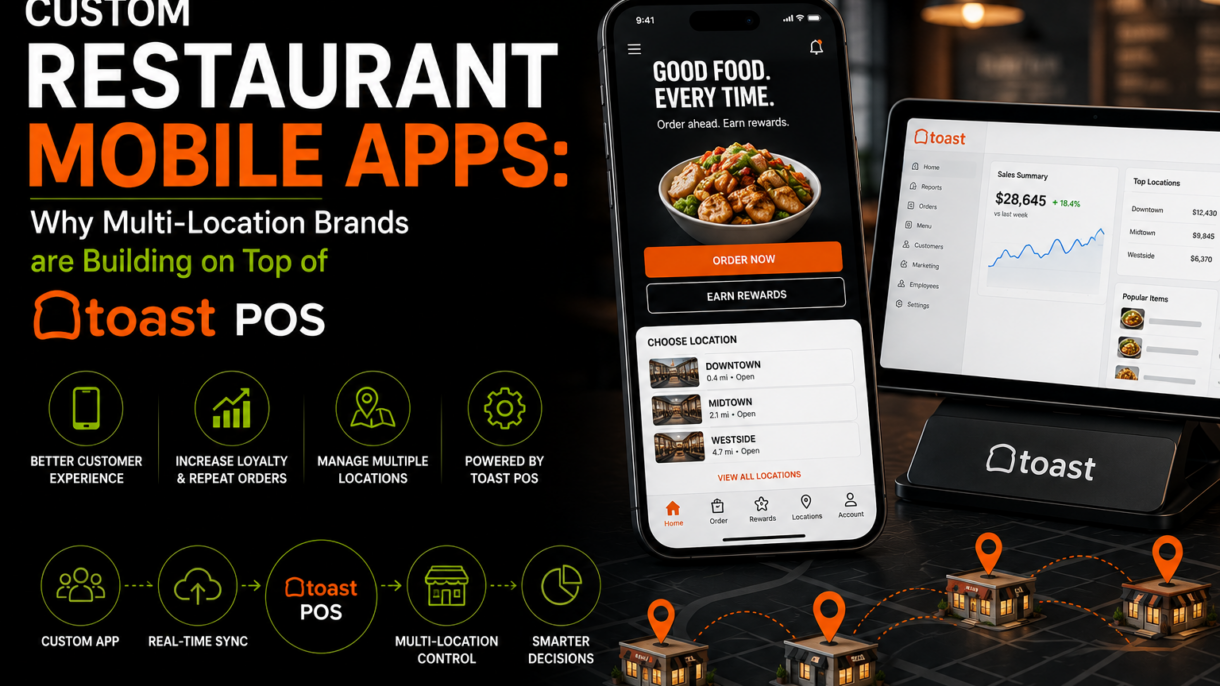

Toast POS custom mobile app matters because Toast should support revenue, direct orders, loyalty, catering, and measurable restaurant growth.
If you operate a growing restaurant group with 5, 10, or 20+ locations, you have already graduated past the basics of digital marketing. You are likely generating millions in annual top-line revenue, but you are also paying exorbitant fees to third-party delivery apps and fighting for customer attention in crowded email inboxes.
At this scale, your biggest marketing asset isn't a clever Instagram reel—it is digital real estate. Specifically, the 6-inch screen of your customer's smartphone.
While Toast's native online ordering links are fantastic for single-location concepts, relying purely on mobile web browsers creates a ceiling for high-volume franchises. To truly dominate your market, increase your customer lifetime value (LTV), and create a frictionless loyalty loop, you need your brand's logo permanently installed on your guest's home screen.
As a specialized, we help scaling operators transition from basic web ordering to enterprise-level digital ecosystems. Here is why the most successful multi-location brands are investing in a Toast POS custom mobile app, the real-world hurdles of getting one live, and how you can build an app without abandoning your existing POS.
Pro Tip Use this guide with your Toast dashboard open. The fastest wins usually come from fixing ordering paths, customer data, follow-up, and tracking before spending more on ads.
The Limitations of Web-Based Ordering for Power Users
Let's look at the real-life journey of your most valuable customer—the "Power User." This is the guest who orders from your franchise three times a month.
- Currently, to place an order, they have to:
Open their Safari or Chrome browser.
Search for your restaurant or type in your URL.
Navigate to the online ordering tab.
Log into their Toast account (if they remember their password) to access their loyalty points.
Re-enter their credit card if Apple Pay/Google Pay glitches.
Every single step is a friction point. In the fast-casual and QSR space, friction equals cart abandonment. Furthermore, web-based ordering forces you to rely on SMS or email to communicate with them—channels that cost money per message and suffer from declining open rates.
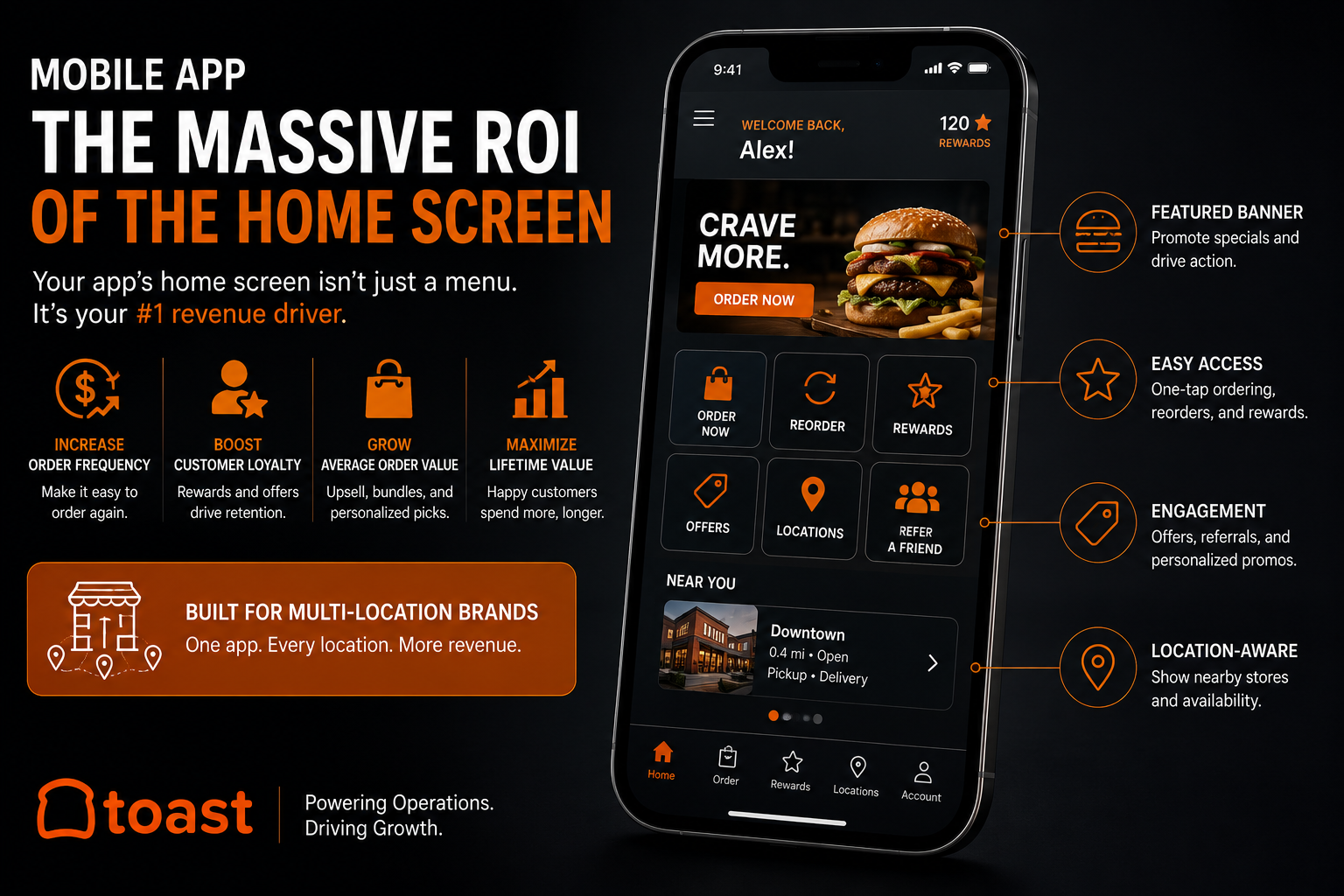
The Massive ROI of the Home Screen
When you transition that Power User to a dedicated iOS and Android app, the financial metrics of your business fundamentally shift.
1. Zero-Cost Push Notifications
This is the ultimate ROI driver of a custom app. Email open rates hover around 20%, and SMS marketing costs money for every text sent. Push notifications bypass the inbox entirely, popping up directly on the user's lock screen at zero marginal cost. You can send a geo-targeted notification at 11:30 AM saying, "Hungry? Order your favorite bowl with one tap," and watch your lunch volume spike instantly.
2. Native, Frictionless Loyalty
With an app, the user is always logged in. Their credit card is saved, their past orders are one click away, and their are tracked automatically. When ordering takes 10 seconds instead of 2 minutes, order frequency skyrockets.
3. Escaping the Third-Party Trap
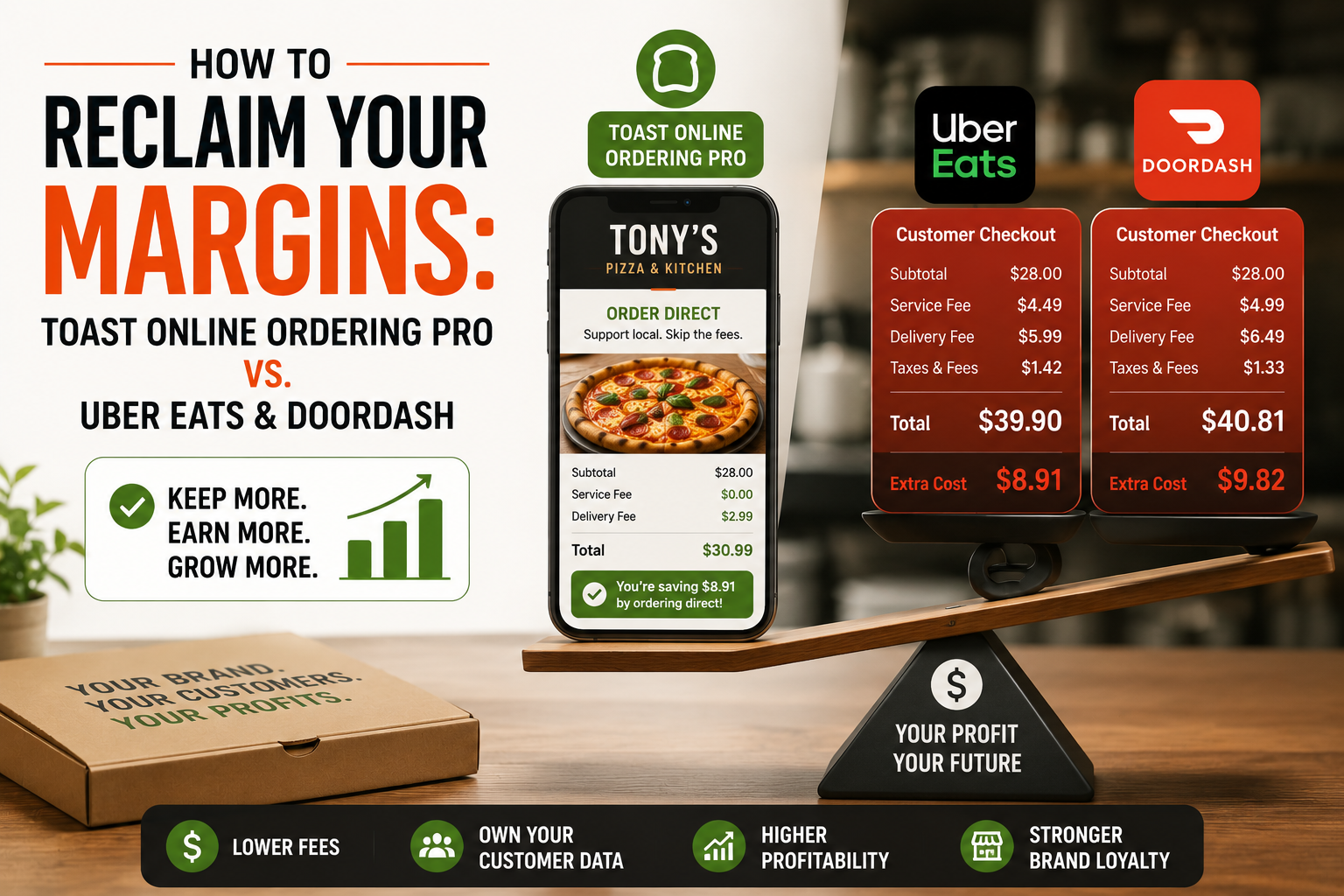
When a customer has your app on their phone, they stop opening DoorDash. You successfully migrate them from a 30% commission channel to a highly profitable, 1st-party direct channel.
Mindshare Setup Note The best Toast POS strategy connects the POS, website, ordering, campaigns, analytics, and follow-up into one system.
The Reality: Building an App While Using Toast
A common misconception among operators is that because they use Toast, they are locked into web-only ordering. This is false. You absolutely can have your own app while utilizing Toast as your central brain. You essentially have two paths:
Path 1: The Out-of-the-Box Toast App
Toast recently rolled out its own native product. This is a solid, template-based solution that allows you to wrap your Toast menu into an app format. It syncs easily because it is a first-party product, and Toast provides a guide to.
The Limitations: However, if you scour the Toast Community forums and Reddit threads, you will see operators hitting immediate roadblocks. Because it is a template, your app will look and feel exactly like every other restaurant using the service. You have limited ability to customize the UI/UX, build advanced catering funnels, or integrate complex third-party tools (like advanced CRMs or custom drive-thru geofencing).
Path 2: A Toast POS Custom Mobile App (API Integration)
For multi-location "whales," a template rarely cuts it. You need a bespoke digital experience.
Using Toast’s open API architecture, developers can build a 100% custom iOS and Android app from scratch that pulls menu data, pricing, and loyalty directly from your Toast backend. You get the operational stability of Toast's Kitchen Display Systems (KDS) combined with a completely unrestricted, premium app design.
Real-Life Problems: Why App Development is a Nightmare for Operators
If you decide to launch an app—whether through Toast's native product or a third-party builder like Appfront or Incentivio—be prepared for a highly technical onboarding process.
According to massive threads on the Toast Operations forums, the actual coding of the app is only half the battle. Here are the real-world nightmares operators face:
The Apple Developer Enrollment Crisis: Apple will not let a software company publish an app under your name. You must register your restaurant as an official Apple Developer. This requires obtaining a D-U-N-S Number (a corporate identifier), proving your LLC's legal entity status, and navigating Apple's notoriously strict verification process. Operators report being stuck in "Apple Purgatory" for 4 to 8 weeks just trying to get their account approved.
App Store Rejections: Google Play and the Apple App Store have rigorous UI/UX guidelines. If your app crashes on a specific iPhone model, or if your privacy policy isn't linked correctly, Apple will reject the app.
The "Syncing" Headaches: If your custom app is not mapped perfectly to your POS using expert, a simple menu change (like 86'ing a seasonal item) will fail to reflect in the app, leading to angry customers and refunded orders.
Ongoing Maintenance: Apps are not "set it and forget it." When Apple releases iOS 19, your app needs to be updated to ensure compatibility, or it will break.
Restaurant operators are experts in hospitality and supply chain logistics—not navigating Apple's bureaucratic software policies.
Why Scaling Franchises Hire an Agency
You cannot trust your franchise's most valuable digital asset to a DIY template or an offshore freelancer who doesn't understand the complexities of restaurant POS architecture.
Building a Toast POS custom mobile app requires a team that understands both high-end and the specific operational realities of the restaurant industry.
- At Mindshare Consulting, we don't just build the software. We handle the entire end-to-end process for multi-location brands:
Navigating the Bureaucracy: We guide you through the painful Apple/Google Developer account creation and DUNS number acquisition.
Custom UI/UX Design: We build a gorgeous, brand-specific interface that blows your competitors out of the water.
Flawless API Integration: We ensure your app talks perfectly to your Toast backend, meaning menus, prices, and loyalty points are always 100% synced in real time.
App Store Management: We handle the submissions, the updates, and the ongoing software maintenance so your app never crashes.
The Ultimate CTA
Your customers are spending an average of 4 hours a day on their smartphones. If your logo isn't on their home screen, you are renting your audience instead of owning it.
Is your franchise ready for its own iOS and Android app? Let's discuss our custom Toast-integrated mobile app development.
to book a discovery call. Let's stop relying on web browsers and build an enterprise-grade digital ecosystem for your brand.
Mindshare Setup Note The best Toast POS strategy connects the POS, website, ordering, campaigns, analytics, and follow-up into one system.
Continue the Toast POS Marketing Cluster
- You Bought Toast POS, Now What? The Ultimate Revenue Setup Guide
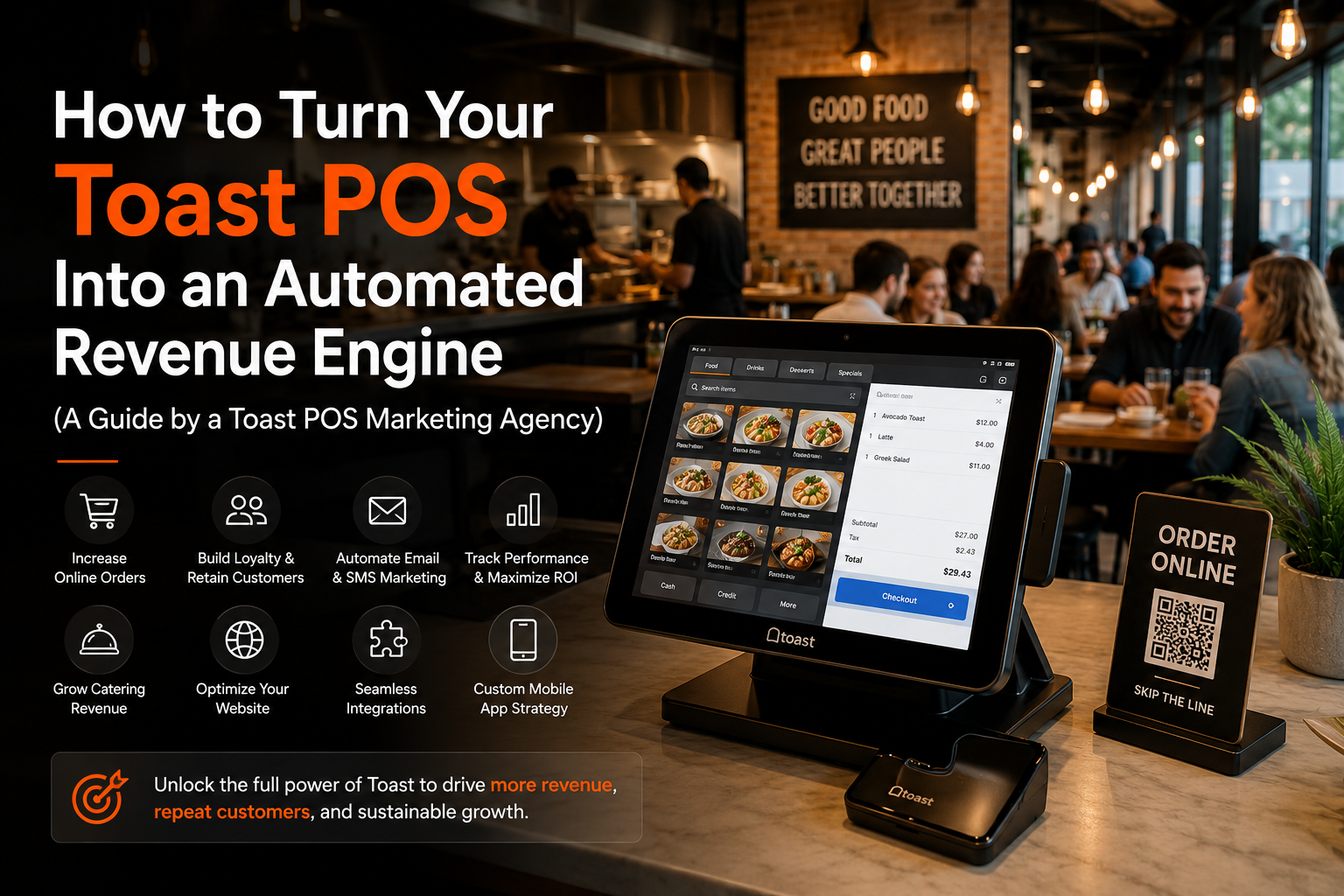
- How to Turn Your Toast POS Into an Automated Revenue Engine
- The Ultimate Guide to Meta Pixel & GA4 Conversion Tracking on Toast POS
- How to Reclaim Your Margins: Toast Online Ordering Pro vs. Uber Eats & DoorDash
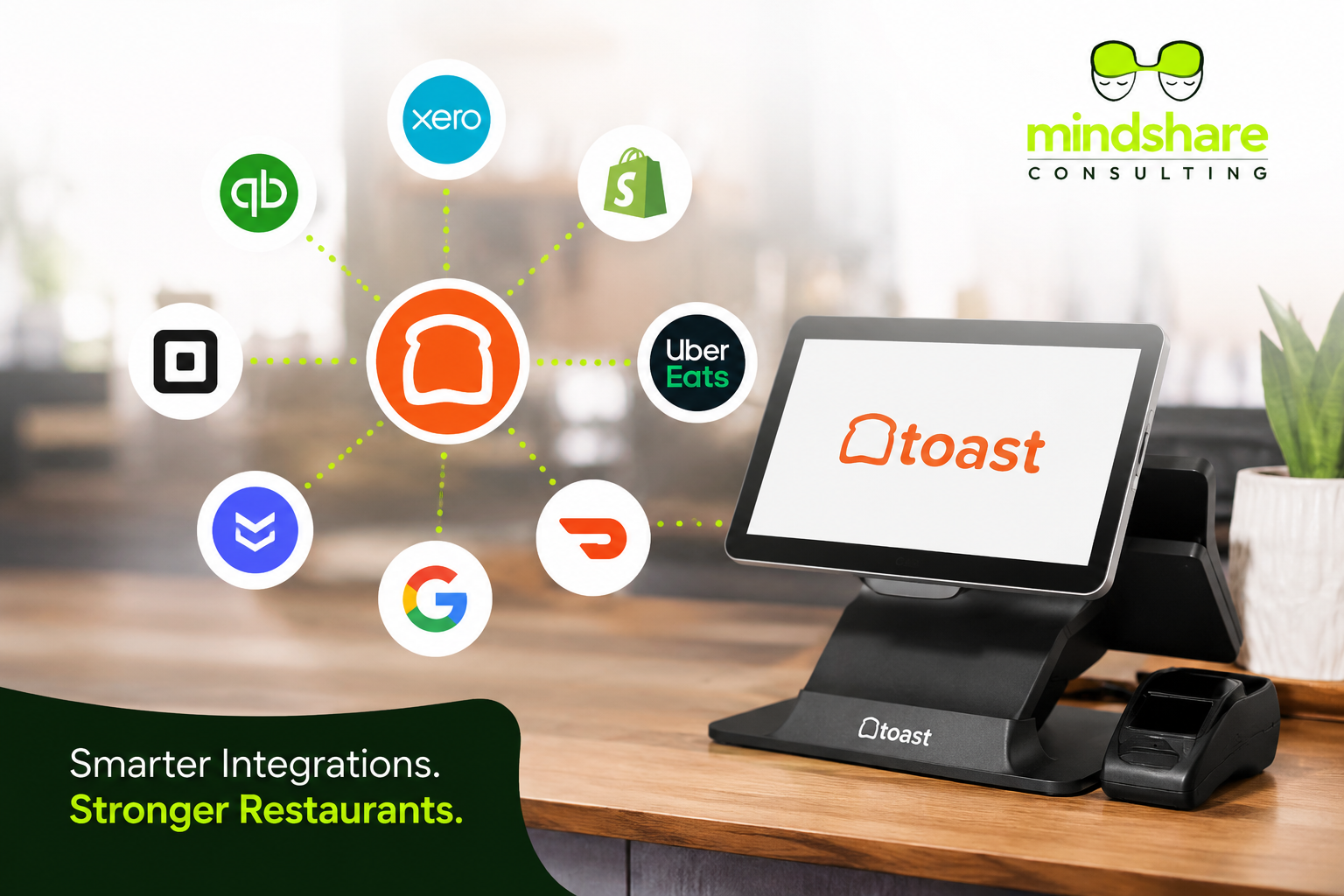
- The Best Toast POS Integrations You Should Actually Be Using in 2026
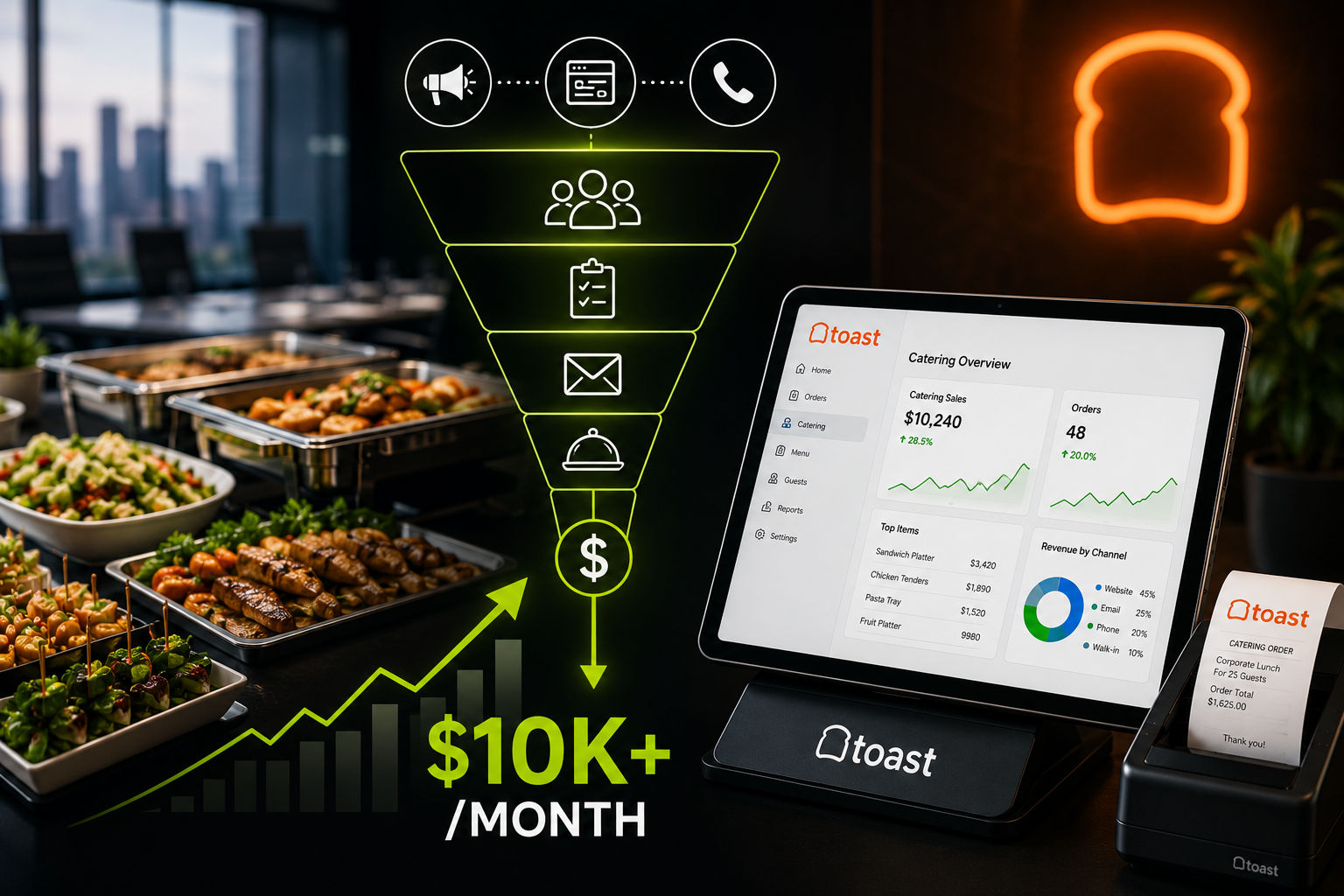
- How to Build a $10k/Month Corporate Catering Funnel Using Toast POS
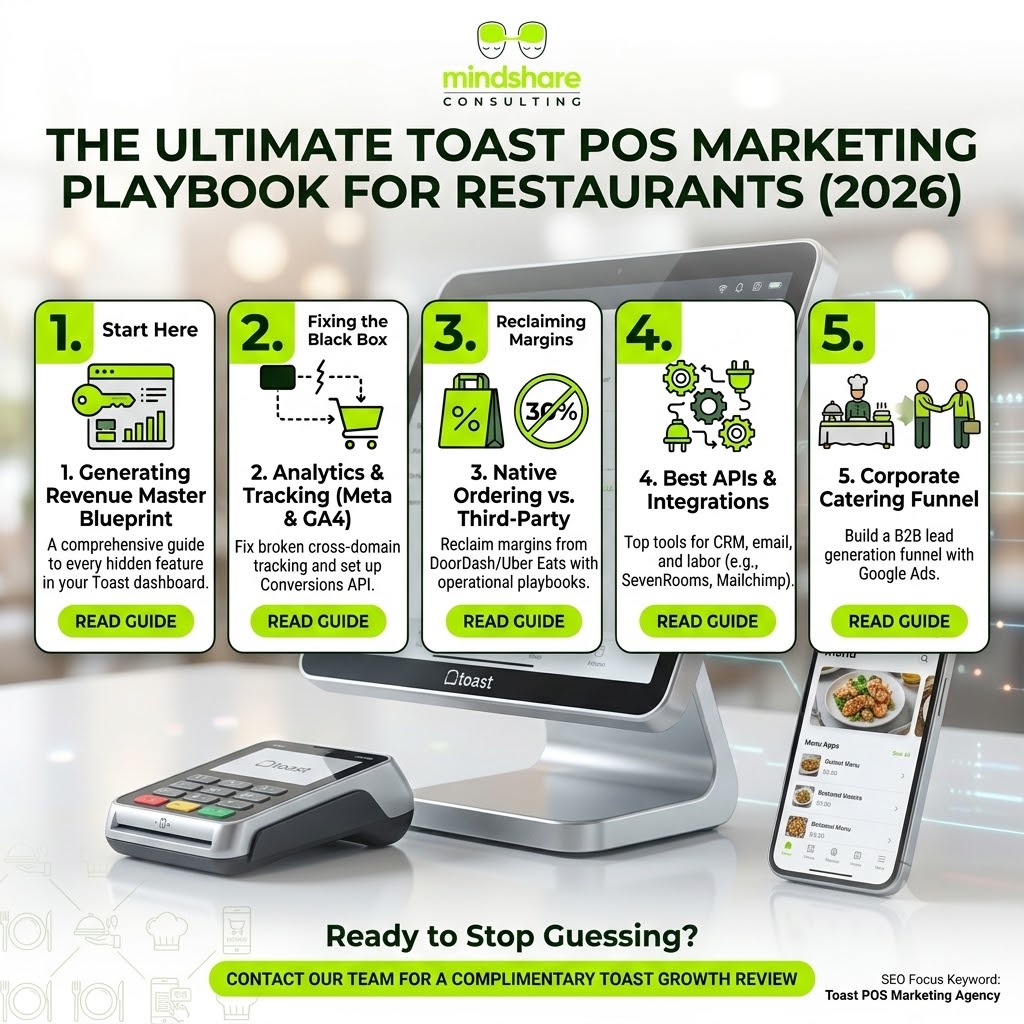
- The Ultimate Toast POS Marketing Playbook for Restaurants (2026)
Helpful Toast POS Resources
Frequently Asked Questions
What is the best way to use Toast POS for restaurant marketing?
The best approach is to connect Toast POS with online ordering, loyalty, email, SMS, website CTAs, local SEO, paid ads, analytics, and a clear reporting process around Toast POS custom mobile app.
Can Mindshare Consulting Inc help with Toast POS marketing?
Yes. Mindshare Consulting Inc helps restaurants plan Toast-connected websites, ordering flows, loyalty, email, SMS, integrations, tracking, and restaurant growth campaigns.
Should restaurants use Toast as more than a POS?
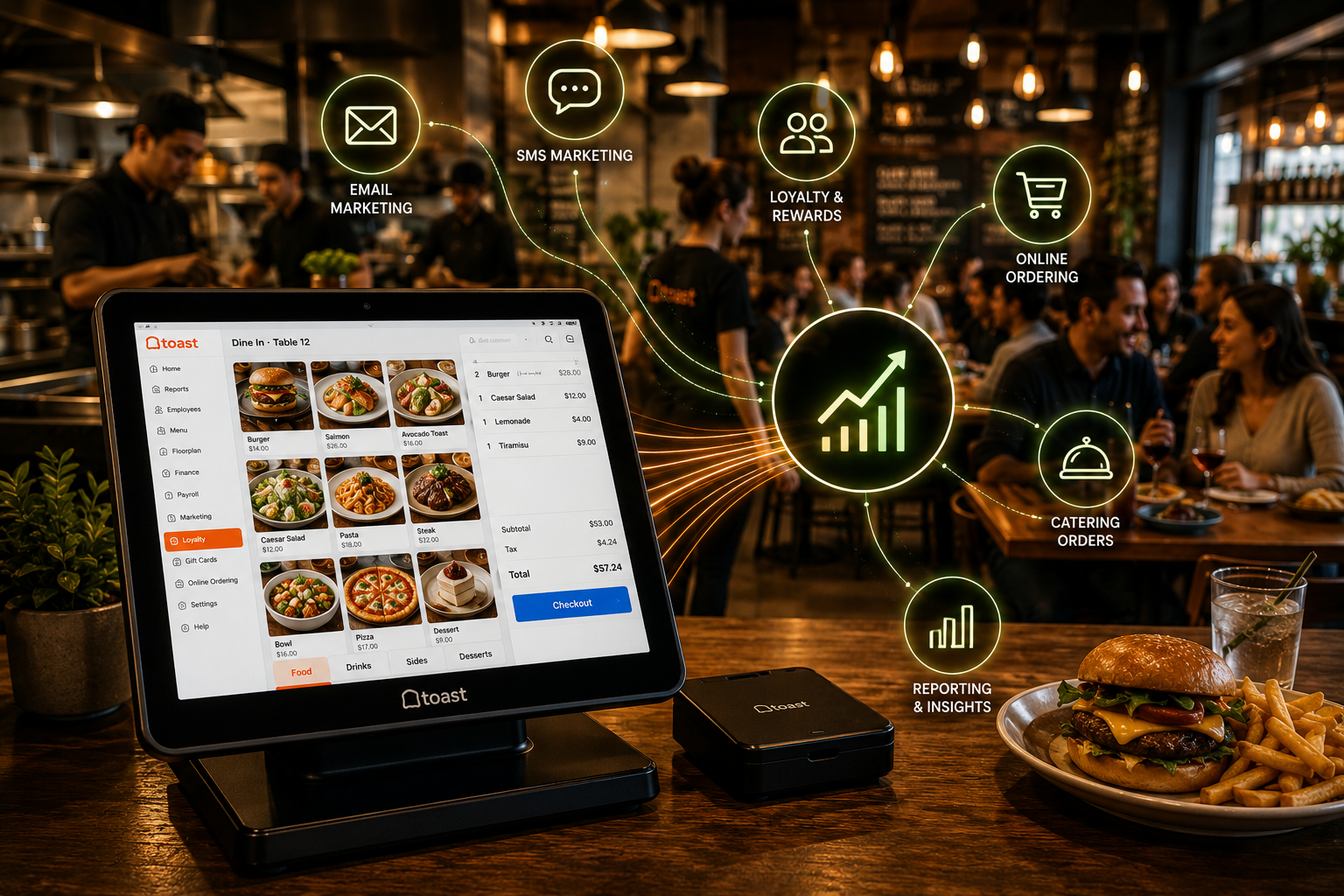
Yes. Toast can support ordering, loyalty, gift cards, catering, customer data, reporting, and marketing workflows when it is configured strategically.
How do restaurants track Toast marketing results?
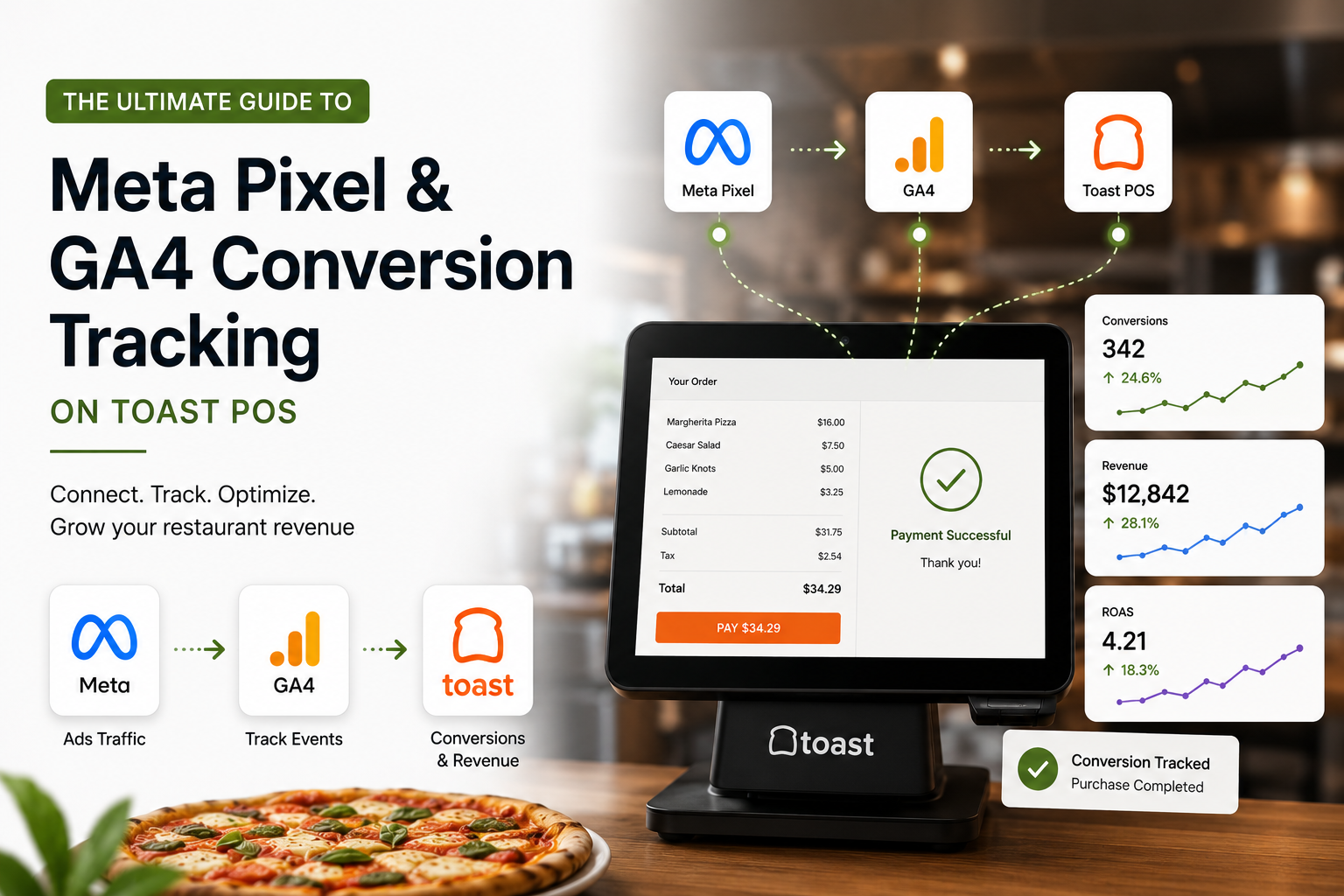
Restaurants should use GA4, Meta Pixel or Conversions API where appropriate, UTM links, call tracking, online ordering click tracking, and campaign reporting.
Work With Mindshare Consulting Inc
Mindshare Consulting Inc helps restaurants connect Toast POS with websites, ordering, loyalty, Google Ads, Meta Ads, email, SMS, analytics, and conversion-focused restaurant growth campaigns.