
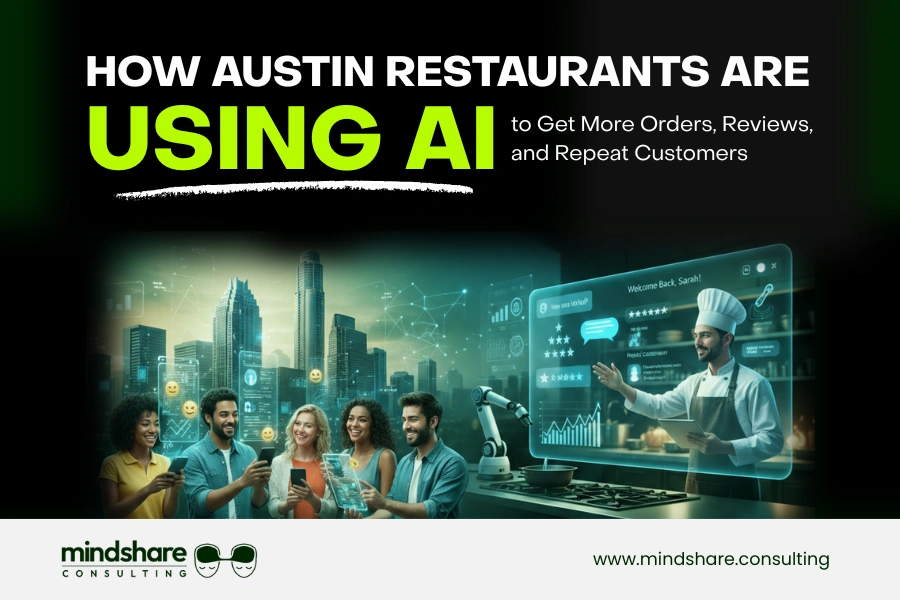

Austin’s restaurant scene is changing fast. While you are manually answering phones, typing social media posts, and hoping for reviews, your competitors across town are using AI to: Answer customer questions 24/7 without staff Generate consistent 5-star reviews automatically Predict exactly which customers will order again Create personalized marketing that converts 3-5x better Fill empty tables during slow periods Reduce labor costs by 30-40%
This is not science fiction. This is happening right now in Austin restaurants. According to National Restaurant Association’s 2026 Technology Report, 68% of restaurant operators believe AI technology gives them a competitive advantage in operations and customer service.
The Austin restaurants growing fastest in 2026 are not just serving great food. They are serving great experiences powered by AI technology that works while they sleep.
Pro Tip: Start tracking your AI implementation ROI using Google Analytics 4 combined with restaurant POS data. Measure metrics like cost per order, customer lifetime value, and labor cost percentage to quantify AI impact on your bottom line.
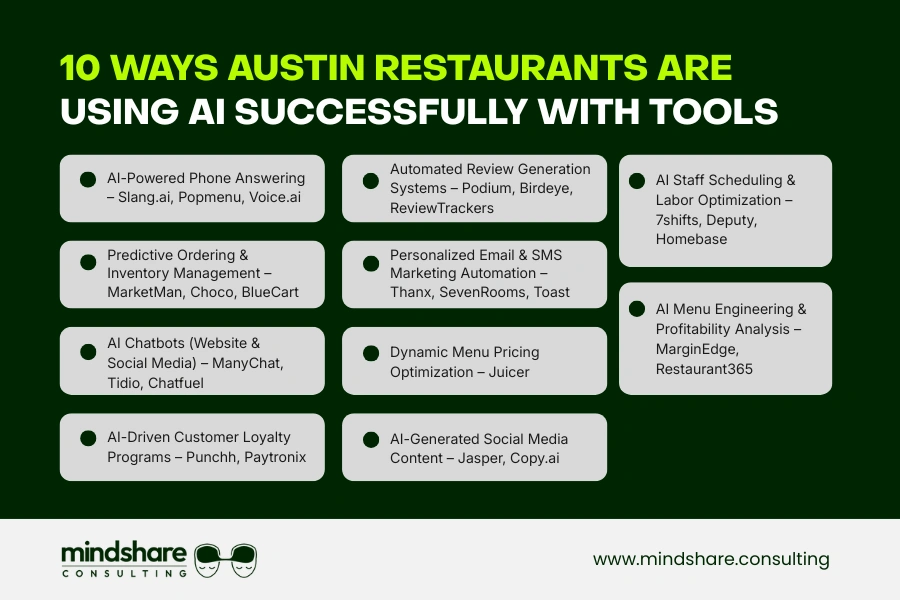
10 Ways Austin Restaurants Are Using AI Successfully
1. AI-Powered Phone Answering and Order Taking
Your phone rings during dinner rush. Staff are busy. Customers get voicemail. Orders go to competitors.
How AI Solves This
- AI phone systems answer every call instantly, take orders accurately, answer menu questions, and handle reservations without human intervention.
- Systems like Slang.ai, Popmenu’s Answering, and Voice.ai integrate directly with restaurant POS systems and answer calls 24/7.
Real Implementation Example
An East Austin BBQ joint was missing 40-60 calls daily during peak hours. After implementing AI phone answering: 100% call answer rate Average order value increased 18% (AI upsells effectively) Staff focus on in-person service instead of phones Orders processed 3x faster Night shift labor eliminated (AI handles late orders)
- Expected Results: Zero missed calls 15-25% increase in phone orders $2,000-$5,000 additional monthly revenue per location ROI within 30-45 days
- Pro Tip: Choose AI phone systems that integrate with your existing POS. Manual order entry eliminates efficiency gains and increases error rates.
2. Automated Review Generation Systems
Reviews determine whether customers choose your restaurant. Most satisfied customers never leave reviews unless prompted strategically.
How AI Automates Review Generation
- AI systems identify satisfied customers through: Order completion tracking Sentiment analysis of interactions Visit frequency patterns Average check size indicators
- Send personalized review requests via SMS or email at optimal timing Follow up with customers who did not respond Respond to reviews automatically with personalized messages Alert management to negative feedback immediately for manual intervention
- Platforms like Podium, BirdEye, and ReviewTrackers specialize in AI-powered review management.
Real Implementation Example
A South Congress brunch spot was getting 2-3 Google reviews monthly organically. After implementing AI review generation: Review volume increased to 15-20 monthly Average rating improved from 4.2 to 4.7 stars Google Maps ranking jumped from position 8 to position 2 for “brunch South Congress” Weekend wait times increased to 45+ minutes (good problem) Monthly revenue increased 34%
Expected Results
300-500% increase in review volume Improved average ratings (AI targets satisfied customers) Better Google Maps rankings Increased visibility in AI-powered search results (ChatGPT, Google AI)
3. Predictive Ordering and Inventory Management
Food waste costs Austin restaurants $8,000-$15,000 annually per location. Running out of popular items loses sales.
How AI Predicts Demand
- AI analyzes historical sales data, weather patterns, local events, holidays, and seasonality to predict exactly what you will sell.
- Systems like MarketMan, Choco, and BlueCart provide AI-powered inventory predictions.
What AI Predicts
Daily ingredient needs by item Optimal reorder timing Price fluctuation patterns Waste reduction opportunities Menu item profitability trends
Real Implementation Example
A Mueller neighborhood Italian restaurant was experiencing 15% food waste and frequent stockouts of popular items. After implementing AI inventory management: Food waste reduced to 4% Stockouts eliminated (AI predicts demand spikes) Food costs decreased from 34% to 28% of revenue Ordering time reduced from 4 hours weekly to 30 minutes Annual savings: $24,000
Expected Results
50-70% reduction in food waste Elimination of stockouts during peak demand 3-6% reduction in food cost percentage Time savings of 3-5 hours weekly per location
4. Personalized Email and SMS Marketing Automation
Generic “10% off your next visit” emails get ignored. Personalized messages based on customer behavior convert 5-8x better.
How AI Personalizes Marketing
- AI analyzes customer data to create individualized campaigns based on: Order history and preferences Visit frequency patterns Average check size Time since last visit Dietary preferences and restrictions Favorite menu items Birthday and anniversary dates
- Platforms like Thanx, SevenRooms, and Toast Marketing offer AI-powered restaurant marketing automation.
AI-Generated Campaign Examples
“Hey Maria! Your favorite breakfast tacos are 20% off this Saturday” “John, it’s been 3 weeks since your last visit. Your usual burger awaits!” “Sarah, happy birthday! Enjoy a complimentary dessert when you dine with us this week” “Try our new vegan options – we noticed you order plant-based frequently”
Real Implementation Example
A Domain area casual dining restaurant had a 15,000-person email list generating minimal revenue. After implementing AI personalization: Email open rates increased from 12% to 38% Click-through rates increased from 2% to 14% Campaign-driven revenue increased 420% Repeat visit frequency increased 28% Unsubscribe rate decreased 60%
Expected Results
3-5x improvement in email engagement Increased repeat visit frequency Higher average check sizes from targeted promotions Better customer lifetime value
Pro Tip
Integrate AI marketing with your POS system to trigger campaigns automatically based on real-time customer behavior, not manual campaign scheduling with AI for Austin Restaurants.
A West 6th Street restaurant was missing customer inquiries sent after business hours via Facebook and Instagram. After implementing AI chatbots: 24/7 instant response to all inquiries Reservation capture increased 45% Online order conversions improved 32% Staff time saved: 8-10 hours weekly Customer satisfaction scores improved
Expected Results
100% inquiry response rate Reduced staff time on repetitive questions Increased reservation and order conversions Better customer experience
5. AI Chatbots for Website and Social Media
Customers ask questions 24/7. “What are your hours?” “Do you have gluten-free options?” “Can I make a reservation for 6 tonight?”
Without instant responses, customers go elsewhere.
How AI Chatbots Work
- AI chatbots on your website, Facebook, and Instagram answer common questions instantly, take reservations, process orders, and collect customer information.
- Platforms like ManyChat, Tidio, and Chatfuel provide restaurant-specific AI chatbot solutions.
Common Questions AI Handles
Menu items and prices Hours and location Dietary accommodations (vegan, gluten-free, allergies) Reservation availability Delivery and takeout options Parking information Event space inquiries Wait time estimates.
6. Dynamic Menu Pricing Optimization
Airlines and hotels use dynamic pricing. Why shouldn’t restaurants?
How AI Optimizes Pricing
- AI analyzes demand patterns, competition, inventory levels, and customer segments to suggest optimal pricing strategies.
- Systems like Juicer and specialized restaurant pricing AI adjust prices based on: Time of day and day of week Current demand vs capacity Inventory levels (increase price of low-stock items) Weather conditions Local events and traffic Competitor pricing
Dynamic Pricing Examples
Happy hour pricing automation Surge pricing during high-demand periods (similar to Uber) Discount optimization to fill slow periods Premium pricing for high-demand items Inventory-based pricing (higher prices when running low)
Real Implementation Example
A downtown Austin upscale restaurant implemented dynamic pricing on their online ordering: Revenue increased 12% without volume changes Slow period orders increased 34% through strategic discounts High-demand items generated additional profit Overall profit margins improved 8%
Expected Results
5-15% revenue increase Better demand balancing across time periods Reduced food waste through inventory-based pricing Improved profit margins
Important Note
Dynamic pricing works best for online ordering and delivery. In-person menu pricing should remain stable to maintain customer trust. Communicate value clearly when implementing any pricing changes.
7. AI-Powered Staff Scheduling and Labor Optimization
Labor costs represent 25-35% of restaurant revenue. Overstaffing wastes money. Understaffing kills service quality.
How AI Optimizes Scheduling
- AI analyzes historical sales data, reservations, events, weather, and holidays to predict exactly how many staff you need by role and time period.
- Platforms like 7Shifts, Deputy, and Homebase offer AI-powered restaurant scheduling.
What AI Scheduling Does
Predicts customer traffic by hour Recommends optimal staff levels by position Creates schedules automatically based on availability and labor laws Sends shift reminders and handles shift swaps Tracks actual vs predicted performance for continuous learning
Real Implementation Example
A Barton Springs area restaurant was spending 35% of revenue on labor with inconsistent service quality. After implementing AI scheduling: Labor costs reduced to 27% of revenue Service consistency improved (right staff at right times) Staff overtime reduced 85% Schedule creation time reduced from 3 hours to 15 minutes weekly Annual labor savings: $62,000
Expected Results
20-30% reduction in labor cost percentage Elimination of overstaffing and understaffing Time savings of 2-4 hours weekly on scheduling Improved employee satisfaction through better schedules
8. AI Menu Engineering and Profitability Analysis
Which menu items actually make you money? Most restaurant owners do not know precisely.
How AI for Austin Restaurants Analyzes Menu Profitability
- AI evaluates every menu item across multiple dimensions: Ingredient costs and profit margins Preparation time and labor requirements Sales volume and popularity Seasonality and demand patterns Customer preferences and ordering patterns.
- Systems like MarginEdge and Restaurant365 provide AI-powered menu analysis.
AI Menu Recommendations
Identify underperforming items to remove Suggest high-margin items to promote Optimize menu layout for profitability Recommend ingredient substitutions to improve margins Predict impact of menu changes before implementation
Real Implementation Example
A food trailer in East Austin was busy but barely profitable. AI menu analysis revealed: Their most popular item had 12% profit margin Their second-most-popular item had 54% profit margin Three items were losing money per sale Menu layout buried their most profitable items
After AI-recommended changes: Eliminated 3 unprofitable items Repositioned high-margin items prominently Adjusted pricing on 6 items Overall profit margin increased from 8% to 21% Monthly net profit increased $7,200
Expected Results
5-10% improvement in overall profit margins Identification of unprofitable menu items Data-driven menu optimization decisions Better understanding of true profitability
9. AI-Driven Customer Loyalty Programs
Traditional punch cards and generic points programs do not drive meaningful loyalty.
How AI Creates Effective Loyalty
- AI personalizes loyalty programs based on individual customer behavior, creating unique incentives that actually motivate repeat visits.
- Platforms like Thanx, Punchh, and Paytronix offer AI-powered loyalty solutions.
AI Loyalty Features
Personalized reward timing (when customer is most likely to visit) Customized offers based on preferences Predictive modeling to prevent customer churn Gamification elements tailored to customer personality Tiered programs that adapt to spending patterns Automated win-back campaigns for lapsed customers
Real Implementation Example
A Zilker neighborhood cafe had a traditional “buy 10 get 1 free” punch card program with minimal impact. After implementing AI loyalty: Active loyalty members increased from 340 to 2,800 Repeat visit frequency increased 46% Average customer lifetime value increased from $180 to $520 Loyalty program-driven revenue: 38% of total Customer acquisition cost decreased (referrals increased)
Expected Results
2-3x increase in repeat customer rates Higher customer lifetime value Reduced customer acquisition costs Measurable revenue attribution to loyalty program
10. AI-Generated Social Media Content
Consistent social media presence drives discovery and engagement. Most restaurants post sporadically or not at all.
How AI Creates Social Content
- AI generates captions, suggests posting times, creates content calendars, and even generates basic visual content suggestions.
- Tools like Jasper, Copy.ai, and restaurant-specific platforms like Popmenu offer AI content generation.
AI Content Generation
Daily post captions optimized for engagement Hashtag suggestions based on trending topics Optimal posting time recommendations Response suggestions for comments and messages Content ideas based on seasonal trends and local events Email newsletter content generation
Real Implementation Example
A South Lamar restaurant was posting to Instagram once every 2-3 weeks with low engagement. After implementing AI content tools: Consistent 5x weekly posting schedule Engagement rate increased from 2.1% to 8.7% Follower growth increased 340% Social media-driven reservations increased 65% Content creation time reduced from 2 hours to 20 minutes weekly
Expected Results
Consistent content calendar execution 3-5x improvement in engagement rates Faster content creation (80% time savings) Increased brand awareness and discovery
Pro Tip
Use AI for content generation but maintain human oversight for brand voice consistency. AI handles 80% of the work; humans provide the 20% that makes content authentic and unique to your restaurant.
Common Concerns About Restaurant AI Technology
“AI Will Replace My Staff”
Reality: AI handles repetitive tasks. Staff focus on customer experience, creativity, and hospitality that AI cannot replicate.
Restaurants implementing AI report happier staff because they are not stuck answering phones or doing inventory for hours.
“AI Is Too Expensive for Small Restaurants”
Reality: Many AI tools cost $50-$300 monthly. A single prevented missed order pays for monthly AI phone answering. One additional regular customer covers review generation costs.
The question is not “Can I afford AI?” but “Can I afford to fall behind competitors using AI?”
“AI Is Too Complicated to Implement”
Reality: Modern restaurant AI platforms are designed for non-technical users. Implementation typically takes 1-4 hours with vendor support.
Most restaurants start with simple tools like chatbots or review generation before expanding to complex systems.
“Customers Prefer Human Interaction”
Reality: Customers prefer CONVENIENCE. They want instant answers at 2am, zero hold times, and personalized experiences. AI delivers this better than humans can scale.
For meaningful interactions, customers absolutely prefer humans. AI frees staff to provide these meaningful moments.
“My Restaurant Is Too Unique for AI”
Reality: AI adapts to YOUR restaurant, not vice versa. Systems learn your menu, your customers, your operations, and optimize accordingly.
The most unique, personality-driven AI for Austin Restaurants use successfully while maintaining character and authenticity.
Your 90-Day AI Implementation Roadmap
Phase 1: Foundation (Days 1-30)
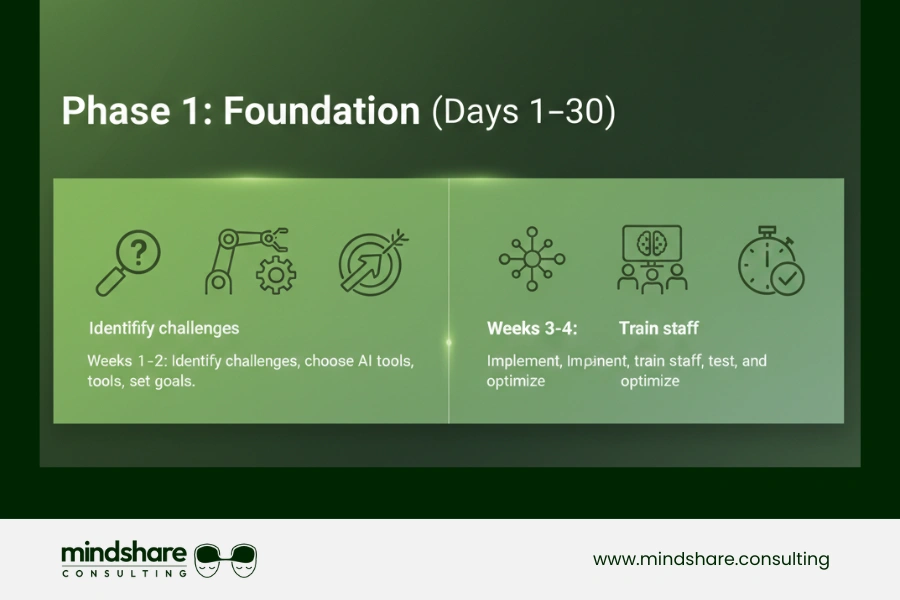
- Week 1-2: Assessment and Planning: Identify biggest operational pain points Research AI tools addressing those problems Get staff input on automation opportunities Set clear metrics for success measurement Choose 1-2 initial AI tools to implement
- Week 3-4: Initial Implementation: Set up chosen AI systems Train staff on new tools Test systems with small customer segments Monitor performance and troubleshoot issues Collect feedback from staff and customers
Recommended First Implementations: AI phone answering (if high call volume) Review generation (all restaurants benefit) Chatbot (low cost, immediate impact)
Phase 2: Expansion (Days 31-60)
Phase 2: Expansion (Days 31–60)
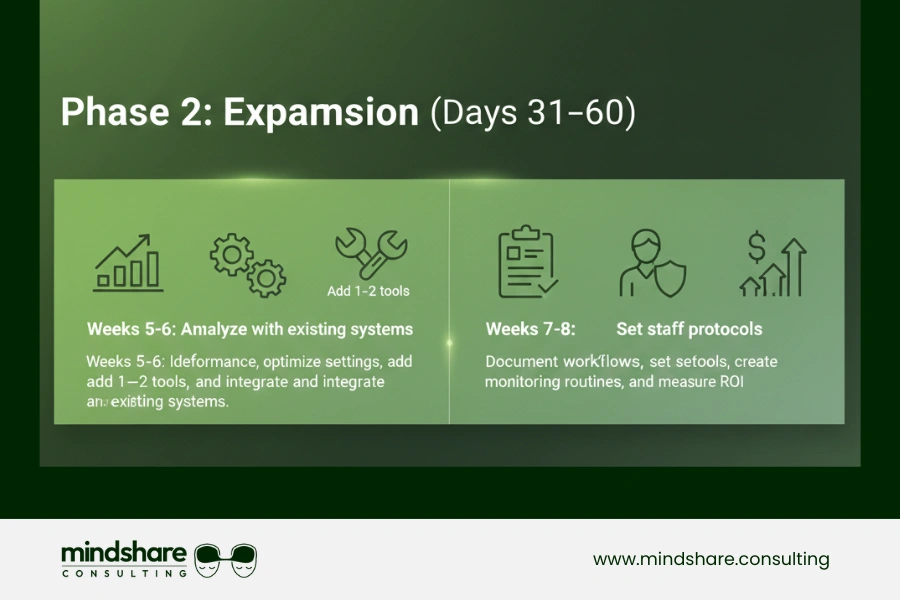
- Week 5-6: Optimization and Expansion: Analyze initial AI tool performance Optimize settings based on real data Add 1-2 additional AI tools Integrate systems with existing POS and tools
- Week 7-8: Process Development: Document AI system workflows Create staff protocols for AI oversight Develop monitoring and reporting routines Measure ROI from initial implementations
Second Wave Implementations: Marketing automation Staff scheduling Social media content generation
Phase 3: Advanced Integration (Days 61-90)
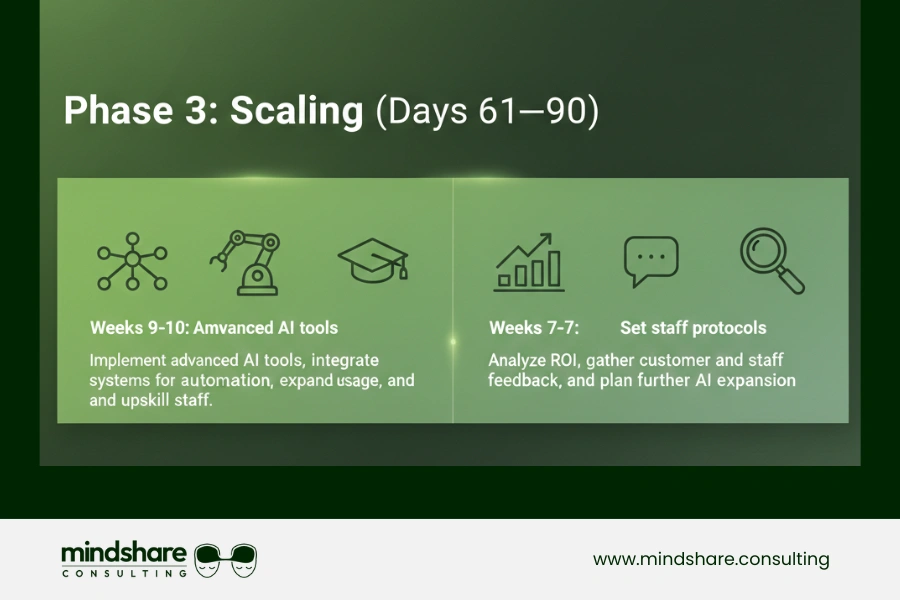
- Week 9-10: Advanced Systems: Implement more complex AI tools Integrate multiple AI systems for workflow automation Expand AI usage to additional functions Train advanced staff capabilities
- Week 11-12: Measurement and Scaling: Comprehensive ROI analysis across all AI systems Customer feedback collection and analysis Staff satisfaction assessment Plan for additional AI implementations
Third Wave Implementations: Inventory management Menu engineering Loyalty program automation
Ongoing: Continuous Improvement
Monthly Activities: Review AI system performance metrics Update AI training with new data Test new AI features and capabilities Optimize existing AI configurations Explore emerging AI restaurant technologies
Measuring AI Implementation Success
Track these metrics to evaluate AI technology impact:
- Customer Metrics: Order volume and frequency Customer acquisition cost Customer lifetime value Review quantity and quality Net Promoter Score (NPS)
- Operational Metrics: Labor cost percentage Food cost percentage Order accuracy rate Response time to inquiries Staff scheduling efficiency Inventory waste percentage
- Financial Metrics: Revenue per available seat hour (RevPASH) Average check size Profit margins Return on AI investment Cost per order Marketing efficiency ratio
Use tools like Google Analytics, your POS system, and AI platform reporting dashboards to track performance comprehensively.
The Bottom Line
Austin restaurants are facing unprecedented competition, labor costs, and customer expectations. AI technology is not optional anymore. It is the difference between growing and struggling.
The Austin restaurants thriving in 2026: Answer every customer inquiry instantly, 24/7 Generate consistent positive reviews that drive discovery Optimize operations for maximum profitability Deliver personalized experiences at scale Operate efficiently with smaller teams
Your competitors are already implementing these AI technologies. Every week you delay is lost revenue, wasted costs, and customers choosing competitors with better experiences.
The choice is straightforward. Continue manual operations while competitors scale with AI. Or implement proven AI systems that deliver measurable ROI within 90 days.
Your next step is simple. Identify your restaurant’s biggest operational challenge. Research AI tools solving that specific problem. Implement one system and measure results. Scale what works.
If you need expert guidance selecting and implementing AI technology that delivers real results for AI for Austin Restaurants, professional consultation eliminates trial-and-error and accelerates return on investment.
Check: Launching a Social Media Page for Your Austin Business: A Step-by-Step Guide
About Mindshare Consulting Inc
At Mindshare Consulting Inc, we specialize in AI for Austin Restaurants marketing. We help local restaurants select the right AI tools, implement them efficiently, train staff properly, and measure real business impact.
Our Austin restaurant clients have implemented AI systems that increased revenue 30-80%, reduced labor costs 20-40%, and improved customer satisfaction significantly. We understand Austin’s unique restaurant market and competitive dynamics.
Whether you operate a food trailer, casual dining restaurant, or upscale establishment, we provide customized AI strategies that fit your budget, operations, and growth goals.