
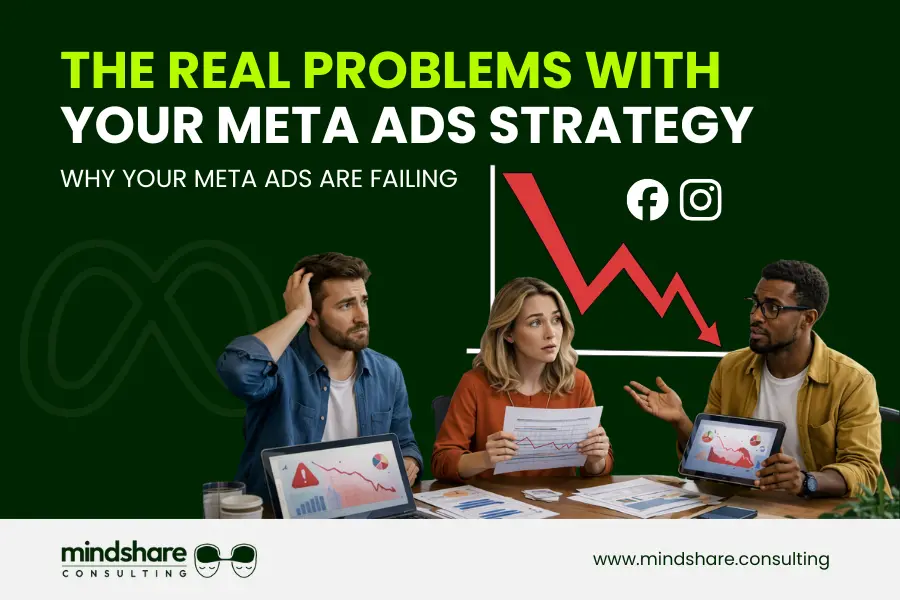

You are spending money on Meta ads. Facebook ads are not converting, Instagram ads are not delivering results. Your cost per lead keeps climbing. Return on ad spend keeps dropping. So you conclude Meta ads are broken. Here is the uncomfortable truth. Meta ads are not broken. Over 10 million businesses actively advertise on Facebook and Instagram, generating over $135 billion in annual ad revenue for Meta. Those businesses are getting results. If your Meta ads are failing, the problem is not the platform. The problem is your strategy. At Mindshare Consulting, we manage Meta advertising campaigns for businesses across industries. The difference between campaigns that fail and campaigns that deliver 300-500% ROI comes down to strategic execution, not platform limitations.
Pro Tip:
Track your Meta ads performance using Facebook Ads Manager combined with Google Analytics 4 UTM tracking. Never rely on platform reporting alone. Cross-reference data to understand true ROI and customer journey attribution.
Why Businesses Think Meta Ads Are Broken
The complaints sound familiar. “Facebook ads used to work but stopped performing.” “Instagram ads get likes but no sales.” “My cost per click keeps rising.” “I spent $5,000 and got zero customers.”
These frustrations are real. But they reveal strategy failures, not platform failures.
-
The iOS 14.5 Attribution Challenge
Apple’s iOS 14.5 update fundamentally changed Meta advertising tracking. When users opt out of tracking, Meta loses visibility into post-click behavior. This makes attribution harder and requires strategic adjustments.
According to Meta’s attribution documentation, advertisers now see 15-30% less conversion tracking data compared to pre-iOS 14.5.
However, businesses that adapted their Meta ads strategy to this new reality continue delivering strong results. Those that did not adjust keep blaming the platform.
-
Increased Competition Drives Up Costs
More businesses advertise on Meta now than ever before. Basic economic principles apply. Higher demand for ad inventory increases costs. Cost per click and cost per thousand impressions rise across all industries.
But higher costs do not mean Meta ads stop working. They mean lazy strategies stop working. Sophisticated Meta ads strategy accounts for increased competition through better targeting, creative differentiation, and conversion optimization.
-
Algorithm Changes Require Strategic Adaptation
Meta’s advertising algorithm evolves constantly. Changes prioritize certain content types, audience signals, and campaign objectives. Strategies that worked in 2022 may underperform in 2026 without adaptation.
Businesses treating Meta ads as “set it and forget it” campaigns fail. Those continuously testing and optimizing succeed.
The Real Problems With Your Meta Ads Strategy
Let’s diagnose why your Meta ads are failing.
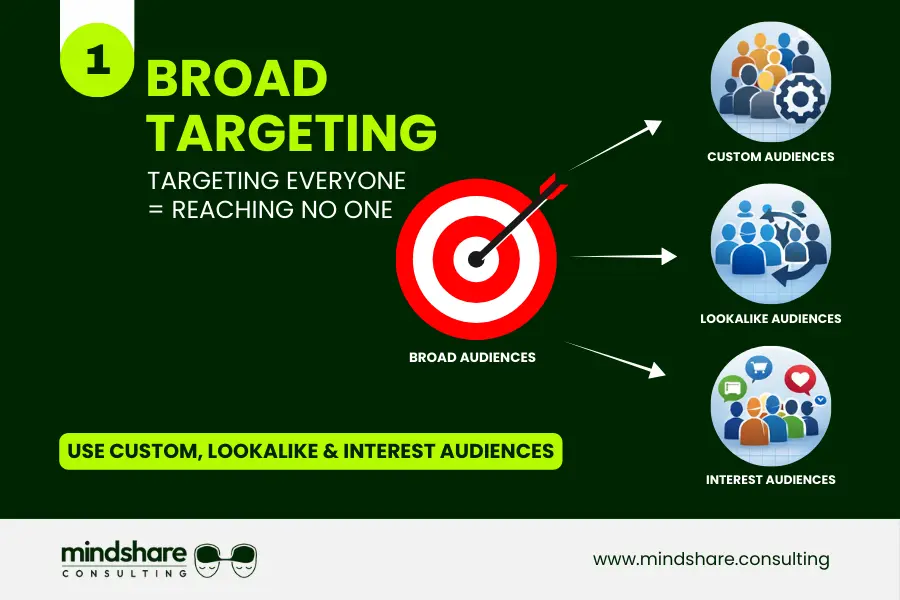
Problem 1: You Are Targeting Everyone (Which Means No One)
Broad targeting sounds appealing. “Why limit my audience when I can reach everyone?”
Because Meta’s algorithm needs clear signals to optimize delivery. Broad targeting dilutes campaign learning and wastes budget on unqualified audiences.
The Fix: Start with tight, specific audiences based on actual customer data. Meta’s algorithm performs better with focused targeting that provides clear conversion signals.
Use these targeting approaches: Custom Audiences from customer email lists and website visitors Lookalike Audiences based on your best customers (top 1-5%) Interest and behavior targeting validated by audience insights data Geographic targeting refined to locations where your customers actually exist Demographic targeting matching your proven buyer profiles
According to Meta’s targeting best practices, campaigns with defined audiences consistently outperform broad targeting by 40-60% on cost per acquisition.
Problem 2: Your Creative Is Generic and Forgettable
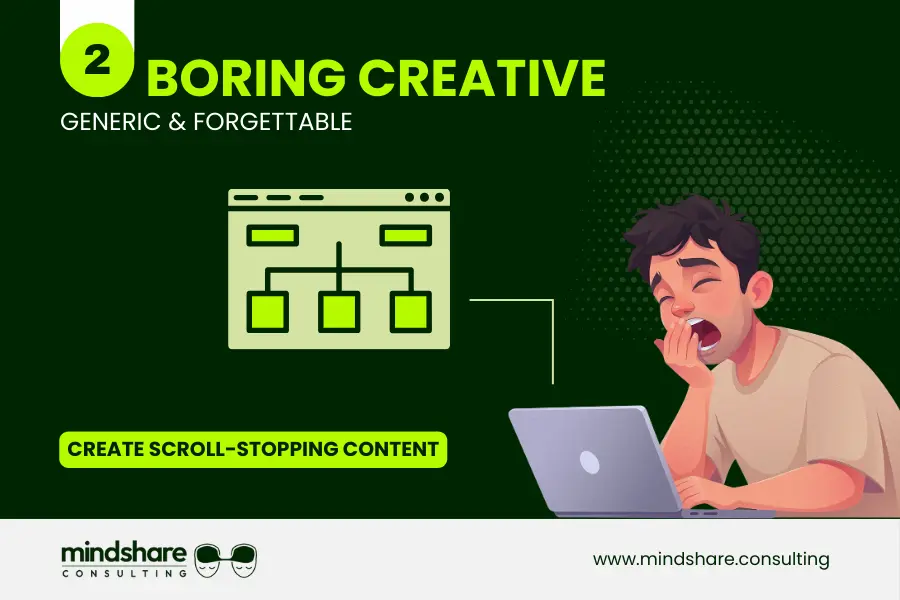
Scroll through your Facebook or Instagram feed. How many ads do you actually remember? Almost none. Your ads face the same problem.
Users see 4-7 ads per minute on Meta platforms according to Meta’s user experience research. Generic stock photos and boring copy get ignored instantly.
The Fix: Create thumb-stopping creative that demands attention. Use video content (performs 120% better than static images) Show real people, real results, real products Lead with benefit-driven hooks in first 3 seconds Test multiple creative variations constantly Use native platform formats (Reels, Stories, Feed) Include clear, compelling calls-to-action Add captions for sound-off viewing (85% watch without sound)
Pro Tip: Meta’s Creative Hub allows you to preview ad creative across placements before spending budget. Test visual impact before launching campaigns.
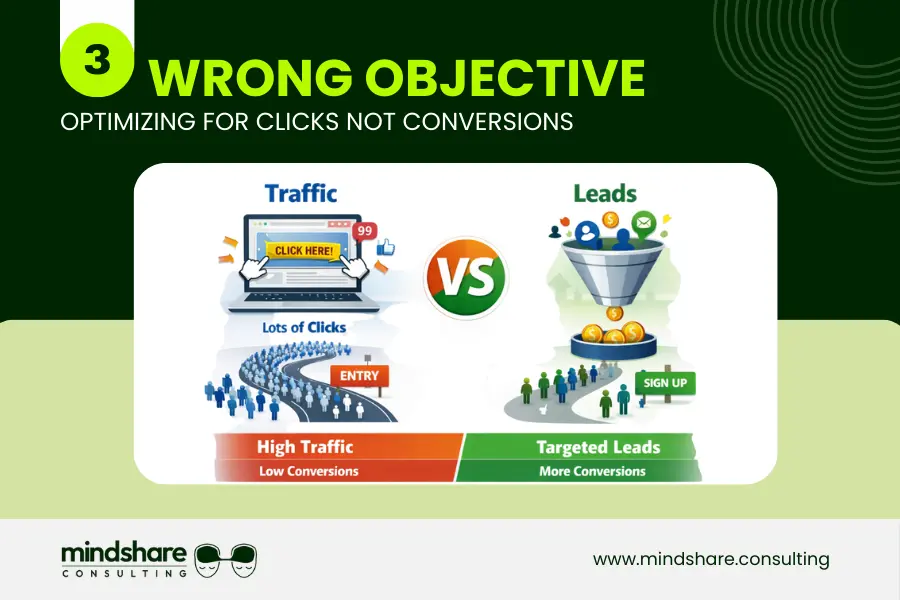
Problem 3: You Are Optimizing for the Wrong Campaign Objective
Meta offers 11 different campaign objectives. Choosing the wrong objective dooms your campaign before it starts.
The Fix: Match campaign objectives to your actual business goals.
|
Business Goal |
Correct Meta Objective |
Wrong Objective Often Used |
|
Generate qualified leads |
Lead generation |
Traffic, Engagement |
|
Drive online sales |
Sales (Conversions) |
Traffic, Reach |
|
Increase brand awareness |
Reach or Brand awareness |
Engagement, Video views |
|
Get phone calls |
Calls |
Traffic, Engagement |
|
Increase app installs |
App installs |
Traffic, Conversions |
|
Fill event attendance |
Event responses |
Reach, Traffic |
Meta’s algorithm optimizes delivery specifically for your chosen objective. Selecting “Traffic” when you want “Sales” tells the algorithm to find people who click, not people who buy.
According to Meta’s campaign objective documentation, using the correct objective improves cost per result by 30-50% on average.
Problem 4: Your Landing Page Experience Destroys Conversions
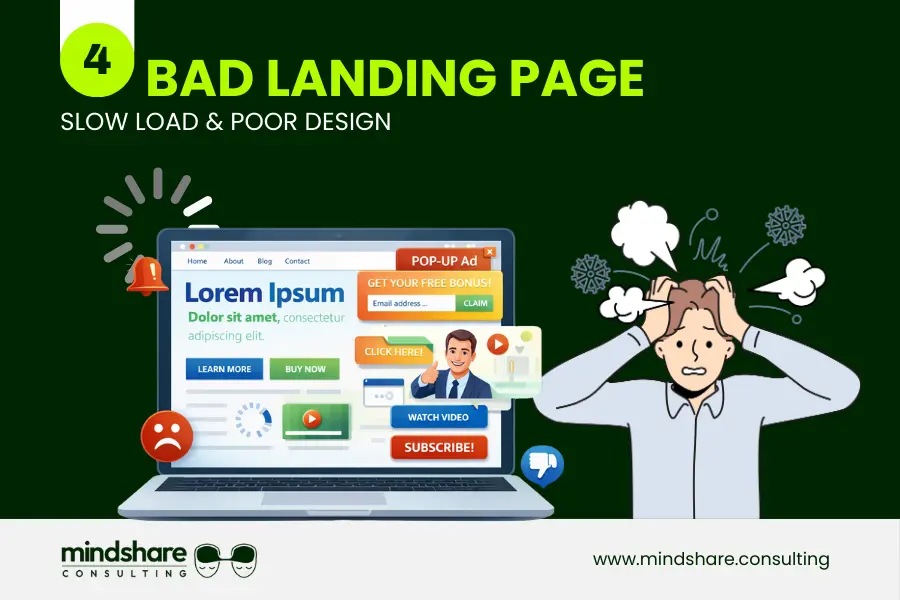
Your ad performs perfectly. People click. They arrive at your landing page. Then they leave without converting.
The problem is not your Meta ads strategy. The problem is what happens after the click.
The Fix: Optimize the complete customer journey. Match landing page messaging to ad creative exactly Load pages in under 3 seconds on mobile Remove navigation distractions Use clear, benefit-focused headlines Include trust signals (reviews, security badges, guarantees) Make forms short and simple Add live chat for immediate questions A/B test landing page elements continuously
According to Google’s mobile speed research, 53% of mobile users abandon sites taking over 3 seconds to load. Your Meta ads performance metrics look bad because your landing page loses customers.
Problem 5: You Are Not Testing Anything Systematically
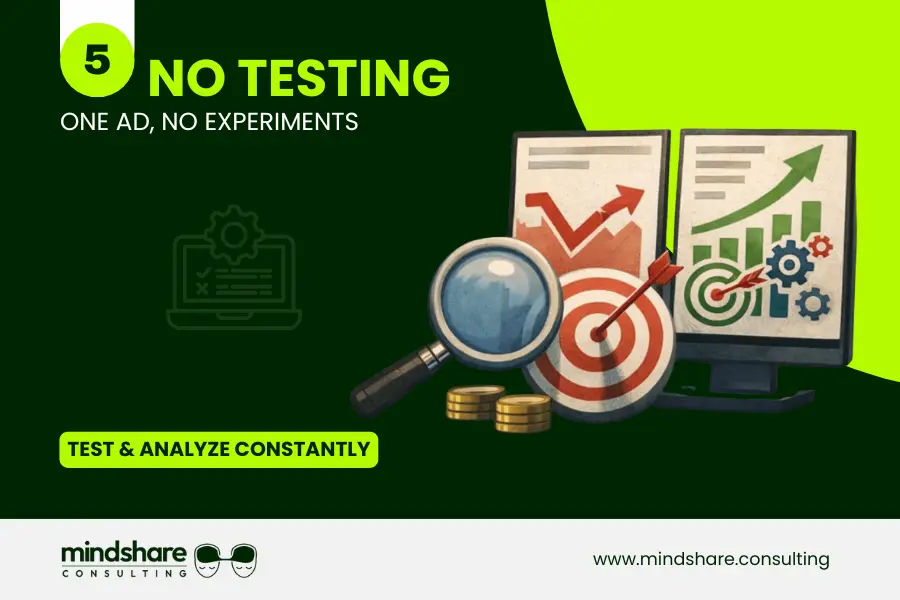
You launched one ad with one creative, one audience, and one message. It did not work, so you concluded Meta ads do not work.
The Fix: Implement systematic testing frameworks. Test 3-5 creative variations per campaign Test multiple audiences simultaneously Test different ad copy angles Test placement optimization Test various offers and calls-to-action Run A/B tests on landing pages Test campaign budget optimization strategies
Problem 6: You Are Measuring Vanity Metrics Instead of Business Results
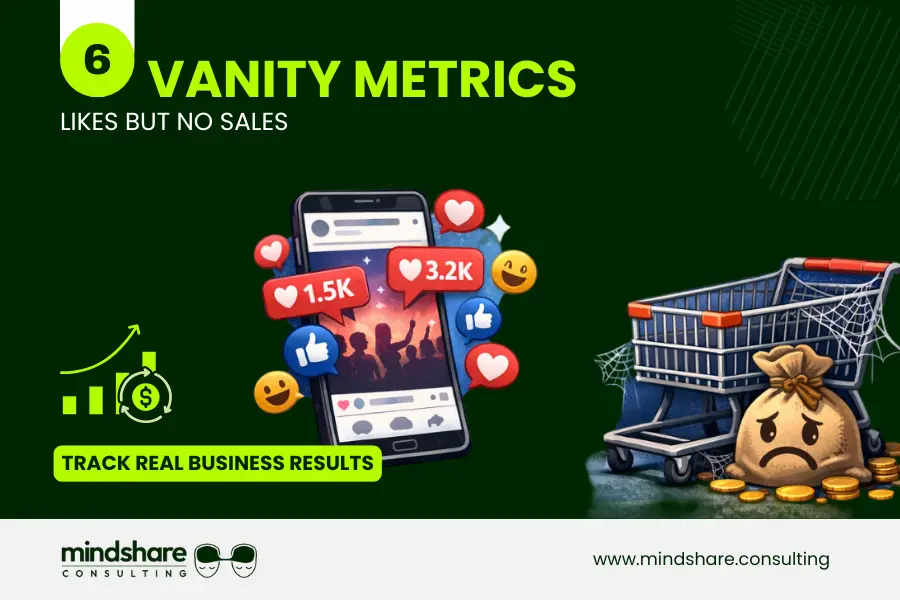
Your dashboard shows impressive numbers. 10,000 impressions! 500 clicks! 200 engagements! But zero sales. Zero qualified leads. Zero revenue.
The Fix: Track metrics that actually matter to business growth.
Vanity Metrics (impressive but meaningless): Impressions Reach Engagement rate Video views Page likes
Business Metrics (actual performance indicators): Cost per acquisition (CPA) Return on ad spend (ROAS) Customer lifetime value (CLV) Lead quality scores Revenue attributed to campaigns Marketing efficiency ratio (MER)
Use Google Analytics 4 and Meta’s conversion tracking to measure complete customer journeys from impression to purchase to repeat purchase.
Proven Meta Ads Strategies That Deliver Real Results
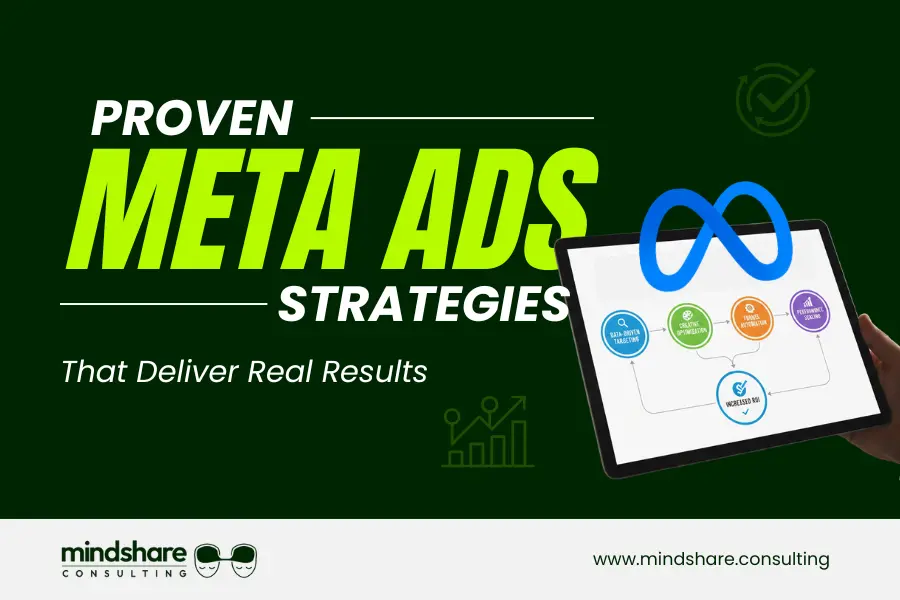
These strategies work consistently across industries and business sizes.
1. Implement the Full-Funnel Campaign Structure
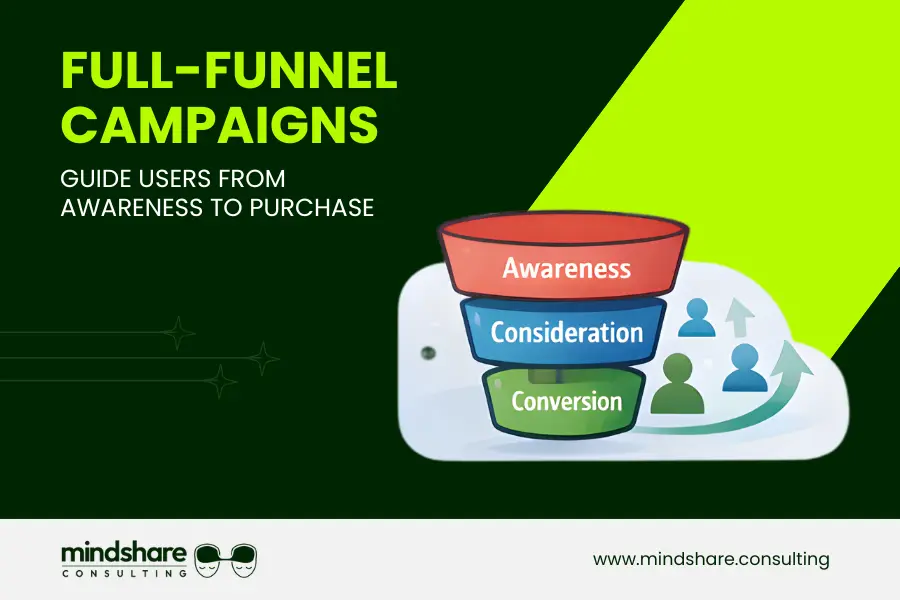
Stop running only conversion campaigns targeting cold audiences. Build complete funnel systems that move prospects through awareness, consideration, and decision stages.
Full-Funnel Structure Top of Funnel (Awareness) Objective: Reach or Brand awareness Audience: Broad interest targeting, demographic targeting Creative: Educational content, problem identification, brand introduction
Goal: Build awareness and pixel data
Middle of Funnel (Consideration) Objective: Traffic or Engagement Audience: Website visitors (last 30-90 days), video viewers, engagers Creative: Case studies, product demonstrations, comparison content
Goal: Build consideration and retargeting pools
Bottom of Funnel (Conversion) Objective: Conversions or Lead generation Audience: Website visitors (last 7-30 days), engaged users, cart abandoners Creative: Direct offers, urgency elements, social proof, guarantees
Goal: Drive conversions and sales
This structure allows Meta’s algorithm to optimize appropriately at each stage rather than forcing cold audiences directly to conversion actions.
2. Master the Conversions API for Accurate Tracking
iOS 14.5 limitations do not disappear, but Conversions API minimizes their impact.
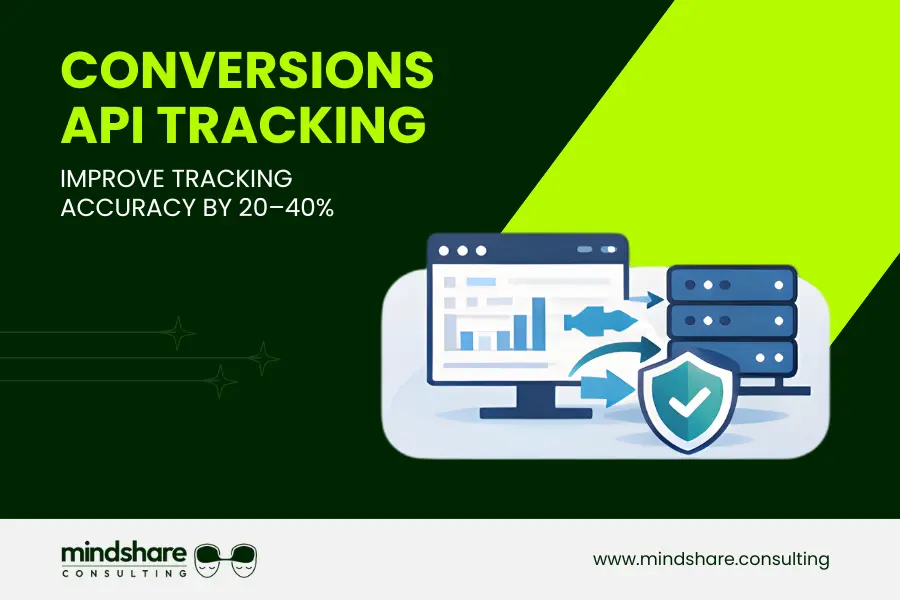
What Is Conversions API: Server-side tracking that sends conversion data directly from your website server to Meta, bypassing browser-based tracking limitations.
Implementation Benefits: Improves conversion tracking accuracy by 20-40% Enhances campaign optimization signals Reduces cost per acquisition Increases attributed conversions Extends attribution windows
How to Implement: Use Meta’s Conversions API documentation for technical setup Install through platforms like Shopify, WordPress, or custom integration Combine with Facebook Pixel for maximum data collection Validate implementation using Meta’s Event Manager testing tools
Businesses implementing Conversions API see immediate improvements in campaign performance because Meta’s algorithm receives better optimization signals.
Pro Tip: Implement Enhanced Match alongside Conversions API to improve customer matching rates by hashing email addresses and phone numbers sent to Meta. This improves retargeting accuracy.
3. Use Dynamic Creative Testing at Scale
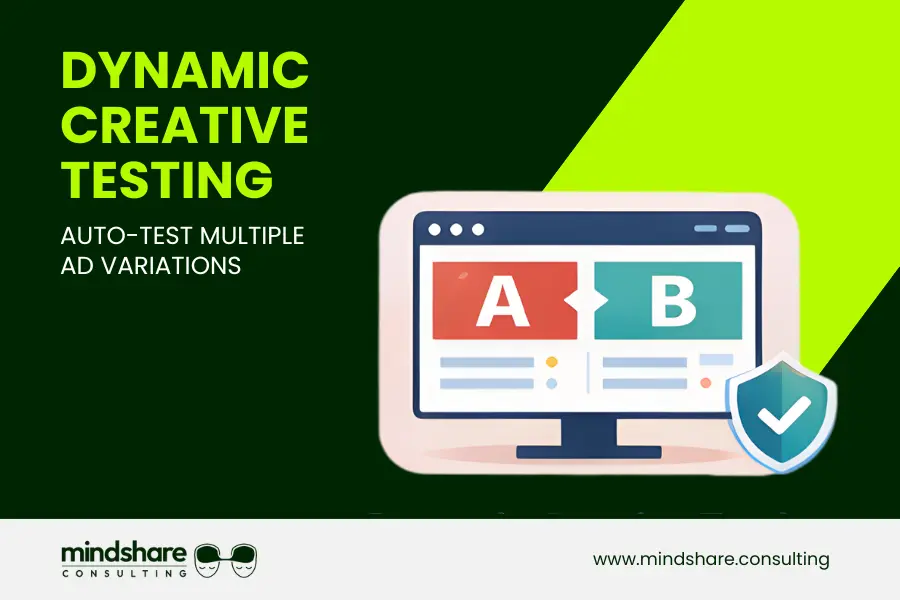
Stop creating one ad and hoping it works. Dynamic creative allows Meta to automatically test multiple creative elements and serve the best-performing combinations.
How Dynamic Creative Works: Upload 5-10 image or video variations Write 3-5 headline variations Create 3-5 description variations Include 2-3 call-to-action variations
Meta’s algorithm tests combinations automatically and allocates budget to top performers.
Expected Results: 30-50% improvement in engagement rates 20-35% reduction in cost per conversion Faster campaign learning periods Continuous creative optimization without manual intervention.
4. Leverage Advantage+ Shopping Campaigns for E-commerce
Meta’s Advantage+ Shopping campaigns use machine learning to automate targeting, creative, and placement optimization specifically for e-commerce.
Key Features: Automated audience targeting using Meta’s AI Up to 150 creative combinations tested automatically Optimized placement across Facebook, Instagram, Messenger, and Audience Network Streamlined campaign structure requiring minimal setup
When to Use Advantage: E-commerce businesses with product catalogs Sufficient conversion data (50+ conversions per week minimum) Budget flexibility for algorithm learning phase
5. Implement Retargeting Sequences Based on Behavior
Stop treating all website visitors the same. Build sophisticated retargeting sequences that respond to specific user behaviors.
Retargeting Sequence Structure
- Day 1-3: Product viewers who did not add to cart Creative: Product benefits, alternative uses, testimonials Offer: Free shipping or small discount
- Day 4-7: Cart abandoners Creative: Urgency messaging, scarcity elements, social proof Offer: Limited-time discount or bonus
- Day 8-14: Multiple page viewers showing high intent Creative: Comparison content, FAQ addressing objections Offer: Live chat support, consultation booking
- Day 15-30: Engaged users not converting Creative: Different product recommendations, brand story Offer: Alternative entry products, payment plans
This behavioral segmentation allows personalized messaging that converts significantly better than generic retargeting ads.
6. Optimize Creative for Mobile-First Experience
Mobile-First Creative Requirements Video format: 9:16 (vertical Stories/Reels) or 1:1 (square Feed) Text: Large, readable fonts on small screens Hook: Compelling first 3 seconds before scroll Captions: Always include for sound-off viewing CTA: Prominent, thumb-friendly button placement Load time: Compressed file sizes for fast delivery
Test creative specifically on mobile devices before launching. Desktop preview does not reveal mobile user experience issues.
7. Use Value-Based Lookalike Audiences
Standard lookalike audiences find people similar to your customers. Value-based lookalikes find people similar to your highest-value customers.
How to Create Value-Based Lookalikes: Export customer data including purchase values Upload customer list with lifetime value data to Meta Create lookalike audiences based on top 25% of customers by value Target these lookalikes with higher-ticket offers
This strategy focuses Meta’s algorithm on finding customers likely to generate significant revenue, not just any customer.
Expected Results: Higher average order values from new customers Better return on ad spend Improved customer lifetime value Lower overall customer acquisition cost relative to revenue
8. Implement Campaign Budget Optimization Correctly
Campaign Budget Optimization (CBO) allows Meta’s algorithm to distribute budget across ad sets automatically.
CBO Best Practices: Use CBO for campaigns with 2-5 ad sets testing similar audiences Set minimum ad set spend limits to ensure testing occurs Allow 3-7 days learning period before optimization judgments Combine with dynamic creative for maximum automation efficiency Monitor performance at ad set level despite automated budget allocation
When Not to Use CBO: Testing dramatically different audiences Campaigns requiring specific budget allocation control Very small daily budgets under $50
According to Meta’s CBO documentation, proper CBO implementation reduces cost per result by 10-20% through algorithmic budget optimization.
Real Business Results From Corrected Meta Ads Strategy
E-commerce Fashion Brand Turnaround
A women’s clothing brand was spending $8,000 monthly on Meta ads with 0.8x ROAS (losing money on every sale).
Problems Identified: Broad targeting to “women interested in fashion” Single generic product photo ads Traffic campaign objective instead of Conversions No retargeting sequences Desktop-optimized landing page
Strategy Changes Implemented: Created full-funnel campaign structure Implemented dynamic creative with 8 video variations Switched to Advantage+ Shopping campaigns Built behavioral retargeting sequences Rebuilt mobile-first landing page experience Installed Conversions API for better tracking
Results After 90 Days: ROAS increased from 0.8x to 4.2x Cost per acquisition decreased 67% Average order value increased 23% Monthly revenue from Meta ads: $33,600 (from $6,400) Total ad spend: $8,000 (same budget) Net profit improvement: $27,200 monthly.
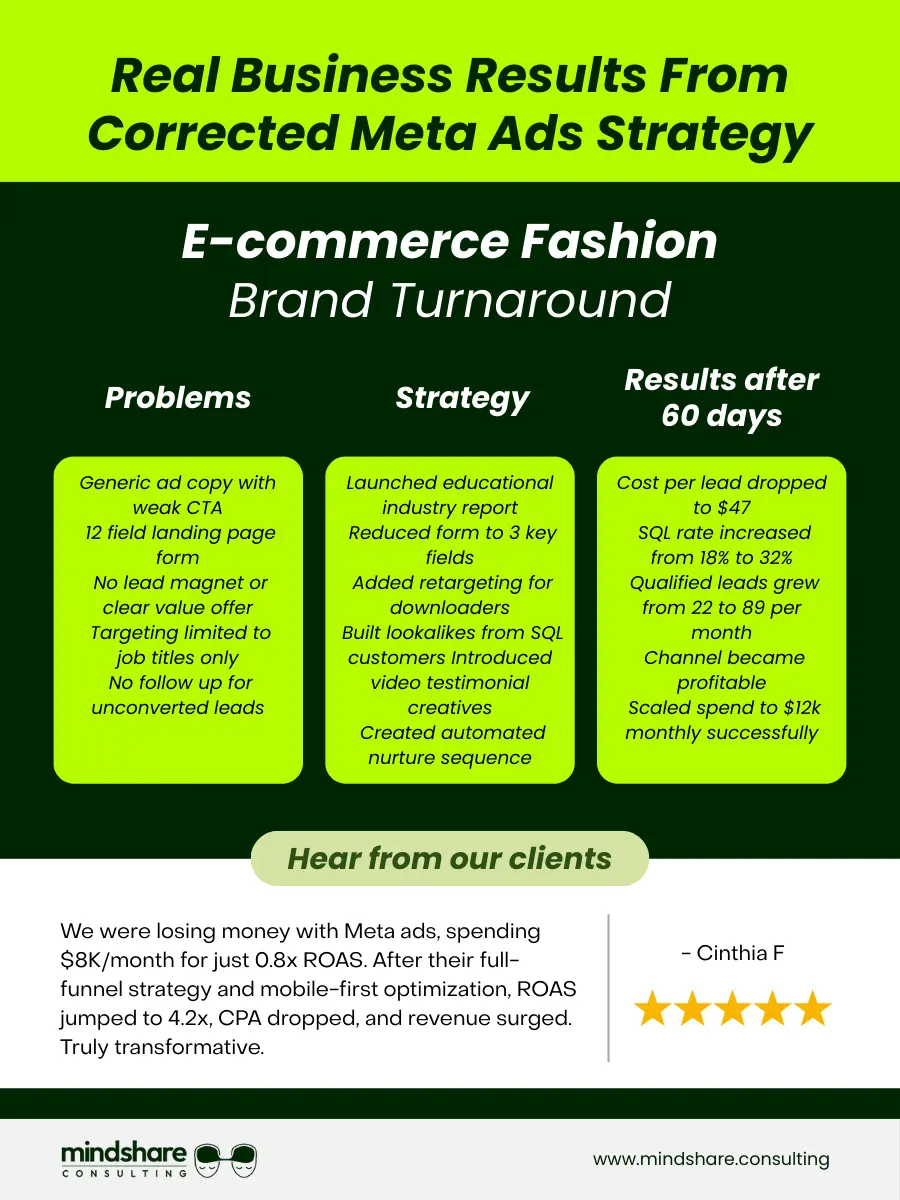
B2B SaaS Lead Generation Success
A B2B software company was generating leads at $185 cost per qualified lead (CPL) from Meta ads, making the channel unprofitable.
Problems Identified: Generic “Learn More” ad copy Landing page with 12-field form No lead magnet or value proposition Targeting job titles only (limited audience) No nurture sequence for unconverted leads
Strategy Changes Implemented: Created educational lead magnet (industry report) Reduced form to 3 fields (name, email, company) Built retargeting campaign for report downloaders Used lookalike audiences from SQL customers Implemented video testimonials in ad creative Created nurture campaign for unconverted leads
Results After 60 Days: Cost per lead reduced to $47 (74% decrease) Lead quality score increased (32% became SQLs vs 18% previously) Monthly qualified leads: 89 (from 22) Meta ads became profitable lead generation channel Campaign scaled to $12,000 monthly budget profitably
Local Service Business Growth
A home services company was spending $3,000 monthly on Meta ads generating 4-6 unqualified leads monthly.
- Problems Identified: Geographic targeting too broad (entire state) No call tracking implementation Generic stock images instead of real work photos No social proof in ad creative Landing page lacked local trust signals
- Strategy Changes Implemented: Narrowed targeting to 25-mile service radius Implemented call tracking integration Created before/after video content of real projects Added customer video testimonials to ads Built location-specific landing pages Set up Google My Business integration
- Results After 45 Days: Qualified leads increased to 38 monthly (from 5) Cost per lead decreased from $500-600 to $79 Conversion rate to booked jobs: 42% Monthly revenue from Meta ads: $47,200 ROAS: 15.7x Scaled budget to $7,500 monthly profitably
These results are typical when businesses fix strategic problems rather than blaming the advertising platform.
Your 90-Day Meta Ads Optimization Plan
Month 1: Foundation and Tracking
- Week 1-2: Install Facebook Pixel correctly on all website pages Set up Conversions API integration Implement Enhanced Match Verify tracking accuracy in Events Manager Connect Google Analytics 4 with UTM parameters
- Week 3-4: Create custom audiences (website visitors, engagers, customer lists) Build initial lookalike audiences from customer data Audit current campaign structure and performance Document baseline metrics (CPA, ROAS, CTR, conversion rate)
Month 2: Strategic Campaign Launch
- Week 5-6: Launch full-funnel campaign structure (awareness, consideration, conversion) Implement dynamic creative testing with 5+ variations Set up behavioral retargeting sequences Begin systematic A/B testing program
- Week 7-8: Optimize landing pages for mobile experience Reduce form friction based on user behavior data Monitor learning phase completion Make initial optimization adjustments based on data
Month 3: Scaling and Refinement
- Week 9-10 Scale winning ad sets by 20-30% Launch additional creative variations Expand audience testing to new segments Implement value-based lookalike audiences
- Week 11-12 Analyze complete funnel performance Calculate true customer acquisition cost including LTV Document winning creative patterns and audience insights Build quarterly optimization roadmap
Ongoing Optimization
Review performance metrics weekly Test new creative concepts monthly Refresh audiences quarterly Audit tracking accuracy monthly Conduct competitive research quarterly
Measuring Meta Ads Success Correctly
Track these metrics at each funnel stage:
- Awareness Stage Metrics Impressions and reach Cost per thousand impressions (CPM) Frequency Video completion rates Brand lift studies
- Consideration Stage Metrics Click-through rate (CTR) Cost per click (CPC) Landing page bounce rate Time on site Pages per session
- Conversion Stage Metrics Conversion rate Cost per acquisition (CPA) Return on ad spend (ROAS) Customer lifetime value (CLV) Marketing efficiency ratio (MER)
- Business Impact Metrics Monthly recurring revenue from ads Customer acquisition cost payback period Profit margin after ad spend Year-over-year customer growth rate
Conclusion
Meta ads work exceptionally well for businesses that execute strategic campaigns correctly. The platform is not broken. The algorithm is not failing. The opportunity has not disappeared. What has changed is that generic, lazy advertising no longer works. Meta rewards sophisticated strategy with exceptional return on investment.
The businesses succeeding with Meta ads in 2026: Implement proper tracking and attribution systems Build full-funnel campaign structures Test creative systematically and continuously Optimize the complete customer journey Scale intelligently based on data Measure business impact, not vanity metrics
Your competitors are already implementing these Meta ads strategies. Every dollar you waste on failed campaigns is a dollar competitors invest in proven tactics that work.
The choice is simple. Continue blaming Meta ads while competitors grow. Or fix your strategy and capture the massive opportunity Meta advertising still provides.
Your next step is straightforward. Audit your current Meta ads strategy against the frameworks outlined above. Identify gaps. Implement systematically using the 90-day plan provided.
If you need expert guidance implementing Meta ads strategies that actually deliver measurable business results, professional management eliminates trial-and-error and accelerates return on investment.
Check: Why Your Lead Generation Website Must Kill the Homepage for a 270% Conversion Boost
About Mindshare Consulting Inc
At Mindshare Consulting Inc, we specialize in data-driven Meta advertising strategy for businesses frustrated with underperforming campaigns. Our proven frameworks have helped clients achieve 3-7x ROAS consistently across industries through strategic campaign structure, advanced targeting, creative optimization, and conversion funnel improvement.
We manage Meta ads campaigns of all sizes, from local service businesses to e-commerce brands to B2B companies. Our approach focuses on measurable business results, not vanity metrics.
Contact Mindshare Consulting today to discuss how our Meta ads strategies can transform your Facebook and Instagram advertising performance and deliver profitable, scalable customer acquisition.