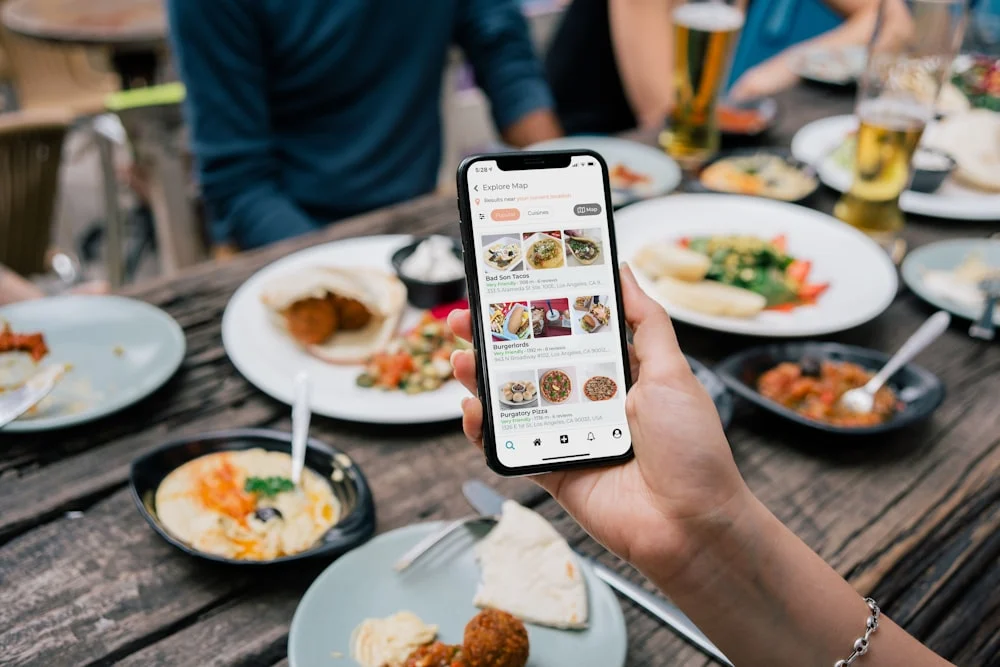
Uber Eats Marketing for Restaurants

Getting a restaurant listed on Uber Eats takes an afternoon. Getting that listing to actually generate a predictable volume of profitable orders takes an ongoing marketing operation, and most restaurant groups never build one. They set up a store, upload a menu, and assume the ap

  • Uber Eats Marketing Specialists
  • Ads Manager & Sponsored Listings Strategy
  • Menu, Promotions & Ranking Optimization
  • Dedicated Support Team
Clients

A Dedicated Uber Eats Marketing Team

    Get Your Free Restaurant Growth Plan

    15-minute strategy call. We’ll show you exactly where you’re losing customers and revenue.

    🔒 No spam. Just real strategies that work.

    ← Swipe to explore →
    Win More Orders

    Turn App Browsing Into Placed Orders

    Sponsored Listings & Ads Manager

    Win the top placements customers actually tap.

    Menu Structure & Naming

    Categories and item names that convert faster scrolls.

    Ratings & Review Management

    Protect the score that drives ranking.

    Multi-Location Rollout

    Consistent menus and promos across every store.

    uber eats marketing for restaurants person holding white and black labeled card
    Protect Your Margin

    Grow Volume Without Discounting It Away

    Offers Built On A Margin Model

    Know the real cost of every promotion before it runs.

    Slow-Period Targeting

    Fill demand gaps without discounting peak hours.

    Acceptance Rate & Ready-Time

    Fix the operational signals that hurt visibility.

    Category & Search Tagging

    Show up in every relevant browse category.

    uber eats marketing for restaurants person taking picture of vegetables
    Turn Orders Into Repeat Customers

    Marketing That Drives Revenue, Not Just Clicks

    In-App Retention Offers

    Bring customers back without needing off-platform data.

    Cross-Channel Bridge

    Move Uber Eats customers to channels you actually own.

    Performance Reporting

    Win first orders efficiently from nearby demand.

    Performance Reporting

    Real Uber Eats Manager data, not vanity metrics.

    uber eats marketing for restaurants blue and brown tote bag
    Why Restaurants Choose Mindshare

    One Partner For Every Part Of Uber Eats Growth

    Marketplace Algorithm Experts

    We know what actually drives ranking inside the app.

    POS & Uber Eats Manager Sync

    Menus and orders stay accurate automatically.

    24×7 Dedicated Support

    A team that understands restaurants.

    Complete Growth Partner

    Setup, ads, promotions, reviews, retention.

    uber eats marketing for restaurants Man smiling while using a tablet in the kitchen.
    Win More Orders

    Turn App Browsing Into Placed Orders

    Sponsored Listings & Ads Manager

    Win the top placements customers actually tap.

    Menu Structure & Naming

    Categories and item names that convert faster scrolls.

    Ratings & Review Management

    Protect the score that drives ranking.

    Multi-Location Rollout

    Consistent menus and promos across every store.

    uber eats marketing for restaurants person holding white and black labeled card
    Protect Your Margin

    Grow Volume Without Discounting It Away

    Offers Built On A Margin Model

    Know the real cost of every promotion before it runs.

    Slow-Period Targeting

    Fill demand gaps without discounting peak hours.

    Acceptance Rate & Ready-Time

    Fix the operational signals that hurt visibility.

    Category & Search Tagging

    Show up in every relevant browse category.

    uber eats marketing for restaurants person taking picture of vegetables
    Turn Orders Into Repeat Customers

    Marketing That Drives Revenue, Not Just Clicks

    In-App Retention Offers

    Bring customers back without needing off-platform data.

    Cross-Channel Bridge

    Move Uber Eats customers to channels you actually own.

    Performance Reporting

    Win first orders efficiently from nearby demand.

    Performance Reporting

    Real Uber Eats Manager data, not vanity metrics.

    uber eats marketing for restaurants blue and brown tote bag
    Why Restaurants Choose Mindshare

    One Partner For Every Part Of Uber Eats Growth

    Marketplace Algorithm Experts

    We know what actually drives ranking inside the app.

    POS & Uber Eats Manager Sync

    Menus and orders stay accurate automatically.

    24×7 Dedicated Support

    A team that understands restaurants.

    Complete Growth Partner

    Setup, ads, promotions, reviews, retention.

    uber eats marketing for restaurants Man smiling while using a tablet in the kitchen.

    Real Results. Real Relationships.

    More than marketing. More than technology. A true restaurant growth partner.

    ExcellentGoogle star 1Google star 2Google star 3Google star 4Google star 55.024 reviews
    5.0Google star 1Google star 2Google star 3Google star 4Google star 5
    Excellent24 reviews
    What We Offer

    Everything You Need for Uber Eats: One Partner, Start to Finish

    Clear deliverables. Tailored to what you actually need.

    01
    Setup & Foundations

    Getting your Uber Eats store set up and structured right from day one.

    Get a Quote
    • Uber Eats Manager account audit, structure, and ongoing configuration
    • Sponsored Listings and Ads Manager campaign management to win search and browse placement
    02
    Full Uber Eats Program

    Turning Ads Manager, promotions, and menu strategy into more orders.

    Get a Quote
    • Store profile, hours, delivery zone, and menu structure setup that reduces order errors
    • Menu optimization and POS sync so the menu stays accurate without manual updates
    03
    Ongoing Support

    Keeping ranking, ratings, and retention improving month over month.

    Get a Quote
    • Offers and promotions calendar planning that grows volume without quietly eating margin
    • Ranking health monitoring tied to ratings, acceptance rate, and order-ready-time accuracy
    +
    Multi-Location / Custom

    For restaurant groups and franchises with custom goals across locations.

    Contact Us
    • Custom strategy across stores
    • Dedicated senior strategist
    • Centralized reporting
    Everything Uber Eats Marketing

    Every Uber Eats Growth Service Under One Roof

    One partner handling setup, ads, menu, promotions, reviews, and retention for restaurants on Uber Eats.

    Uber Eats Marketing for Restaurants

    Getting a restaurant listed on Uber Eats takes an afternoon. Getting that listing to actually generate a predictable volume of profitable orders takes an ongoing marketing operation, and most restaurant groups never build one. They set up a store, upload a menu, and assume the app will do the rest. It won't. Uber Eats is a marketplace with its own search algorithm, its own paid placement auction, and its own ranking signals, and restaurants that don't actively manage all three get buried under competitors who do. Mindshare runs Uber Eats marketing for restaurants as a dedicated discipline, not a side task bolted onto general social media or SEO work.

    • Uber Eats Manager account audit, structure, and ongoing configuration
    • Sponsored Listings and Ads Manager campaign management to win search and browse placement
    • Store profile, hours, delivery zone, and menu structure setup that reduces order errors
    • Menu optimization and POS sync so the menu stays accurate without manual updates
    • Offers and promotions calendar planning that grows volume without quietly eating margin
    • Ranking health monitoring tied to ratings, acceptance rate, and order-ready-time accuracy

    Being Listed on Uber Eats Is Not the Same as Being Found

    Uber Eats ranks restaurants in search and category browse using a mix of factors, and none of them are static. Ratings and review volume feed directly into where a restaurant lands in the results a hungry customer scrolls through. Order-ready-time accuracy and order acceptance rate factor into standing on the platform, because Uber Eats is optimizing for a reliable customer experience, not just restaurant preference.

    Sponsored Listings purchased through Ads Manager can push a restaurant above organic results entirely, which means a restaurant with a mediocre organic position can still win the impression if a competitor is paying for placement and they aren't. None of this is visible to an owner who logs into Uber Eats Manager once a month to check payouts. It has to be actively managed.

    What Uber Eats Marketing for Restaurants Actually Covers

    When we say "Uber Eats marketing," we mean the full stack of decisions that determine whether a restaurant shows up, gets clicked, and gets ordered from repeatedly. That includes how the store is configured in Uber Eats Manager, how the menu is structured and named, how promotions are timed against slow periods versus peak demand, how sponsored placement budget is allocated across dayparts and categories, and how a restaurant's rating trajectory is protected as order volume scales. Multi-location groups add another layer, since decisions made for one store's Ads Manager campaign or Offers schedule need to be coordinated across every location on the account rather than managed store by store.

    The Eight Parts of a Complete Uber Eats Growth Program

    We break Uber Eats marketing into eight connected services, and most restaurant clients need several of them running at once rather than a single isolated fix. Uber Eats Marketing and Advertising covers Ads Manager campaigns and Sponsored Listings strategy. Uber Eats Store Setup covers the foundational Uber Eats Manager configuration, delivery zones, hours, and store profile work that everything else depends on. Uber Eats Menu Optimization covers menu structure, item naming, categorization, and POS sync.

    Uber Eats Promotions Strategy covers how and when to run Offers like percentage-off deals, BOGO, and free delivery without destroying margin. Uber Eats Ratings and Reviews Management covers protecting and improving the rating that drives ranking. Uber Eats Multi-Location Management covers coordinating campaigns, menus, and promotions across a restaurant group's stores from one account. Uber Eats Performance Analytics and Reporting covers turning Uber Eats Manager's raw metrics into decisions. And Uber Eats Customer Retention Strategy covers converting first-time delivery customers into repeat ones.

    Choosing Which of the Eight Services to Start With

    Few clients need all eight services at full intensity on day one, and starting everywhere at once tends to dilute results rather than accelerate them. We prioritize based on where the audit shows the biggest gap between current performance and what the store is capable of, not based on a fixed package.

    A store with a strong rating but a disorganized Ads Manager account gets advertising fixed first, since the fundamentals are already sound and paid spend is simply being wasted. A store with a declining rating gets ratings and fulfillment issues addressed before any ad spend increase, since pouring more visibility into a weakening experience only accelerates the decline. A newly added location in a multi-location group usually starts with store setup and menu standardization before anything else, since campaigns and promotions built on a shaky foundation rarely perform.

    How Visibility and Ranking Work Inside the App

    A customer opening Uber Eats sees a ranked list before they see a single menu item. That ranking blends organic signals (ratings, popularity, delivery reliability) with paid signals (Sponsored Listings bids placed through Ads Manager). A restaurant that ignores both is invisible to a large share of nearby demand, regardless of how good the food is. We treat the organic and paid sides as one system: cleaning up store setup and menu structure to strengthen organic standing, then layering Ads Manager spend on top to fill in the gaps during launch periods, slow dayparts, or high-competition categories.

    What Working With Mindshare Looks Like

    Engagements typically start with a full Uber Eats Manager audit covering store setup, menu structure, current ratings trend, and any existing ad spend. From there we prioritize based on where the biggest gap is, sometimes it's a menu that's actively costing orders through poor categorization, sometimes it's an Ads Manager account burning budget on the wrong placements, sometimes it's a promotions calendar that's been running the same discount every week regardless of demand. We report against real Uber Eats Manager metrics, not vanity numbers, and we adjust monthly as ranking factors and order patterns shift.

    Common Mistakes That Quietly Sink an Uber Eats Account

    Most of the accounts we take over share the same handful of problems, just in different combinations. Below are the mistakes we see most often, roughly in order of how much damage they tend to cause.

    • Treating the listing as "set it and forget it." A store configured once at onboarding and never revisited drifts out of sync with real hours, real fulfillment capacity, and real menu availability within a few months.
    • Running Sponsored Listings without checking organic health first. Paying to boost visibility for a store with a weak rating or inconsistent order-ready times means paying to send more customers into a shaky experience, which shows up as a worse cost per order rather than a better one.
    • Letting one manager own the entire Uber Eats Manager account with no documented process. When that manager moves on, the reasoning behind the delivery zone, hours, or promotions calendar disappears with them.
    • Reacting to a single bad week instead of a trend. A slow week or one bad review triggers a panic discount or rushed menu change, when the actual driver was a staffing gap or a supplier issue that a promotion won't fix.
    • Ignoring acceptance rate until it's already hurting rank. Acceptance rate and order-ready-time accuracy move slowly, so by the time an owner notices reduced visibility, the underlying pattern has usually been building for weeks.

    Sponsored Listings vs Organic Ranking, What Each Lever Actually Controls

    Owners often ask whether they should just buy their way into visibility or focus entirely on fixing fundamentals. The honest answer is that the two levers control different things on different timelines, which is why we manage them together instead of picking one over the other.

    FactorSponsored Listings (paid)Organic ranking (unpaid)
    Speed to impactImmediate, live as soon as a campaign is activeBuilds over weeks to a full quarter as ratings and order history accumulate
    What drives itBid competitiveness, budget, category and daypart targetingRatings, review volume, acceptance rate, order-ready-time accuracy
    Cost structureOngoing spend, tied to impressions or acquired ordersNo direct spend, but requires ongoing operational discipline
    DurabilityDisappears the moment spend stopsPersists and compounds as long as fundamentals stay strong
    Best used forNew store launches, slow dayparts, high-competition categoriesLong-term cost efficiency and reducing dependence on ad spend

    How We Audit a New Uber Eats Account

    Every new client engagement starts with the same structured audit, regardless of how long the store has been live. It's the fastest way to find out whether the biggest opportunity is in setup, menu, ratings, or ad spend, rather than guessing.

    1. Pull the full order history and rating trend from Uber Eats Manager for at least the trailing 90 days.
    2. Check acceptance rate and order-ready-time accuracy against typical benchmarks for the store's category.
    3. Review delivery zone boundaries against actual fulfillment performance at the edges of that zone.
    4. Audit menu category order, item naming, and modifier structure for obvious friction points.
    5. Review any active or recent Ads Manager campaigns for spend efficiency and targeting logic.
    6. Check whether POS integration is live and whether availability updates actually flow through automatically.
    7. Review the promotions history for stale offers still running on autopilot.
    8. Summarize findings into a prioritized list, ranked by expected impact against effort to fix.

    What a Monthly Reporting Cycle Actually Includes

    Reporting only matters if it changes what happens next, so we build every reporting cycle around decisions rather than a dashboard export. Each month, we pull order volume, acceptance rate, order-ready-time accuracy, rating trend, and Ads Manager spend efficiency directly from Uber Eats Manager and compare them against the prior month and the same period a year earlier where the data exists.

    From there, we flag whatever moved outside its normal range, a rating dip, a spike in canceled orders in one delivery zone, a category where cost per acquired order jumped, and turn that into a short list of specific changes for the coming month. Owners get a plain-language summary, not a raw metrics dump they have to interpret themselves.

    Multi-Location Coordination, What Changes as You Add Stores

    A single-location Uber Eats account is a manageable amount of surface area for one person to watch closely. Add a second, third, or tenth location, and the same tasks, menu consistency, promotions timing, ad spend allocation, multiply across every store while the hours in a week stay fixed. That's the point where informal management, one person checking each store when they get a chance, reliably breaks down.

    ConsiderationSingle locationMulti-location group
    Menu consistencyOne structure to maintainA shared standard applied across every store, with room for local item differences
    Ad spend allocationOne budget, one set of local daypartsBudget split across stores with different local competition and demand patterns
    Promotions calendarBuilt around one store's demand gapsA shared framework, with timing and depth tailored per location
    ReportingOne set of monthly numbersStore-by-store numbers rolled up so underperforming locations don't hide in a group average

    How Ratings Recovery Works When Standing Has Already Slipped

    Some clients come to us after a rating has already dropped, not before. Recovery in that situation is slower and more deliberate than prevention would have been, since a rating built from months of order history doesn't reset with a single good week. The first move is almost always identifying what actually drove the decline, a fulfillment issue, an accuracy problem, a stretch of late deliveries, rather than assuming it will simply average back out.

    Once the underlying cause is fixed, the rating recovers gradually as new, better orders accumulate and older, weaker ones age out of the trailing window Uber Eats weighs most heavily. We set realistic timelines with clients during this phase, since promising a fast turnaround on a metric that's mechanically slow to move sets the engagement up for a frustrating conversation later.


    Let's Build Your Uber Eats Uber Eats Marketing Plan

    Mindshare runs Uber Eats marketing for restaurants, covering Ads Manager campaigns, store setup, menu optimization, and promotions that protect your margin.

    Free Strategy Session

    Custom Growth Plan

    Competitor Analysis

    Revenue-Focused Recommendations

    Frequently Asked Questions

    Yes. POS marketing and delivery marketplace marketing solve different problems. Your POS system doesn't control how you rank in Uber Eats search results, whether Sponsored Listings are working, or how your Offers calendar is structured. Third-party delivery platforms have their own algorithms and their own paid placement systems that need separate, dedicated management.

    We configure and maintain store settings, build and manage Ads Manager and Sponsored Listings campaigns, structure and update the menu, plan the Offers and promotions calendar, and monitor the metrics that affect ranking, including ratings, acceptance rate, and order-ready-time accuracy.

    No. We focus entirely on the marketing side, driving more qualified orders, improving ranking, and running profitable promotions. We don't negotiate commission tiers or handle payout disputes with Uber Eats directly, as that's a contractual matter between the restaurant and the platform.

    No. Our menu work is optimization, structuring categories, writing item names and descriptions that convert, and syncing the menu to your POS so it never drifts out of date. Photography is a separate discipline outside our Uber Eats marketing scope.

    Yes. Multi-location groups manage every store from a single Uber Eats Manager account, and we build campaigns, promotions calendars, and menu standards that work across that whole account rather than treating each store as an isolated project.

    Store setup and menu structure fixes can affect order accuracy and conversion within the first couple of weeks. Ranking improvements tied to ratings and Sponsored Listings performance build over a longer horizon, typically a full quarter, since Uber Eats' ranking signals respond to sustained patterns, not single-week spikes.

    Jay Mehta, Founder and Growth Partner at Mindshare Consulting
    20+Years
    Meet Your Growth Partner

    Meet Jay Mehta

    Founder & Growth Partner, Mindshare Consulting Inc.

    For more than 20 years, Jay has helped businesses grow through marketing, technology, automation, and customer acquisition. Today he leads Mindshare Consulting's approach to restaurant delivery marketplace marketing, applying that same discipline to how restaurants compete for visibility and orders on Uber Eats.

    20+Years Experience
    250+Projects Delivered
    Third-Party OrderingIndustry Focus
    AI-PoweredSmarter Marketing
    “

    Getting listed on Uber Eats isn’t the goal. Getting found, ranked, and reordered from is, and that takes an actual marketing program, not a one-time setup.

    Jay Mehta, Founder
    © 2026. All rights reserved by Mindshare Consulting Inc