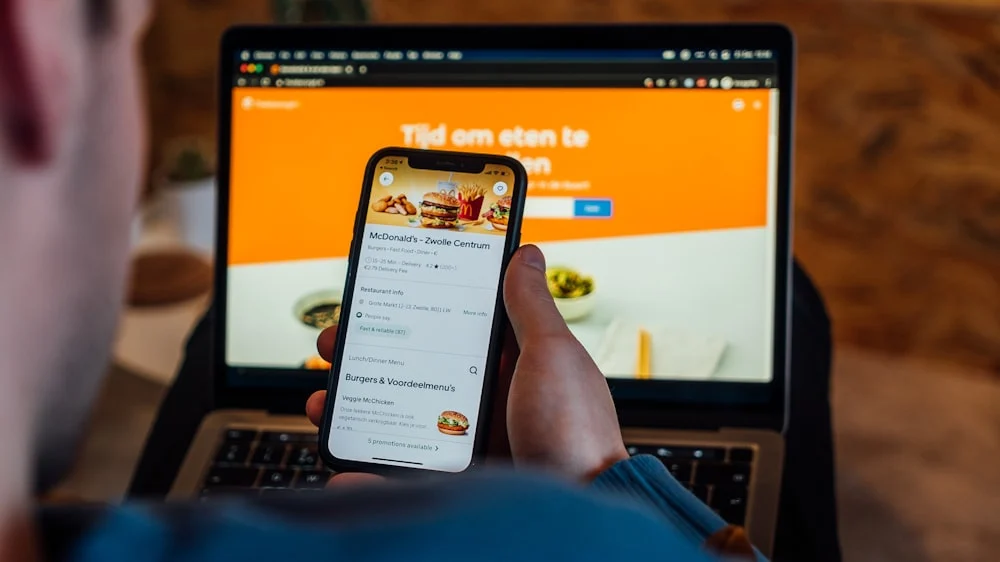
Grubhub Review Management and Customer Retention

Grubhub review management matters more than most restaurants realize because star rating and review recency directly feed Grubhub’s ranking algorithm, a slipping rating doesn’t just look bad to browsing diners, it actively suppresses your visibility in search and category results, and it costs you the repeat orders retention work depends on.

  • Grubhub Marketing Specialists
  • Sponsored Listings & Grubhub+ Strategy
  • Menu, Promotions & Ranking Optimization
  • Dedicated Support Team
Clients

A Dedicated Grubhub Marketing Team

    Get Your Free Restaurant Growth Plan

    15-minute strategy call. We’ll show you exactly where you’re losing customers and revenue.

    🔒 No spam. Just real strategies that work.

    ← Swipe to explore →
    Win More Orders

    Turn Grubhub Visibility Into Placed Orders

    Marketing & Advertising

    Win the placements customers actually tap.

    Menu Optimization

    Structure that converts faster scrolls.

    Multi-Location Management

    Protect the score that drives ranking.

    In-App Visibility

    Consistent execution across every store.

    grubhub review management Man smiling while using a tablet in the kitchen.
    Protect Your Margin

    Grow Volume Without Discounting It Away

    Promotions Strategy

    Know the real cost of every promotion before it runs.

    Slow-Period Targeting

    Fill demand gaps without discounting peak hours.

    Store Setup

    Fix the operational signals that hurt visibility.

    Retention & Loyalty

    Show up in every relevant category.

    grubhub review management person holding white samsung galaxy smartphone
    Turn Orders Into Repeat Customers

    Marketing That Drives Revenue, Not Just Clicks

    Retention & Loyalty

    Bring customers back without needing off-platform data.

    Cross-Channel Bridge

    Move platform customers to channels you actually own.

    Performance Reporting

    Win first orders efficiently from nearby demand.

    Performance Reporting

    Real Grubhub data, not vanity metrics.

    grubhub review management a person using a cell phone while driving a car
    Why Restaurants Choose Mindshare

    One Partner For Every Part Of Growth

    Grubhub Algorithm Experts

    We know what actually drives ranking inside Grubhub.

    POS Sync

    Menus and orders stay accurate automatically.

    24×7 Dedicated Support

    A team that understands restaurants.

    Complete Growth Partner

    Setup, ads, promotions, reviews, retention.

    grubhub review management person taking picture of the foods
    Win More Orders

    Turn Grubhub Visibility Into Placed Orders

    Marketing & Advertising

    Win the placements customers actually tap.

    Menu Optimization

    Structure that converts faster scrolls.

    Multi-Location Management

    Protect the score that drives ranking.

    In-App Visibility

    Consistent execution across every store.

    grubhub review management Man smiling while using a tablet in the kitchen.
    Protect Your Margin

    Grow Volume Without Discounting It Away

    Promotions Strategy

    Know the real cost of every promotion before it runs.

    Slow-Period Targeting

    Fill demand gaps without discounting peak hours.

    Store Setup

    Fix the operational signals that hurt visibility.

    Retention & Loyalty

    Show up in every relevant category.

    grubhub review management person holding white samsung galaxy smartphone
    Turn Orders Into Repeat Customers

    Marketing That Drives Revenue, Not Just Clicks

    Retention & Loyalty

    Bring customers back without needing off-platform data.

    Cross-Channel Bridge

    Move platform customers to channels you actually own.

    Performance Reporting

    Win first orders efficiently from nearby demand.

    Performance Reporting

    Real Grubhub data, not vanity metrics.

    grubhub review management a person using a cell phone while driving a car
    Why Restaurants Choose Mindshare

    One Partner For Every Part Of Growth

    Grubhub Algorithm Experts

    We know what actually drives ranking inside Grubhub.

    POS Sync

    Menus and orders stay accurate automatically.

    24×7 Dedicated Support

    A team that understands restaurants.

    Complete Growth Partner

    Setup, ads, promotions, reviews, retention.

    grubhub review management person taking picture of the foods

    Real Results. Real Relationships.

    More than marketing. More than technology. A true restaurant growth partner.

    ExcellentGoogle star 1Google star 2Google star 3Google star 4Google star 55.024 reviews
    5.0Google star 1Google star 2Google star 3Google star 4Google star 5
    Excellent24 reviews
    What We Offer

    Everything You Need for Grubhub: One Partner, Start to Finish

    Clear deliverables. Tailored to what you actually need.

    01
    Setup & Foundations

    Getting your Grubhub presence set up and structured right from day one.

    Get a Quote
    • Daily review and rating monitoring with alert flags for negative feedback
    • Response templates and workflows tailored to positive, neutral, and negative reviews
    02
    Review Management

    Turning ads, promotions, and content strategy into more orders on Grubhub.

    Get a Quote
    • Root-cause tracking to identify recurring operational issues behind low ratings
    • Recovery strategy for restaurants coming off a rating dip
    03
    Ongoing Support

    Keeping ranking, ratings, and retention improving month over month.

    Get a Quote
    • Review-to-order-experience correlation analysis (delivery time, accuracy, packaging)
    • Staff feedback loops to fix issues at the source, not just respond to symptoms
    +
    Multi-Location / Custom

    For restaurant groups and franchises with custom goals across locations.

    Contact Us
    • Custom strategy across stores
    • Dedicated senior strategist
    • Centralized reporting
    Everything Grubhub Marketing

    Every Grubhub Growth Service Under One Roof

    One partner handling setup, ads, content, promotions, reviews, and retention for restaurants on Grubhub.

    Grubhub Review Management for Restaurants

    Grubhub review management matters more than most restaurants realize because star rating and review recency directly feed Grubhub's ranking algorithm, a slipping rating doesn't just look bad to browsing diners, it actively suppresses your visibility in search and category results. Because Grubhub weights recent reviews more heavily than your all-time average, a bad week can drag down your standing faster than a strong month can repair it. Mindshare builds ongoing review monitoring and response systems designed around that recency weighting, not a reactive "check occasionally" habit.

    • Daily review and rating monitoring with alert flags for negative feedback
    • Response templates and workflows tailored to positive, neutral, and negative reviews
    • Root-cause tracking to identify recurring operational issues behind low ratings
    • Recovery strategy for restaurants coming off a rating dip
    • Review-to-order-experience correlation analysis (delivery time, accuracy, packaging)
    • Staff feedback loops to fix issues at the source, not just respond to symptoms

    Why Recent Reviews Matter More Than Your All-Time Rating

    Grubhub's ranking weighting treats review recency as more meaningful than a flat lifetime average, which means a restaurant's displayed rating and its actual ranking-relevant "current standing" can diverge in ways that surprise owners looking only at the headline star number. A restaurant sitting at a solid 4.5 average built over years of operation can still see ranking suppression if the last two to three weeks brought a cluster of 2- and 3-star reviews tied to a kitchen staffing issue or a delivery partner problem.

    This is precisely why Grubhub review management has to be an ongoing, near-real-time discipline rather than a quarterly glance at the overall number, by the time a slipping average shows up in the headline rating, the ranking damage from recent reviews has often already been done.

    Building a Response Workflow That Actually Helps

    Responding to reviews isn't just a courtesy, a thoughtful, specific response to a negative review demonstrates to future readers that issues get addressed, which measurably softens the damage a bad review does to a hesitant diner deciding whether to order. We build response templates by review category rather than a single generic script: a genuine service or accuracy complaint gets a specific acknowledgment and a concrete resolution offer, a food quality complaint gets routed internally to identify whether it's a one-off or a pattern, and a delivery-time complaint gets checked against actual delivery data before responding, since the issue is sometimes a driver assignment problem outside the restaurant's direct control but still worth addressing transparently.

    Grubhub Review Management, Response Strategy by Review Type

    Review TypeResponse ApproachInternal Action
    5-star, no specific complaintBrief, genuine thank-you responseNone required, log as baseline
    4-star with minor noteAcknowledge the specific note, thank for feedbackFlag for pattern tracking if repeated
    Food quality complaintSpecific acknowledgment, offer to make it rightRoute to kitchen management, check for pattern
    Delivery time/accuracy complaintTransparent acknowledgment, check delivery data firstCross-check against actual fulfillment logs
    1-star with no detailPolite request for detail, invitation to resolve directlyFlag as low-information, monitor for pattern

    Root-Cause Tracking, Fixing the Source, Not Just the Symptom

    A response, no matter how well written, doesn't fix the underlying issue generating negative reviews in the first place. We log every negative review by category, packaging, accuracy, temperature, delivery time, staff interaction, to identify patterns that point to a fixable operational root cause rather than treating each review as an isolated incident.

    A cluster of "cold food" complaints in a two-week window, for example, often traces back to a specific delivery zone edge, a packaging choice that doesn't insulate well for longer trips, or a kitchen timing issue during a particular daypart, each of which has a different fix, and none of which get identified by responding to reviews one at a time without aggregating the pattern.

    Recovering From a Rating Dip

    Restaurants coming to us after a rating drop want to know how fast they can recover, and the honest answer depends on order volume and the severity of the underlying issue. Because recent reviews carry more ranking weight, a resolved operational issue combined with a steady stream of new, genuinely positive reviews can meaningfully dilute a bad stretch within four to eight weeks for a restaurant with healthy order volume, lower-volume restaurants take longer simply because fewer new reviews arrive to outweigh the recent negative cluster.

    We never recommend review-gating or incentivizing only positive reviews, both of which violate Grubhub's and most platforms' review policies and create risk far outweighing any short-term rating benefit; the sustainable path is fixing the operational issue and letting genuine satisfied customers generate the recovery.

    Our Review Management Process

    1. Set up daily monitoring across all Grubhub locations with negative-review alerts
    2. Build response templates by review category and severity
    3. Respond to all reviews within a defined turnaround window, prioritizing negative ones
    4. Log every negative review by root-cause category for pattern tracking
    5. Cross-reference recurring complaint categories against operational data (delivery time, order accuracy)
    6. Route identified operational issues to restaurant management with specific, actionable detail
    7. Track rating trend weekly, watching recency-weighted movement, not just the headline average
    8. Adjust response and operational recommendations based on what's actually moving the trend

    Review Management Across Multiple Locations

    Multi-location restaurant groups need review monitoring that flags issues at the individual store level rather than an averaged, group-wide view that can mask one struggling location behind several strong ones. We track ratings and review categories per location specifically so a pattern developing at one store gets addressed before it drags down that location's search visibility, even while the brand's overall average still looks healthy. This location-level view is also where we typically find the earliest signal of an operational issue, since a single store's rating trend moves faster and more visibly than a blended group-wide average, a detail confirmed against the reporting available in Grubhub's merchant partner tools.

    Common Mistakes Restaurants Make With Grubhub Review Management

    • Checking ratings only occasionally instead of monitoring daily, missing recency-driven ranking damage
    • Responding to negative reviews defensively or not responding at all
    • Treating each negative review as an isolated incident instead of tracking root-cause patterns
    • Attempting to incentivize or gate reviews, risking policy violations for minimal upside
    • Averaging ratings across all locations, masking a struggling individual store
    • Responding to reviews without checking actual operational data first, leading to inaccurate or generic replies

    From Protecting Your Rating to Building Repeat Customers

    Everything above protects the rating that ranking depends on. A Grubhub retention strategy addresses a problem acquisition-focused marketing ignores entirely: winning a first-time Grubhub order is only valuable if that customer orders again, and every repeat order paid through Grubhub Marketplace still carries a commission that a repeat order through your own channel wouldn't. We build retention and loyalty programs specifically designed to convert first-time Grubhub diners into repeat customers, and where possible, migrate loyal repeat customers toward Grubhub Direct or direct ordering channels that preserve more margin per order.

  • First-time customer follow-up and re-engagement offer strategy
  • Repeat-order tracking and customer lifecycle segmentation
  • Grubhub Direct setup and migration strategy for loyal repeat customers
  • Grubhub Corporate Accounts strategy for recurring office-order volume
  • Post-order experience optimization (packaging, order notes, follow-up)
  • Loyalty and rewards program design tied to repeat-order incentives
  • Why Retention Matters More on Grubhub Than It Might Seem

    Every order placed through Grubhub Marketplace carries a commission, which means a restaurant's genuine profitability on delivery orders improves substantially when a customer's second, third, and tenth order cost less to acquire than the first one did, or when that customer eventually orders directly rather than through the Marketplace at all. A retention-focused Grubhub strategy treats the first order not as the finish line but as the actual starting point of the customer relationship, since acquisition marketing has already done its job getting that first order and the review and rating work above protects the reputation that supports it; what happens after determines whether the acquisition spend was actually worth it.

    The First 72 Hours After a First-Time Order

    The window immediately following a first Grubhub order is the highest-leverage moment for retention, because a customer's experience with your food, packaging, and delivery timing while that first impression is still fresh determines whether they'll consider you again the next time they're choosing where to order. We work with clients on post-order experience details that seem small individually but compound: packaging that keeps food at the right temperature and presentation for the actual delivery distance involved, an order note or insert encouraging a return visit or introducing a loyalty program, and prompt attention to any negative review or complaint that surfaces in that early window, exactly the response workflow described above, since a poorly handled first-order problem essentially guarantees no second order.

    Grubhub Retention Strategy, Customer Lifecycle Stages

    Customer StagePrimary GoalRecommended Tactic
    First-time customerDeliver a strong first experiencePackaging quality, order accuracy, prompt fulfillment
    Second-order window (7-30 days)Convert trial into a habitLight retention offer, order note encouraging return visit
    Repeat customer (3+ orders)Deepen loyalty, reduce discount dependencyLoyalty perks, smaller/less frequent discounts
    Loyal repeat customerMigrate toward margin-preserving channelsIntroduce Grubhub Direct or direct ordering incentive
    Office/corporate customerCapture recurring bulk order volumeGrubhub Corporate Accounts enrollment and promotion

    Migrating Loyal Customers Toward Grubhub Direct

    Grubhub Direct lets restaurants embed commission-free ordering on their own website while still using Grubhub's fulfillment network, which makes it a natural next step for customers who've already ordered from you repeatedly through the Marketplace and clearly like your food enough to keep coming back. We don't recommend trying to push every first-time Grubhub customer toward Direct immediately, that undermines the discovery value Grubhub's Marketplace provides in the first place, but for genuinely loyal repeat customers, a targeted nudge toward ordering directly (often paired with an exclusive direct-only perk) preserves margin on orders that would otherwise continue carrying full Marketplace commission indefinitely.

    Grubhub Corporate Accounts, An Overlooked Retention Channel

    Grubhub Corporate Accounts let companies set up group ordering for their employees, and for restaurants near office districts, this represents a genuinely different and often more resilient order pattern than typical consumer Marketplace traffic, office lunch ordering tends to be recurring, predictable, and less price-sensitive than a one-off consumer craving decision. We help restaurants position their menu and profile to attract this channel specifically, since Corporate Account orders function almost like a built-in retention mechanism: once an office adopts your restaurant as a regular lunch option, order frequency from that account tends to be considerably stickier than typical individual consumer ordering patterns.

    Designing a Loyalty Program That Fits Grubhub's Structure

    Traditional restaurant loyalty programs built around a punch card or app-based points system don't translate directly onto a third-party marketplace where the restaurant doesn't own the full customer relationship or contact information. We design loyalty approaches that work within this constraint, order-note-based rewards redeemable on a next Grubhub order, milestone-based perks triggered after a customer's third or fifth order, and where a customer has migrated to Grubhub Direct or a direct channel, a more traditional points or rewards structure that requires direct customer contact information to function properly.

    Our Retention and Loyalty Process

  • Segment order history into first-time, second-order-window, and repeat customer cohorts
  • Audit current repeat-order rate and time-to-second-order as baseline metrics
  • Improve post-order experience details (packaging, order notes, follow-up)
  • Design and test a second-order-window re-engagement offer
  • Build a milestone-based loyalty structure for repeat customers
  • Identify loyal repeat customers as candidates for Grubhub Direct migration
  • Set up or optimize Grubhub Corporate Accounts enrollment where relevant
  • Track repeat-order rate and Direct migration rate monthly as core retention KPIs
  • Measuring Retention the Right Way

    Repeat-order rate alone doesn't tell the whole story, so we track it alongside time-to-second-order (how quickly a first-time customer places a second order), average orders per customer over a rolling 90-day window, and, for restaurants pursuing Direct migration, the percentage of repeat Marketplace customers who've moved some or all of their ordering to a direct channel. These combined metrics give a much clearer picture of whether retention efforts are genuinely working than order volume alone, which can rise or fall for reasons entirely unrelated to how well repeat customers are being retained, or how well the rating and review work above is holding up. Restaurants building out Grubhub Direct or Corporate Accounts for the first time can find current program details through Grubhub's merchant partner portal.

    Common Mistakes Restaurants Make With Grubhub Retention

  • Treating every Grubhub order as a one-time transaction instead of tracking customer lifecycle
  • Ignoring the first 72 hours after a first order, missing the highest-leverage retention window
  • Offering the same discount depth to loyal repeat customers as brand-new first-time customers
  • Never introducing loyal customers to Grubhub Direct, leaving margin on the table indefinitely
  • Overlooking Grubhub Corporate Accounts as a source of recurring, less price-sensitive order volume
  • Measuring retention success by order volume alone instead of repeat-order rate and time-to-second-order


  • Let's Build Your Grubhub Reviews Plan

    Grubhub review management for restaurants, rating monitoring, response strategy, and recovery workflows that protect ranking and repeat orders.

    Free Strategy Session

    Custom Growth Plan

    Competitor Analysis

    Revenue-Focused Recommendations

    Frequently Asked Questions

    Because Grubhub weights recent reviews more heavily than your all-time average, the ranking impact can show up within days to a couple of weeks, especially if several negative reviews cluster in a short window. This is why daily monitoring matters more than a periodic check, the damage compounds quickly if a root cause isn't identified and addressed fast.

    Responding to negative and neutral reviews should be a firm priority given the ranking and conversion stakes, and responding to positive reviews with a brief, genuine thank-you is good practice but lower urgency. We prioritize turnaround time on negative reviews specifically since those carry the most reputational and ranking risk if left unaddressed.

    No, incentivizing or gating reviews violates Grubhub's platform policies and most delivery platforms' terms, and the risk of penalty far outweighs any short-term rating benefit. The sustainable approach is resolving the underlying issue that generated the complaint and letting genuinely satisfied customers generate positive reviews on their own.

    It depends on order volume and how quickly the underlying operational issue gets fixed, but restaurants with healthy order volume typically see meaningful recovery within four to eight weeks once the root cause is addressed, since a steady stream of new positive reviews dilutes the recency-weighted impact of the earlier negative cluster relatively quickly.

    Delivery time and food temperature complaints are among the most frequent, and they often trace back to a specific delivery zone edge, packaging that doesn't insulate well over longer distances, or kitchen timing during a particular daypart. Aggregating negative reviews by category rather than responding to them individually is usually what surfaces this kind of pattern.

    The first 72 hours after a customer's first order. Food quality, packaging, delivery timing, and how promptly any issue gets resolved during that window shape whether the customer considers you again. A strong first impression combined with a well-timed re-engagement nudge in the following weeks does more for retention than any loyalty program layered on afterward.

    No. Grubhub Marketplace provides real discovery value for new customers who wouldn't otherwise find you, so pushing every first-time customer toward Direct undermines that acquisition channel. Direct migration works best as a targeted strategy for genuinely loyal, repeat customers who already know and order from you regularly through the Marketplace.

    Corporate Accounts let companies set up recurring group ordering for employees, and office lunch ordering tends to be more predictable and less price-sensitive than typical individual consumer orders. Once an office adopts your restaurant as a regular option, that account's order frequency is often considerably stickier than standard one-off consumer ordering patterns.

    Not in the traditional punch-card or points-app sense, since the restaurant doesn't own the full customer contact relationship on a third-party marketplace. We design workaround approaches instead, order-note-based rewards and milestone perks triggered after a certain number of orders, and reserve a more traditional points structure for customers who've migrated to a direct ordering channel.

    Repeat-order rate, time-to-second-order, and average orders per customer over a rolling 90-day window give a much clearer picture than total order volume alone, since volume can shift for reasons unrelated to retention. For restaurants pursuing Direct migration, the percentage of repeat customers moving orders to a direct channel is an additional key indicator.

    Jay Mehta, Founder and Growth Partner at Mindshare Consulting
    20+Years
    Meet Your Growth Partner

    Meet Jay Mehta

    Founder & Growth Partner, Mindshare Consulting Inc.

    For more than 20 years, Jay has helped businesses grow through marketing, technology, automation, and customer acquisition. Today he leads Mindshare Consulting's approach to restaurant marketplace marketing, applying that same discipline to how restaurants compete for visibility and orders on Grubhub.

    20+Years Experience
    250+Projects Delivered
    Delivery MarketplaceIndustry Focus
    AI-PoweredSmarter Marketing
    “

    Getting listed on Grubhub isn’t the goal. Getting found, ranked, and reordered from is, and that takes an actual marketing program, not a one-time setup.

    Jay Mehta, Founder
    © 2026. All rights reserved by Mindshare Consulting Inc