

How Work-From-Home Trends Are Reshaping Restaurant Lunch Traffic in 2026
The U.S. remote-capable workforce is now roughly 52% hybrid, 27% fully remote, and only 21% fully on-site. That shift didn’t just change commuting, it rewired the weekday lunch rush restaurants used to be able to set a clock by. Here’s what the data shows and what to actually do about it.
Downtown restaurants have felt this trend directly for several years now, but 2026 is the year the pattern has stopped looking temporary and started looking like the new normal. A once-reliable Tuesday-through-Thursday lunch rush has become the whole game, while Mondays and Fridays go quiet in office-dependent areas. Restaurants that adjusted their staffing, promotions, and marketing around this shift are outperforming the ones still running a pre-2020 lunch playbook.
What the Data Actually Shows
Office badge-swipe data shows weekly occupancy readings still sitting in the mid-50% range compared to pre-pandemic levels, with sharp midweek spikes and noticeably quieter Mondays and Fridays, a pattern Kastle Systems’ Back to Work Barometer, which tracks real office badge-swipe data nationally has tracked closely alongside commercial real estate occupancy. That compression concentrates lunch demand into three days instead of five, which is a very different operational problem than simply “fewer diners overall.”
The transaction mix has shifted too. Workplace dining research found dine-in transactions during lunch fell from 79% of the mix in Q1 2019 to 70% in Q1 2023, while takeout climbed from 20% to 27% over the same period. Fewer people are eating a sit-down lunch near the office, and more are grabbing something to bring back to a kitchen table or a coworking desk.
Even in markets like Austin, where downtown office occupancy has followed the same national hybrid-work pattern, restaurants near business districts are seeing the identical midweek-heavy, Monday/Friday-light rhythm. The fix isn’t waiting for offices to fill back up, it’s building a marketing and staffing plan around the pattern that’s actually happening now.
Why This Hits Lunch Harder Than Dinner
Dinner traffic was never as tied to office occupancy in the first place, since it’s driven by households, date nights, and social plans rather than a workday. Lunch, especially near business districts, was built almost entirely around office workers on a predictable weekday schedule. When that schedule fragments into “some employees, some days, unpredictable overall,” the lunch rush a restaurant used to staff and prep for stops being a safe bet on any single day of the week.
Five Ways Restaurants Are Actually Adapting
- Trimming lunch hours on the quiet days. Some operators near business districts have scaled back Monday and Friday lunch service hours rather than staffing for a rush that doesn’t reliably show up.
- Leaning harder into off-premise for home-based workers. A worker eating lunch at home is still a lunch customer, just one who needs delivery or a nearby pickup option instead of a dine-in table.
- Shifting marketing weight toward dinner and weekends. With lunch demand less reliable, promotional budget and social content increasingly emphasize the dayparts that are actually growing.
- Building small-group and catering options for hybrid teams. Teams that only overlap in-office on set “anchor days” often want a group lunch order on those specific days, which is a real, plannable opportunity rather than a guess.
- Targeting loyalty perks around actual visit patterns. Rewarding a guest’s Tuesday-Wednesday-Thursday visit pattern, instead of a generic weekly cadence, respects how hybrid workers actually eat now.
The Marketing Angle: Meeting Guests Wherever They’re Actually Working
This is where most restaurants stop adapting: they change hours and menu focus, but never change how they’re actually found and marketed to. A few adjustments make a measurable difference:
- Weight local search and Google Ads toward Tuesday-Thursday. If your dining room is genuinely quieter on Mondays and Fridays, a flat weekly ad budget is overspending on the days least likely to convert.
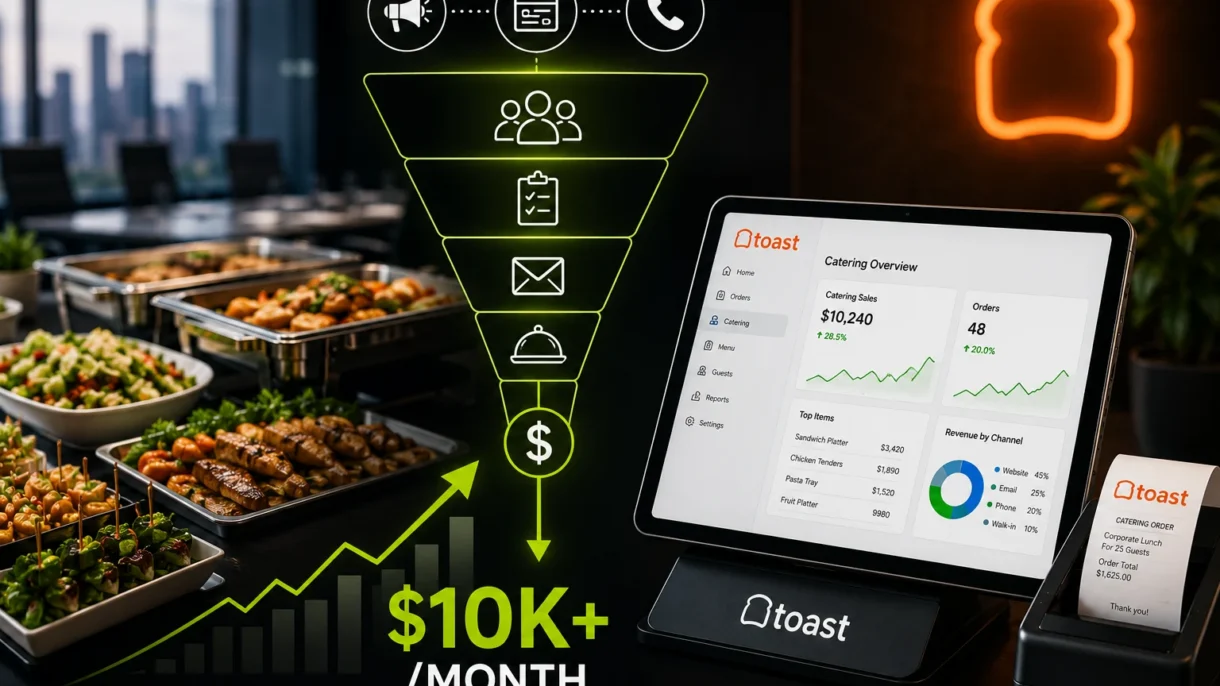
- Build (or promote) a catering and group-order page. Hybrid “anchor day” team lunches are a real, underused opportunity most restaurants never actively market. Our corporate catering funnel guide covers exactly how to capture this demand.
- Make sure your Google Business Profile and local SEO reflect real current hours and off-premise options, not a pre-pandemic listing that still implies a dine-in-only, five-day lunch rush.
This ties directly into the broader shift toward off-premise dining covered in our 2026 restaurant industry statistics roundup, where off-premise orders now account for close to 75% of total restaurant traffic industry-wide.
A Practical Weekly Focus Calendar Built Around Hybrid Patterns
| Day | Typical Office Pattern | Restaurant Focus |
|---|---|---|
| Monday | Lightest office attendance | Lean on off-premise/delivery marketing; consider reduced lunch staffing |
| Tuesday – Thursday | Anchor days, highest office occupancy | Full lunch staffing, catering/group-order push, local Ads weighted here |
| Friday | Second-lightest office attendance | Shift messaging toward weekend/social dining rather than office lunch |
| Weekend | Not office-driven | Household and social-occasion marketing, unaffected by hybrid work patterns |
Adjust Your Marketing to How Your Guests Actually Work Now
Mindshare Consulting Inc helps restaurants rebuild their local SEO, ad scheduling, and catering strategy around real, current guest patterns instead of a pre-pandemic assumption about the workweek.
FAQs
How has remote work changed restaurant lunch traffic?
Office occupancy in many markets remains well below pre-pandemic levels, with demand concentrated into Tuesday through Thursday and noticeably lighter on Mondays and Fridays. Dine-in’s share of lunch transactions has fallen while takeout’s share has grown.
Should restaurants change their hours because of hybrid work trends?
Many operators near business districts have scaled back lunch hours specifically on the lightest office-attendance days rather than staffing evenly across the full week for a rush that no longer reliably shows up on every weekday.
Is this trend specific to big cities, or does it affect smaller markets too?
The hybrid-work pattern is national, and markets with meaningful downtown office populations, including mid-size cities like Austin, see the same midweek-heavy, Monday/Friday-light rhythm as larger metros.
What’s the biggest marketing opportunity created by hybrid work?
Group and catering orders for teams on their in-office “anchor days” are a real, often under-marketed opportunity, along with better-targeted off-premise marketing for guests now working from home.
Can Mindshare Consulting Inc help adjust our marketing for these trends?
Yes. Mindshare Consulting Inc helps restaurants realign local SEO, ad scheduling, and catering marketing around actual current guest visit patterns rather than outdated weekday assumptions.