
Choosing from the many restaurant POS systems on the market is a decision you make once and live with for years. Every option can take an order and run a card. The real differences show up in how well the system connects to the rest of your operation: your website, your online ordering, your menu updates across locations, and the reports you will actually open every week.
This guide compares the five platforms restaurant owners ask about most: Toast, Clover, Square, Lightspeed, and TouchBistro. We do not pretend one is universally the best. We show you where each one fits, and what to check before you sign.
What a Restaurant POS System Actually Needs to Do in 2026
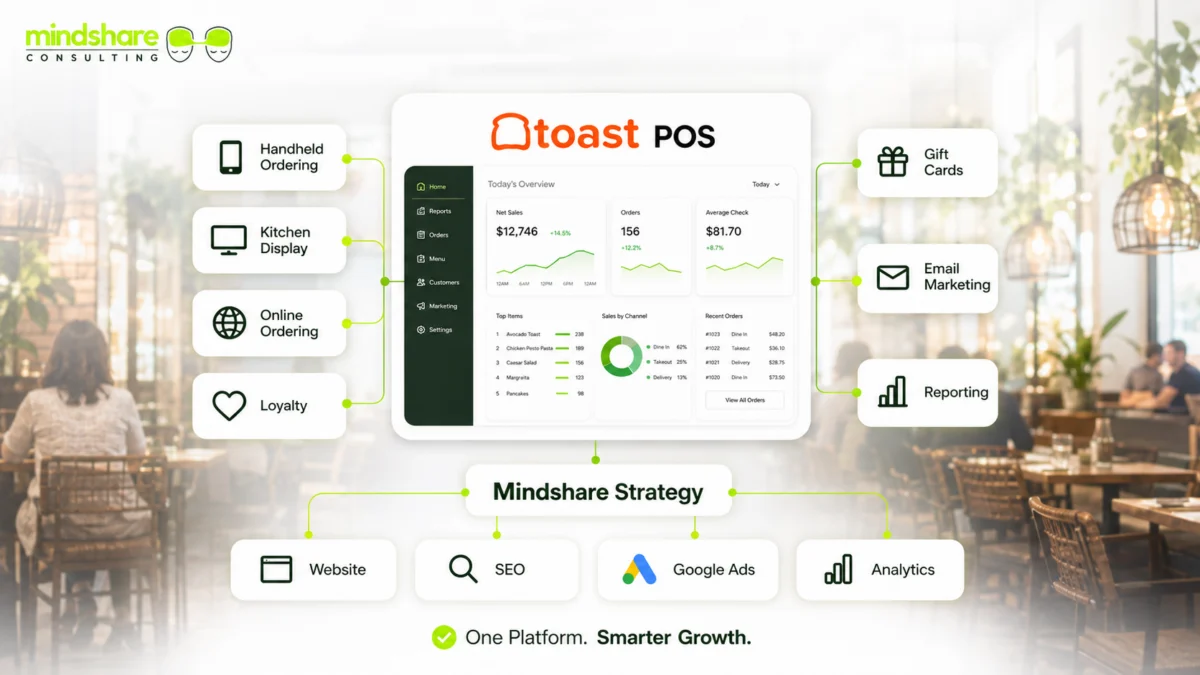
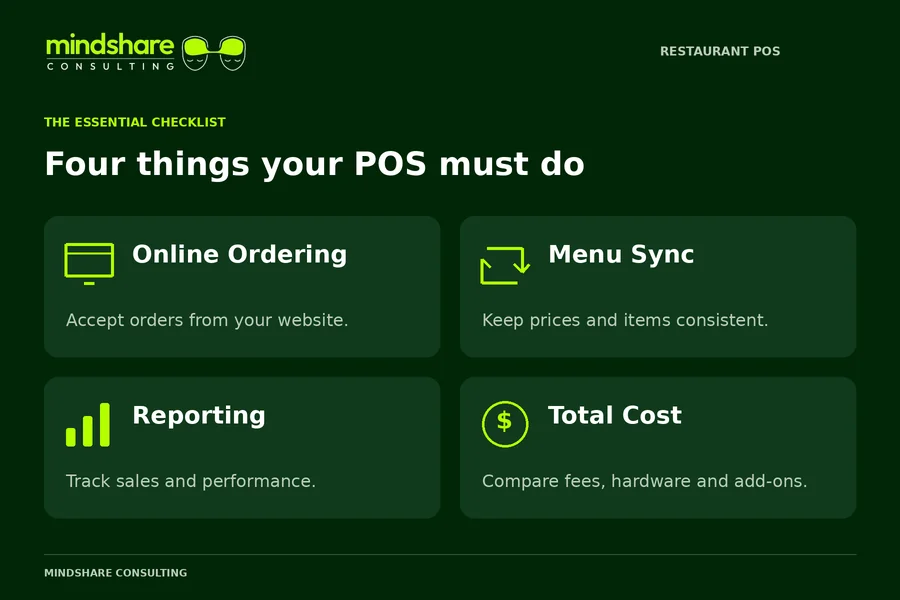
A modern restaurant point of sale system is no longer just a cash register. It is the hub that connects ordering, kitchen, payments, labor and guest data. When you evaluate restaurant POS software, judge it on four things:
- Online ordering integration: do orders flow from your own website straight to the kitchen?
- Menu sync: does one change update every channel and location?
- Reporting: do the reports answer the questions you ask every week?
- Total cost: software, hardware, processing rates and contract terms together.
Online Ordering Integration: The Biggest Differentiator
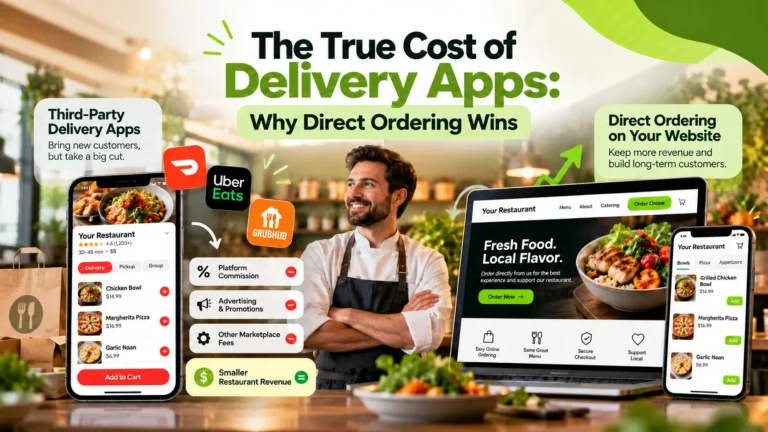
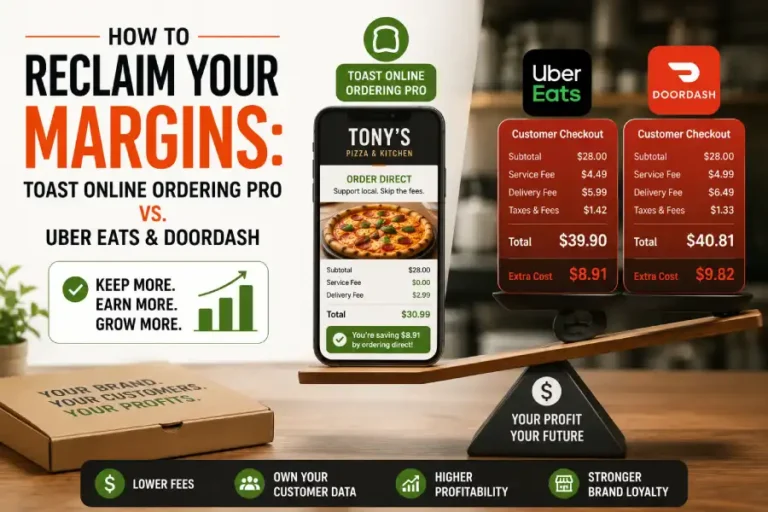
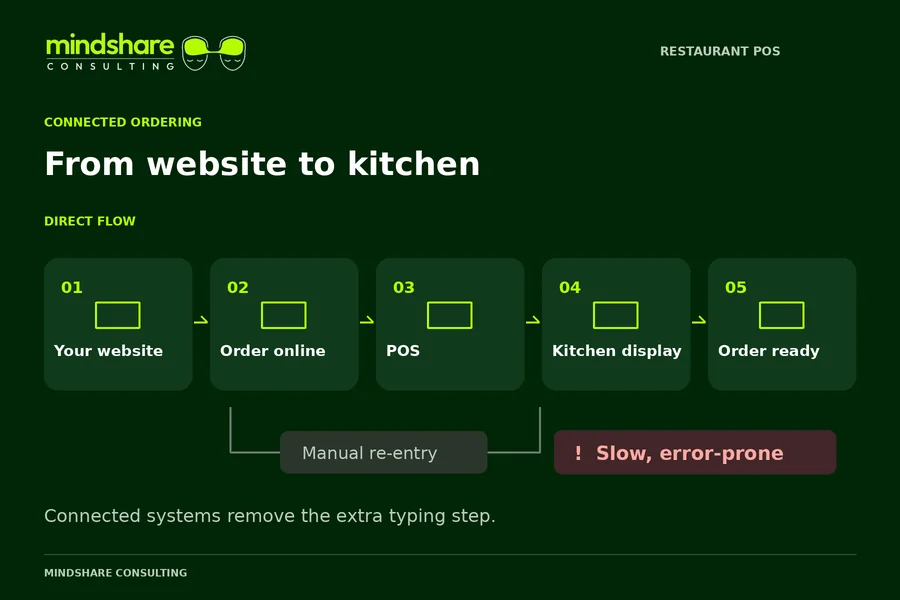
If you want orders coming through your own website instead of renting your customers from third-party delivery apps, this is the dimension that matters most.
Toast was built restaurant-first, and it shows here. Its online ordering is designed to sit natively on your website, sync menu items with the POS and send orders to the kitchen without re-entry. For owners who want to own the ordering relationship, this tight integration is often the deciding factor.
Square offers a capable system through Square Online that connects cleanly to Square POS. It suits smaller operations that want to launch fast with little configuration. The tradeoff is less restaurant-specific depth: modifiers, course timing and kitchen routing can feel retrofitted compared with Toast.
Clover supports online ordering through its app marketplace or third-party integrations. That makes it more of an assembled solution, with more moving parts to keep in sync when you update a menu or run a promotion.
Lightspeed Restaurant has solid online ordering and is often chosen by multi-location and full-service operations that need advanced table and course management. It works well with a custom website, though it favors teams with some technical support to configure it properly.
TouchBistro is built for full-service restaurants, with strong table-side and floor management tools. Confirm exactly how its online ordering connects to your website and which add-ons are required before committing.
Menu Sync Across Channels
A menu change should only happen once. Ask each vendor a simple question: if I update a price or 86 an item at the counter, does it instantly change online, on delivery apps and at every location?
- Toast and Lightspeed handle this natively with centralized menu management across locations and channels.
- Square syncs cleanly for a single location, but multi-location consistency needs more manual oversight.
- Clover depends heavily on the ordering integration layered on top, so test it with your real menu, not just a sales demo.
- TouchBistro should be tested the same way, particularly if you run more than one location.
Reporting You Will Actually Use
All five platforms generate reports. What matters is whether they answer your weekly questions: which items drive margin, which dayparts underperform, and how online orders compare with dine-in.
Toast is generally considered the most restaurant-specific out of the box, with labor cost against sales, modifier-level data and online versus in-house breakdowns. Square reporting is clean and easy to read but more general-purpose. With Clover and Lightspeed, the most useful views sometimes sit inside add-on modules, so check what is included at the tier you will actually buy, not the top-tier demo.
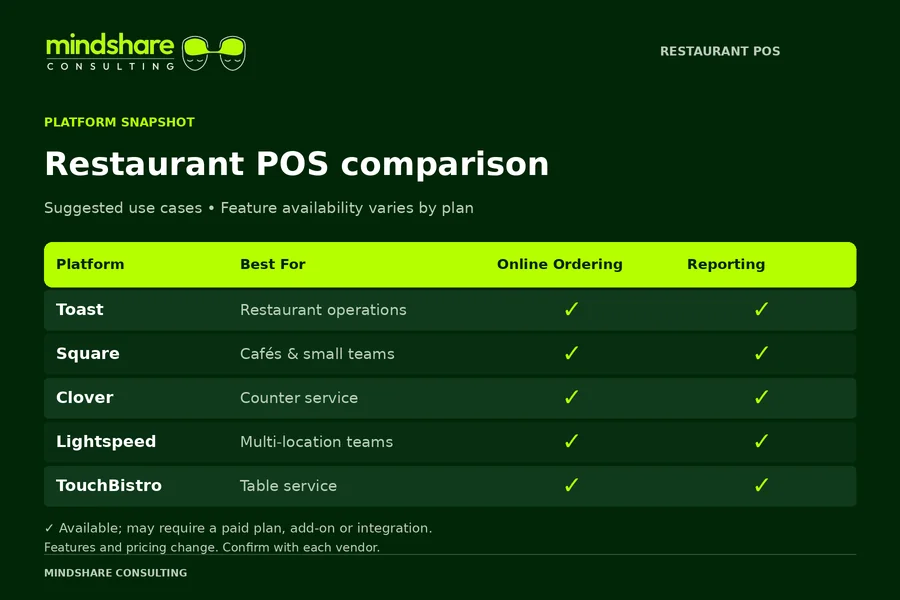
Restaurant POS Systems Compared at a Glance
| Platform | Best For | Online Ordering | Menu Sync | Reporting | Watch Out For |
|---|---|---|---|---|---|
| Toast | Restaurants that want direct ordering and restaurant-specific reports | Native, built for restaurants | Strong, centralized | Most restaurant-specific out of the box | Confirm hardware and contract terms |
| Square | Small, simple operations that want to launch fast | Square Online, easy setup | Clean for one location | Clean, general-purpose | Less restaurant-specific depth |
| Clover | Operations with specific hardware or marketplace needs | Via marketplace or third-party apps | Depends on the integration | Solid, some views in add-ons | More assembly, more moving parts |
| Lightspeed | Multi-location and full-service restaurants | Solid, works with custom sites | Strong, centralized | Solid, some views in add-ons | Works best with technical support |
| TouchBistro | Full-service restaurants focused on floor and table service | Confirm integration details | Test with your menu | Confirm what is in your tier | Verify online ordering add-ons |
Pricing: What to Ask Before You Sign
Every one of these platforms uses tiered or custom pricing that varies by location count, hardware and modules such as online ordering, loyalty and advanced reporting. Prices and terms change often, so confirm current numbers directly with each vendor. Ask every vendor:
- Is online ordering a separate monthly fee, or bundled?
- What is the actual payment processing rate, not just the software subscription?
- Is there a contract term, and what does early termination cost?
- Does multi-location pricing scale linearly, or is there a volume discount?
Which Restaurant POS System Should You Pick?
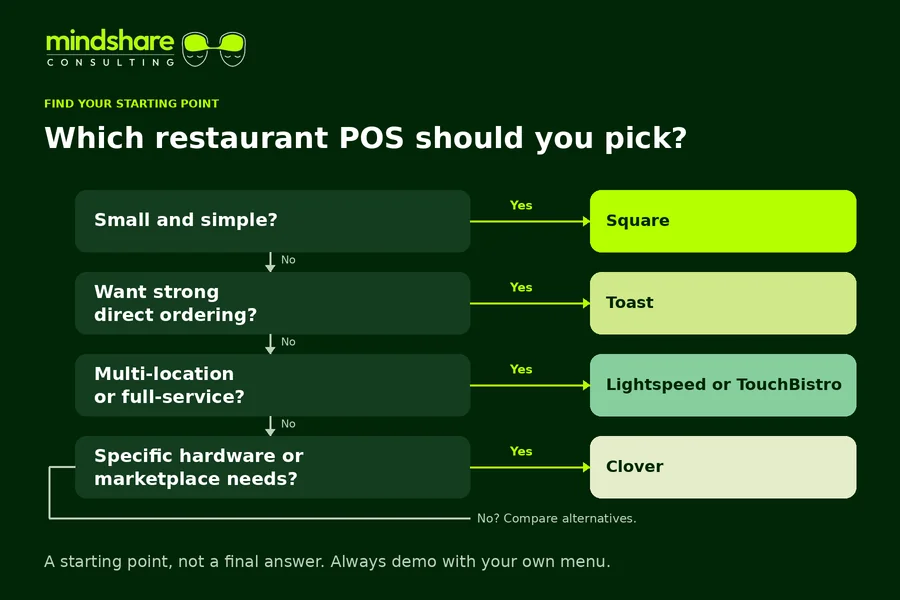
- Want strong direct ordering and restaurant-specific reporting with little assembly? Toast is usually the strongest starting point for both full-service and quick-service restaurants.
- A small, simple operation that needs to get running fast? Square is a legitimate, low-friction choice.
- Already invested in a marketplace-style setup or specific hardware? Clover can work, but expect more assembly.
- Multi-location or full-service with complex table management? Lightspeed deserves a serious look.
- A full-service dining room where floor management is the priority? Put TouchBistro on your shortlist.
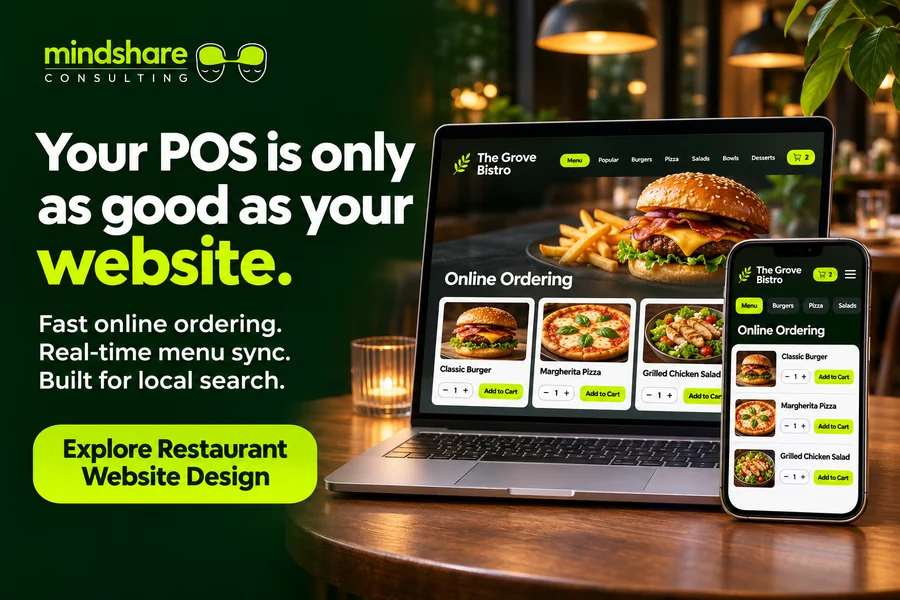
Your POS Is Only as Good as the Website Behind It
Here is the part most comparison guides skip. A POS that syncs perfectly with a slow, poorly structured ordering page still loses you orders. The integration is only as good as the site it connects to.
A website built to take full advantage of your POS loads fast on mobile, shows accurate real-time menus, makes ordering the obvious next step, and is structured for local search so hungry customers nearby can find you. That is the work behind our restaurant website design service.
Once the foundation is right, the traffic side matters just as much. Our restaurant marketing services cover Google Ads for restaurants and Meta Ads to bring in orders, and local SEO for restaurants to keep them coming in without paying for every click.