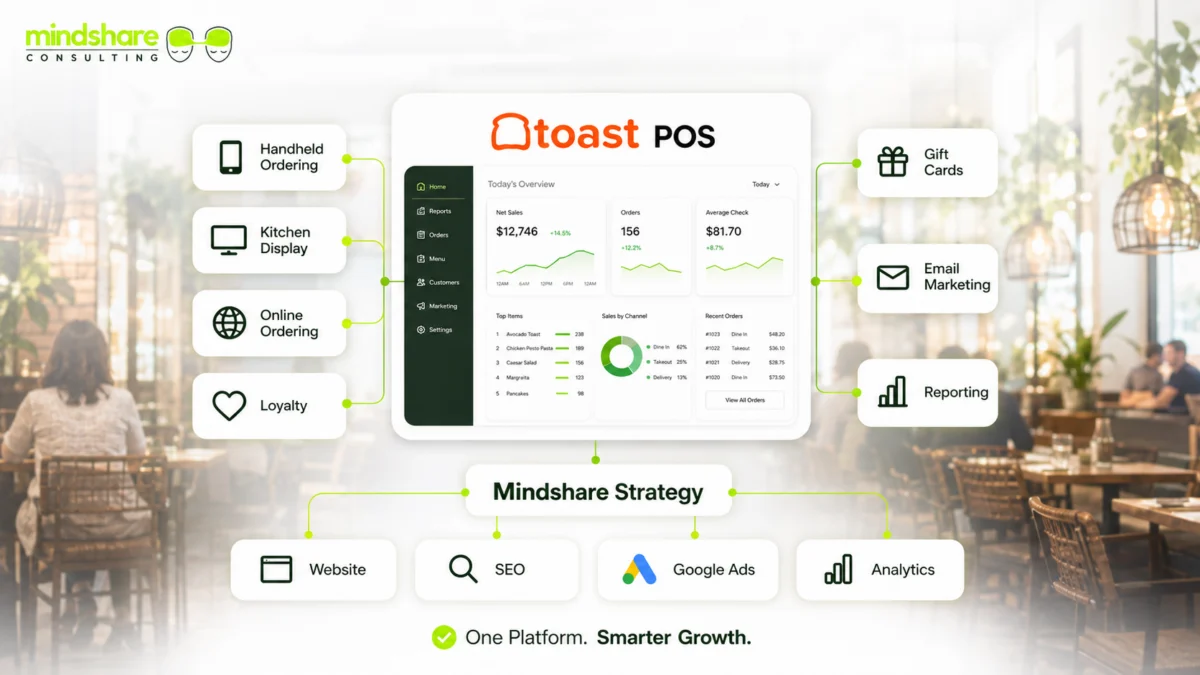



Austin has one of the fastest-growing small business economies in the country, and that growth cuts both ways. There are more customers moving here every year, but there are also more businesses competing for the same searches, the same social feeds, and the same ad auctions. I have spent over two decades at Mindshare Consulting helping Austin-area businesses figure out where to actually put their marketing dollars, and the short answer is: website design, SEO, social media, and Google Ads are not four separate decisions. They are one system, and this guide to digital marketing Austin businesses can use walks through how each piece works and how they fit together.
Website Design: The Foundation Everything Else Depends On
Your website is the only marketing asset you fully own and control. Social platforms change their algorithms, ad platforms raise their prices, but your site is yours. That also means every dollar you spend on SEO or ads is wasted if the site itself does not convert visitors into calls, form fills, or bookings once they arrive.
The two most common questions I get from Austin business owners are how much a good website should actually cost, and what mistakes are quietly costing them customers right now. I have written detailed answers to both:
- Website Design Cost for Austin Small Businesses (2026 Pricing Guide) breaks down realistic pricing by tier, from DIY builders to full-service agencies, and what actually drives the price up.
- 7 Website Design Mistakes Costing Austin Businesses Customers covers the specific, fixable errors I see most often on local sites, from buried phone numbers to slow mobile load times.
If you are starting from scratch or considering a redesign, our website design services page has examples of the work itself.
SEO: Getting Found Without Paying for Every Click
SEO is the slowest of the four disciplines to show results, and also the one with the best long-term return, because you stop paying for a click once you rank for it. Austin is a genuinely tough market for SEO. Between the tech and startup scene and a dense population of service businesses, most competitive keywords already have entrenched competitors with years of content and backlinks behind them.
That does not mean SEO is not worth doing. It means it has to be done with a realistic timeline and a strategy that plays to a smaller business’s actual advantages, like neighborhood-level targeting instead of trying to rank city-wide on day one. Two guides worth reading:
- How Long Does SEO Take to Work in Austin? A Realistic Timeline sets expectations month by month so you know what “working” actually looks like at 60 days versus 6 months.
- Austin Local SEO: How to Rank in the Map Pack for Neighborhood Searches is the more tactical piece, focused specifically on Google’s Map Pack and neighborhood-level targeting instead of a generic checklist.
Our SEO services page has more on how we structure engagements month to month.
Social Media Marketing: Building Trust Before Someone Ever Calls You
Social media rarely closes a sale directly, but it does the work of making a stranger comfortable enough to eventually call you or click through to your site. For local Austin businesses, that usually means showing up consistently with real photos of your work, your team, and your customers, not stock content.
The two questions I hear most on this topic are about pricing and timing:
- Social Media Marketing Cost for Austin Small Businesses lays out realistic monthly pricing and what should be included at each tier.
- Best Times to Post on Social Media for Austin Audiences corrects a lot of generic “best time to post” advice that is based on Eastern time zone data and does not hold up for a Central time, tech-worker-heavy audience.
You can see the kind of work we do on our social media marketing services page.
Google Ads: Immediate Visibility While the Other Three Build
Google Ads is the one channel that can put you at the top of the results page tomorrow, which makes it the right starting point for a brand-new business or a time-sensitive offer. The tradeoff is that visibility disappears the moment you stop paying for it, unlike SEO or a well-built site.
Two questions come up constantly with Austin clients:
- Google Ads Budget Guide for Austin Small Businesses covers realistic starting budgets and how cost-per-click varies wildly by industry.
- Google Ads vs SEO for Austin Businesses: Which Should You Choose First? walks through the specific scenarios where one should come before the other, and when you honestly need both running at once.
Our Google Ads and PPC services page has more detail on how we manage campaigns and budgets.
How These Four Pieces Work Together
In practice, the businesses that grow fastest in Austin do not pick one channel and ignore the rest. They typically start with a website that can actually convert traffic, run Google Ads immediately to generate revenue and real keyword data while SEO content is still being built, use that same content to build organic rankings over 6 to 12 months, and use social media the entire time to keep the brand visible between transactions. Each channel makes the others more efficient: ads data tells you which keywords convert, which tells you what to write SEO content about, and social proof from reviews and posts makes both your ads and your organic listings more trustworthy when someone finally clicks.
How Mindshare Consulting Helps
We run all four of these disciplines under one roof specifically so they reinforce each other instead of working against each other, which is what happens when a business hires four separate vendors who never talk to each other. If you want a straight answer on where your business should actually start, book a strategy call and we will walk through your specific situation before recommending anything.
Conclusion
There is no universal right answer to “should I do SEO or ads first” or “how much should a website cost,” because it depends entirely on your business, your budget, and how fast you need results. What I can tell you after twenty years of doing this in Austin specifically is that the businesses who treat these four channels as one connected system consistently outperform the ones treating them as separate line items. Start with whichever guide above matches your most urgent question, and come back to the others as you build out the rest of your marketing.
For a deeper look at two of these four channels, see our Austin SEO Company and Web Design Austin Texas pages, which cover exactly how we structure each engagement.