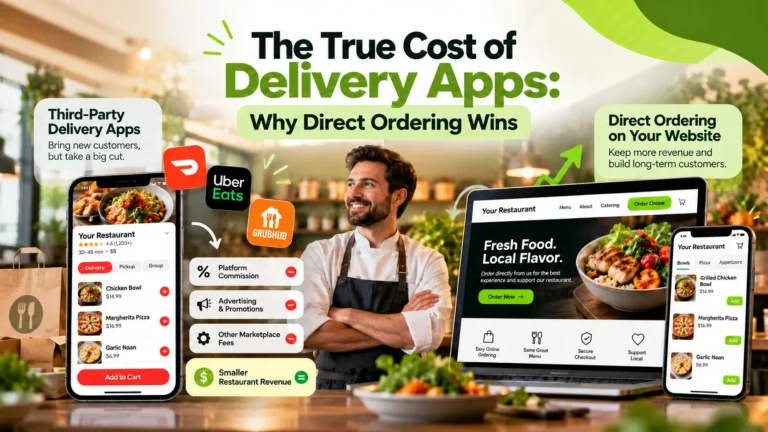
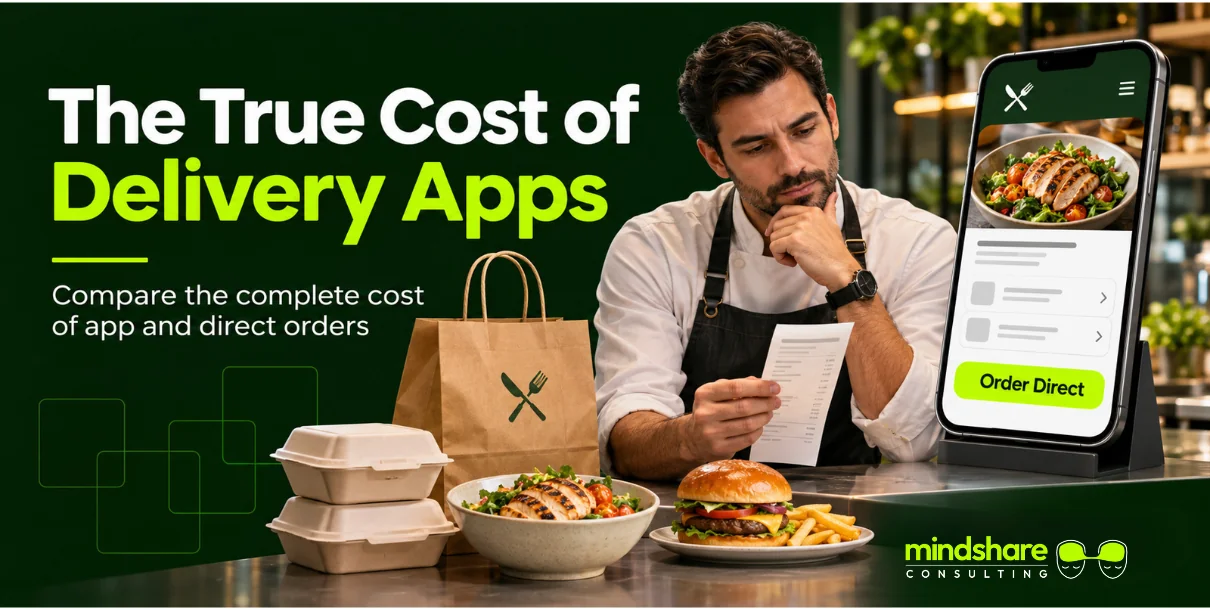

Delivery app fees for restaurants are easy to notice on a statement and harder to evaluate across a full year. A percentage that feels manageable on one order can become a substantial expense when it applies to hundreds of orders every month.
Direct ordering can improve the economics, particularly for repeat customers. However, a useful comparison must include more than a marketplace commission and a card-processing rate. Software, setup, maintenance, customer acquisition and delivery fulfillment all affect the result.
The right question is how much each channel costs to produce and fulfill an order, and whether it brings you business you would otherwise miss. A coordinated restaurant marketing strategy should connect acquisition, ordering and repeat business rather than treating each channel in isolation.
What Delivery App Fees Actually Include
Marketplace fees vary by platform, plan, order type and restaurant agreement. As checked on November 17, 2026, published U.S. pricing includes the following examples. These are standard advertised rates, not a quote for every restaurant.
| Platform | Published delivery marketplace rates | Important qualification |
|---|---|---|
| DoorDash | Basic 15%; Plus 25%; Premier 30% | Standard U.S. plans; eligibility and agreement terms apply. |
| Uber Eats | Lite 20%; Plus 25%; Premium 30% | Plus adds 5 percentage points for Uber One orders. |
The rates above were checked against the platforms’ published U.S. merchant pricing on November 17, 2026. Confirm your own contracted rates before budgeting. Pickup and self-delivery have different fee structures, so keep those orders separate in your calculations.
Do not assume payment processing is always an extra charge on top of commission. DoorDash states that its marketplace commission includes credit card processing, delivery logistics and other marketplace services. Optional advertising, promotions or equipment can introduce additional costs.
Use your own statements and agreement to identify the charges that actually apply. Avoid counting a bundled service twice.
What Direct Online Ordering Really Costs
Direct online ordering lets customers purchase through your restaurant’s website or another ordering channel you control. It may avoid marketplace commission, but it still has operating costs.
Include payment processing, ordering software, hosting, maintenance, integration support and any per-order technology fees. Add your website or setup investment separately. Marketing, discounts, refunds and staff time may also change the total.
Delivery needs its own line in the budget. You can accept an order directly and use an outside courier, but the courier still needs to be paid. In-house drivers also create costs, including labor, mileage and dispatch.
For pickup, compare direct pickup against marketplace pickup. Comparing a pickup order with a marketplace-delivered order would mix two different services.
A well-planned restaurant website should make ordering convenient while keeping the underlying costs visible.
A Monthly and Annual Cost Comparison
The following is a hypothetical comparison of delivered orders. It is not a vendor quote, a Mindshare package price or a forecast of guaranteed savings. Both channels handle the same 300 orders per month at a $40 food subtotal per order.
Assumptions for the example
| Input | Assumed value |
|---|---|
| Monthly delivered orders | 300 |
| Food subtotal per order | $40 |
| Marketplace commission | 25%, including processing and delivery in this example |
| Direct payment processing | 3% + $0.30 per order |
| Direct courier fulfillment | $6 per order, paid entirely by the restaurant |
| Direct software, hosting and maintenance | $250 per month combined |
| Direct setup investment | $1,200 once in the first year |
The model uses identical menu prices and no customer delivery-fee recovery. It excludes taxes, tips, discounts, refunds, chargebacks and channel-specific acquisition spending. Food, kitchen labor and packaging are assumed equal and excluded from both sides. Add any differences that apply to your restaurant.
Per order and monthly costs
| Cost item | Marketplace | Direct ordering |
|---|---|---|
| Food sales per month | $12,000 | $12,000 |
| Commission per $40 order | $10.00 | $0.00 |
| Separate processing per order | Included | $1.50 |
| Separate courier cost per order | Included | $6.00 |
| Variable channel cost per order | $10.00 | $7.50 |
| Variable costs for 300 orders | $3,000 | $2,250 |
| Monthly software and maintenance | $0 assumed | $250 |
| Ongoing monthly channel cost | $3,000 | $2,500 |
Under these assumptions, direct ordering reduces ongoing channel costs by $500 a month. That is a cost difference, not the restaurant’s net profit. Normal operating expenses still need to be paid.
First month and full year
| Period | Marketplace cost | Direct cost | Direct cost reduction |
|---|---|---|---|
| First month | $3,000 | $3,700 | −$700 |
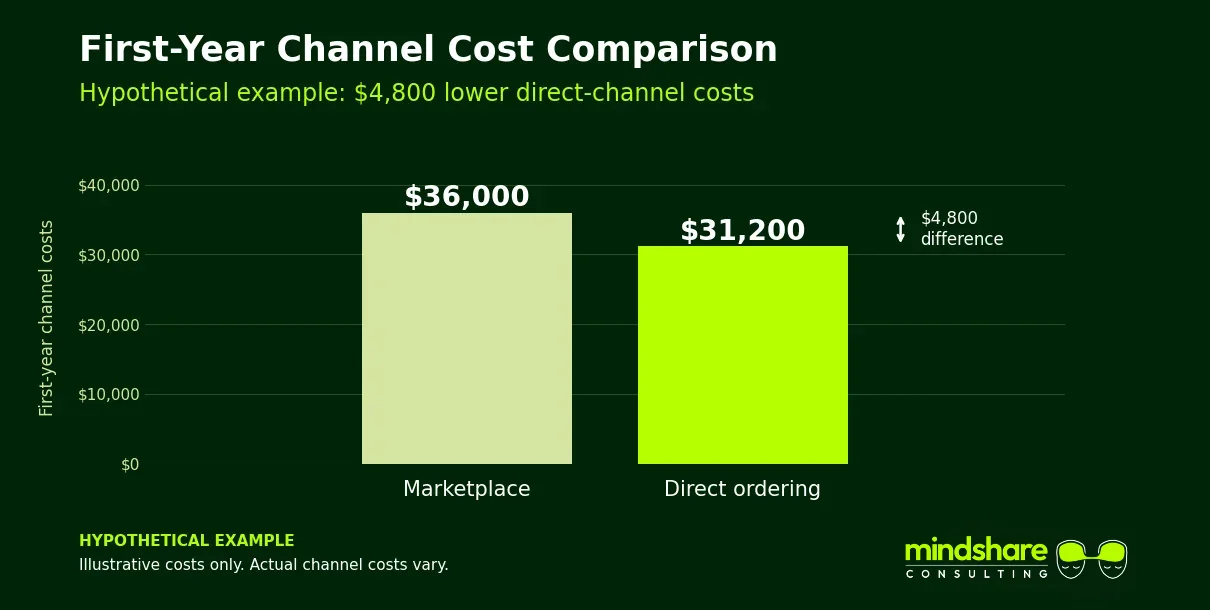
| First 12 months | $36,000 | $31,200 | $4,800 |
| Later 12 months at the same costs | $36,000 | $30,000 | $6,000 |
Direct ordering costs $700 more in the first month because the full $1,200 setup cost is paid upfront. Across the first year, the $6,000 operating cost reduction offsets setup and leaves a $4,800 difference. Any additional direct-channel marketing or operating costs reduce that amount.
When Does Direct Ordering Break Even
The example saves $2.50 in variable channel costs per delivered order: $10 in marketplace commission minus $7.50 for direct processing and courier fulfillment.
At that difference, 100 orders per month cover the assumed $250 recurring cost. Above 100 orders, the direct channel starts producing an ongoing cost advantage before setup and any additional acquisition spending.
At 300 orders per month, the $500 monthly advantage recovers the $1,200 setup investment during the third month, assuming steady volume and costs.
The result can change quickly. If the courier costs $8.50 instead of $6, direct variable costs rise to $10 per order. The variable advantage disappears, and the recurring software cost makes direct ordering more expensive in this model.
Run the calculation with your actual average order value, delivery costs and repeat-order volume before deciding how much to invest.
Customer Access Matters Alongside Commission
Marketplace platforms generally control their ordering interface and limit how restaurants can use customer information. The exact data and marketing permissions available depend on the platform and agreement.
Direct ordering can give you more access to order history and customer contact details, depending on your software and integrations. That access can support service communication and a permission-based customer audience.
An order does not automatically give you permission to send promotional emails or texts. Collect the appropriate marketing permissions, respect customer preferences and provide a straightforward way to unsubscribe.
A planned email marketing strategy can help bring customers back, but re-engagement still carries costs for software, messaging, creative work and any offer you provide.
Use Marketplaces and Direct Ordering Together
Delivery apps can introduce your restaurant to customers who would not otherwise find it. A marketplace order with a lower contribution may still be worthwhile when it adds business your kitchen can fulfill profitably.
Build a direct option for customers who already know your restaurant and prefer to order from you. Promote it through your own website, in-store materials and permission-based communications. Use restaurant social media marketing to explain where to order, show relevant menu items and make the direct-order link easy to find.
Use packaging or marketplace-related promotions only where your platform agreement permits them. A QR code is inexpensive to produce, but design, printing, incentives and delivery can still cost money. Measure the orders it generates rather than assuming it pays for itself immediately.
Track new versus repeat guests, average order value and contribution after channel costs. Compare results before moving more budget from one channel to another.
What a Competitive Direct Ordering Experience Requires
Customers need a clear reason to order directly, starting with a reliable experience. Your ordering page should work well on a phone, load promptly and explain pickup or delivery options before checkout. Our restaurant SEO checklist provides a starting point for improving how nearby diners find your menu, website and business information.
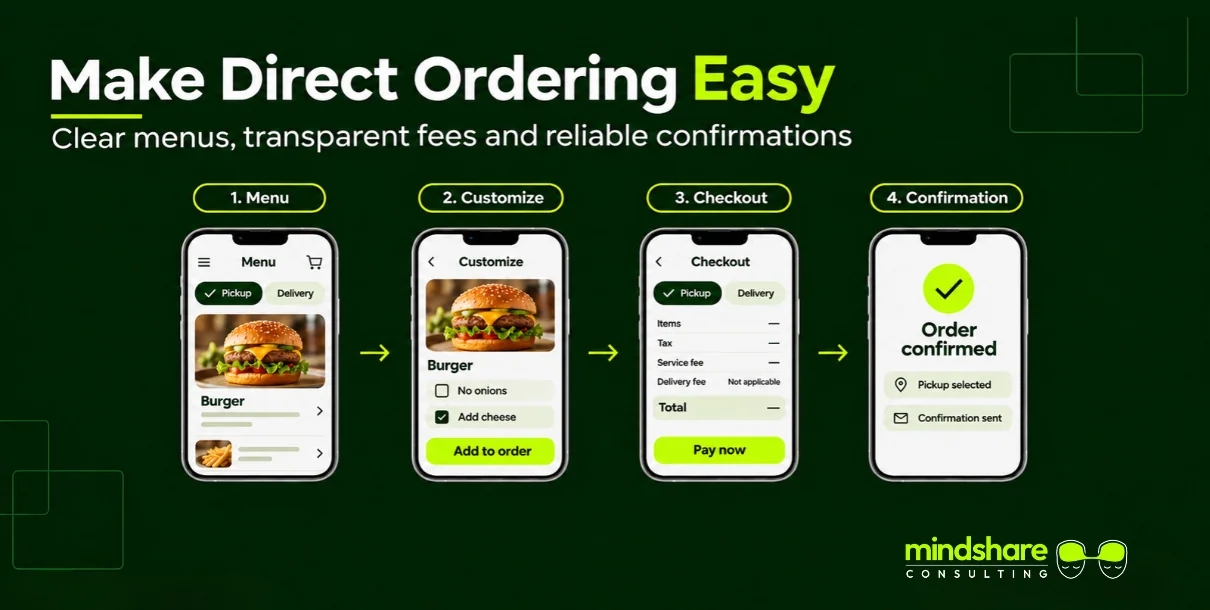
Prioritize accurate menus, clear modifiers, current availability, transparent fees and realistic fulfillment times. Offer guest checkout where supported and make the confirmation easy to understand.
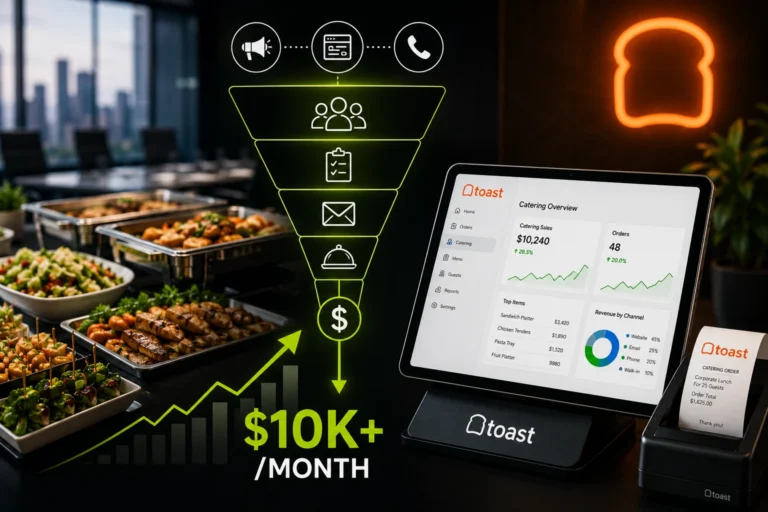
Plan the connection with your POS carefully. Menu syncing, payment handling and kitchen routing depend on the systems, plans and integration access available. Do not assume every ordering tool supports every feature. For restaurants using Toast, our guide to Toast POS setup and restaurant growth explains related website, loyalty and operational considerations.
Our restaurant POS marketing services connect the technology discussion with how guests discover, order from and return to your restaurant.
Measure the Results Before Scaling
Start with a manageable test of your direct channel. Record order volume, checkout completion, repeat orders, average order value and actual courier charges.
Calculate contribution after food, labor, packaging, payment, fulfillment, discounts and acquisition costs. Then account for fixed software costs and setup investment when assessing the channel as a whole.
Keep comparable order types together. Separate pickup from delivery and distinguish new demand from orders that simply moved between channels.