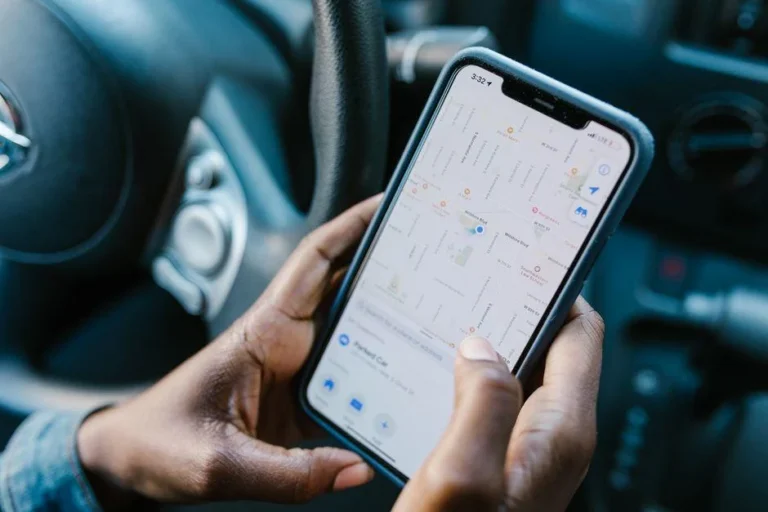

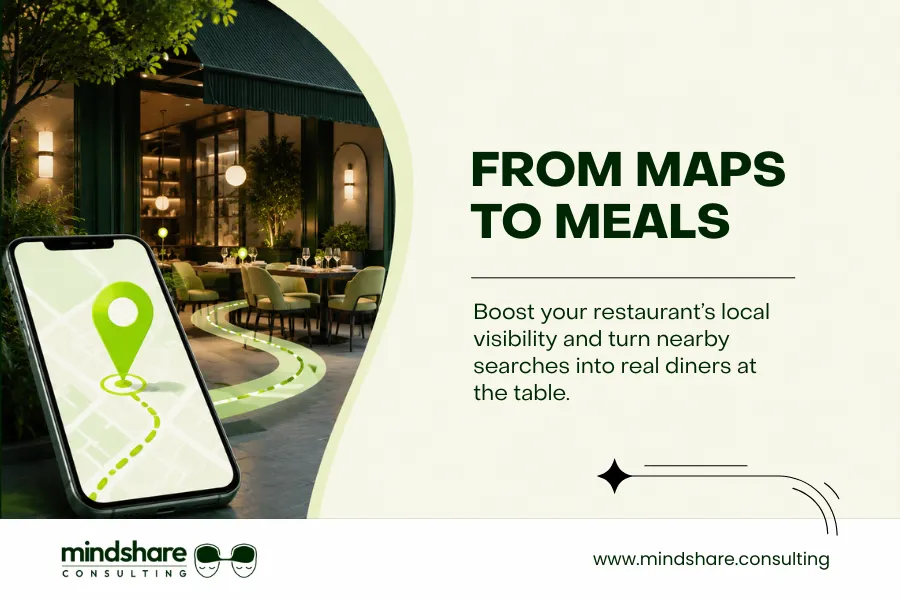

Here’s an uncomfortable truth about how people actually choose where to eat: most of them never make it to your website at all. They search “[cuisine] near me,” compare nearby options in Google Maps, check ratings, photos, hours, menus, and distance, and often decide without visiting several restaurant websites.
If your restaurant has weak visibility in local results, nearby diners may choose a competitor before they ever discover your menu or website.
Restaurant SEO isn’t about chasing generic national rankings. It’s about winning that tiny, high-intent local map pack, and this checklist walks through exactly how to do it.
If you’re looking for a complete growth strategy beyond local rankings, explore our Restaurant Marketing Agency services to combine restaurant SEO, paid advertising, reputation management, and customer retention into one scalable marketing strategy.
Why Restaurants Struggle With Local SEO More Than Other Businesses
Restaurants face a uniquely competitive local search environment: dozens of nearby competitors targeting near-identical keywords, review volume that shifts weekly, and menus that change seasonally. A restaurant website SEO audit almost always uncovers the same recurring issues:
- An unclaimed or incompletely filled-out Google Business Profile.
- Inconsistent business name, address, and phone number (NAP) across directories.
- Few or no recent reviews, or reviews left unanswered for months.
- No schema markup, so Google can’t confidently display your menu, hours, or price range in search results.
- A slow, non-mobile-optimized website losing visitors before they even see your menu.
Fixing these issues is the foundation of effective restaurant SEO and often delivers the fastest improvements in local search visibility.
1. Claim and Fully Optimize Your Google Business Profile
Why This Is Step One, Not an Afterthought
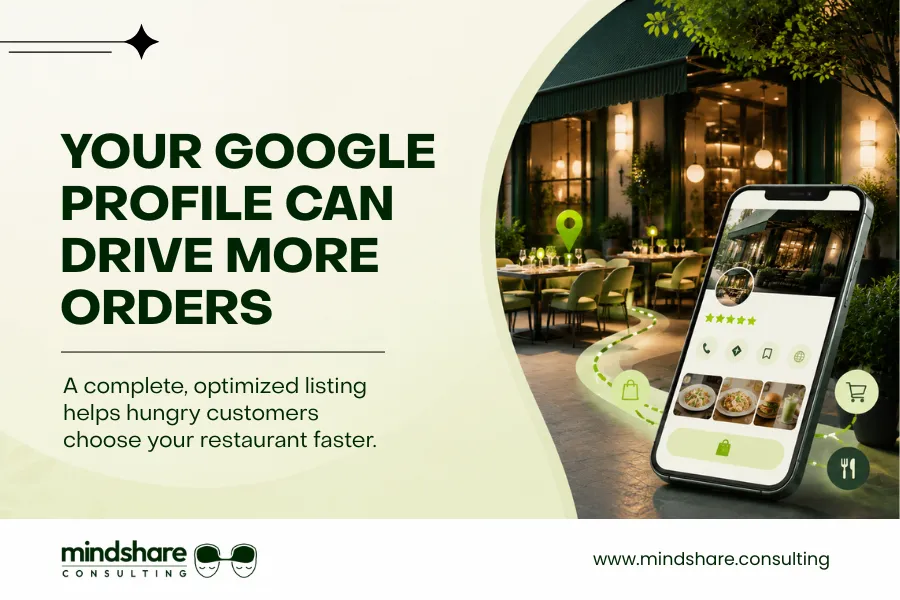
Your Google Business Profile is a core local discovery asset. Its information can appear across Google Search and Maps, helping potential diners evaluate your restaurant before visiting your website.
Strong restaurant SEO begins with a complete and optimized Google Business Profile.
What “Fully Optimized” Actually Looks Like
- Correct primary category (e.g., “Italian Restaurant,” not just “Restaurant”).
- Complete, accurate hours, including holiday hours updated in advance.
- Menu uploaded directly or linked, with prices visible.
- Current, high-quality photos covering food, interior, exterior, atmosphere, and accessibility. Add new images when the menu, space, or seasonal experience changes.
- The Q&A section pre-seeded with common questions (parking, reservations, dietary options).
- Useful posts for current specials, events, or seasonal menu items. Publish when you have something valuable and accurate to share; do not promise a ranking boost from posting frequency.
Bottom Line Benefits
- Higher likelihood of appearing in the Google Maps 3-pack.
- More direct calls, direction requests, and website clicks straight from the listing.
- A stronger first impression before a searcher ever visits your site.
2. Build Consistent Local Citations
What Citations Are and Why They Matter
A citation is any online mention of your restaurant’s name, address, and phone number, think Yelp, TripAdvisor, OpenTable, local chamber of commerce sites, and food blogs.
Google cross-references these listings as a trust signal for restaurant Google Maps ranking. Inconsistent information (an old address, a disconnected phone number) actively works against your restaurant SEO efforts.
Building the List
Prioritize in this order:
- Core aggregators: Yelp, TripAdvisor, Apple Maps, Bing Places.
- Food-specific platforms: OpenTable, Resy, DoorDash, Uber Eats, Zomato.
- Local directories: city/regional chamber of commerce, local news “best of” lists, neighborhood association sites.
Audit existing citations for mismatched NAP data before submitting new ones, cleaning up an old address is often more valuable than adding ten new listings.
3. Turn Reviews Into an Active SEO Asset
Why Review Velocity Matters More Than Total Count
Reviews help potential customers evaluate a restaurant and contribute to overall prominence, but Google does not publish a formula or a guaranteed review threshold. Focus on earning genuine reviews consistently and responding helpfully rather than chasing an arbitrary review count.
A Simple System That Works
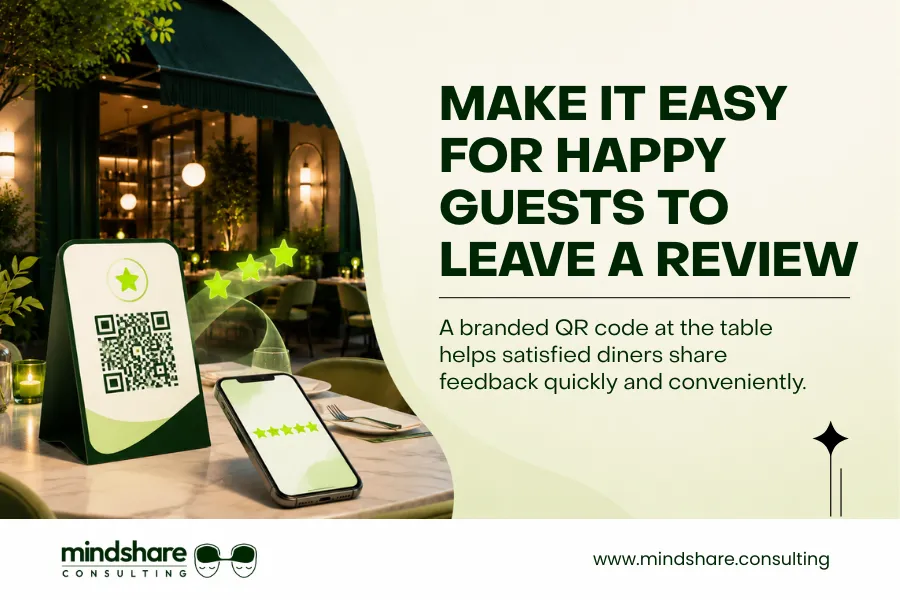
- Add a QR code to receipts or table tents linking directly to your Google review page.
- Train front-of-house staff to verbally ask satisfied guests at checkout.
- Respond to positive and negative reviews promptly and professionally. Helpful responses show customers that you value feedback; do not present a 48-hour response rule as a confirmed ranking factor.
Bottom Line Benefits
- Steady stream of fresh reviews signaling an active, trustworthy business.
- Improved star rating trust with potential customers scanning the map pack.
- Public responses that show prospective diners you take feedback seriously.
4. Add Schema Markup So Google Understands Your Menu
The Technical Piece Most Restaurants Skip
Restaurant schema markup (structured data) tells Google explicitly:
- This is a restaurant.
- Here is the menu.
- Here is the price range.
- Here are the hours.
- Here is the cuisine type.
Without it, Google has to guess, and guesses rarely display as rich, clickable results.
Implement valid Restaurant or LocalBusiness structured data for information that is visible on the page, such as address, hours, cuisine, menu URL, and price range. Do not promise self-serving AggregateRating stars: Google states that LocalBusiness and Organization pages controlling their own reviews are ineligible for the star review feature.
Schema implementation is one of the most overlooked opportunities in restaurant SEO because it improves how Google understands and displays your business online.
5. Fix the On-Page and Technical SEO Basics
A restaurant website SEO audit should also check:
- Mobile usability and page speed, especially for menu, location, ordering, and reservation pages. Check your own analytics for the mobile share instead of publishing an uncited industry percentage.
- A dedicated page per location (for multi-location restaurants) rather than one generic “Locations” page competing against itself.
- Location-specific content, city and neighborhood mentioned naturally in page copy, not just in the footer.
- Image alt text describing dishes, since restaurant image search traffic is a meaningfully underused channel.
Bottom Line Benefits
- Faster load times that keep mobile visitors from bouncing.
- Individual pages that can rank for each location’s specific local searches.
- Additional discovery traffic through Google Image search.
These foundational improvements strengthen your overall restaurant SEO strategy and create a better experience for both users and search engines.