

Restaurant Marketing Tools 2026: Product Updates and Practical Tips
To help restaurant operators thrive during an increasingly AI-driven year, we’re rounding up the digital marketing tools actually worth using in 2026, plus practical, no-fluff guides on setting each one up correctly.
Most restaurants already own more marketing technology than they use. A Toast, Clover, or Square POS can run online ordering, loyalty, gift cards, email, and SMS on its own, and most operators only ever turn on the payment and ticket-printing parts. The gap between “has the tool” and “uses the tool” is where most of the lost revenue actually sits, not in the POS contract itself.
This roundup is organized by job, not by product name, because the job is what actually matters: getting more direct orders, more repeat visits, cleaner tracking, and less time lost to manual work. Each section below links to a full, practical setup guide from Mindshare Consulting Inc so you can go from “which tool” to “here’s exactly how to configure it” in one click.
1. Online Ordering & Direct Revenue Tools
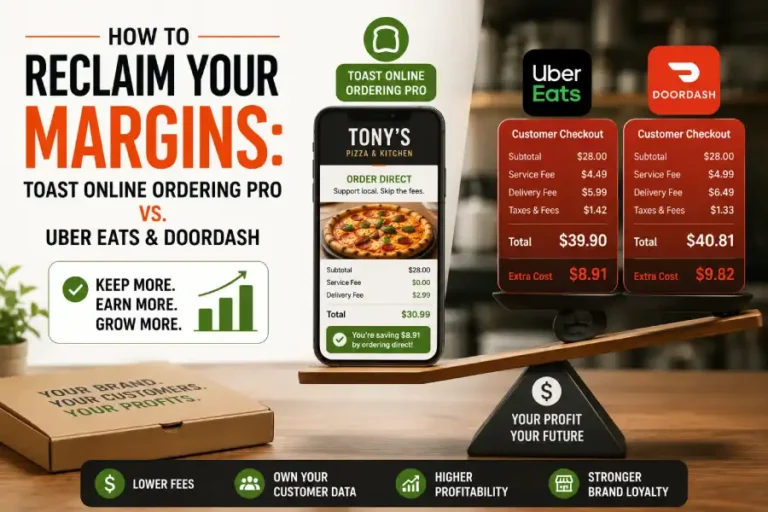
Third-party delivery apps typically take 25% to 30% of every order, which means a restaurant that can shift even a fraction of that volume onto its own ordering page keeps significantly more of each ticket. The practical fix isn’t turning off DoorDash or Uber Eats; it’s making your own ordering page fast, photo-rich, and Apple Pay/Google Pay-ready, then actively routing repeat customers toward it with in-bag QR codes, loyalty-only perks, and branded search ads that protect your own name from being outbid.
2. Loyalty, Rewards & Retention Tools
A loyalty program only works if guests actually enroll at the point of sale, which means the tablet prompt, the receipt copy, and the first-visit reward all have to be tuned deliberately rather than left on default settings. Multi-tiered rewards that protect food cost percentages, instead of a flat cashback discount, tend to drive more repeat visits without quietly eating into margin on every redemption.

3. Direct Communication Tools: SMS & Email
Every ticket your POS processes leaves behind a customer record, and most of that data sits untouched in a dashboard nobody opens twice. SMS still holds a roughly 98% open rate, which makes it the fastest way to fill a slow Tuesday night, while email remains the better channel for segmented, higher-effort campaigns like win-back series and VIP previews. Restaurants that treat these as two separate, deliberately scheduled channels consistently outperform the ones sending one generic blast a month.

Toast POS SMS Marketing: The Definitive Guide
Toll-free number registration, carrier-compliant messaging cadence, and the segments that actually get texted back for a reservation or online order.
Read the guide →

Toast POS Email Marketing: Step-by-Step Guide
How to segment your transactional customer database, avoid the spam folder, and build automated behavioral email flows instead of one-off blasts.
Read the guide →
4. Analytics & Conversion Tracking Tools
Most restaurants running Google or Meta ads have no reliable way to prove those ads actually drove an order, because the customer’s browser session breaks the moment they leave your website for your POS’s ordering subdomain. Fixing this requires cross-domain tracking in GA4 and, increasingly, server-side conversion tracking via Meta’s Conversions API, since iOS privacy changes and ad blockers now silently drop a meaningful share of standard pixel events.

5. AI-Powered Marketing Tools
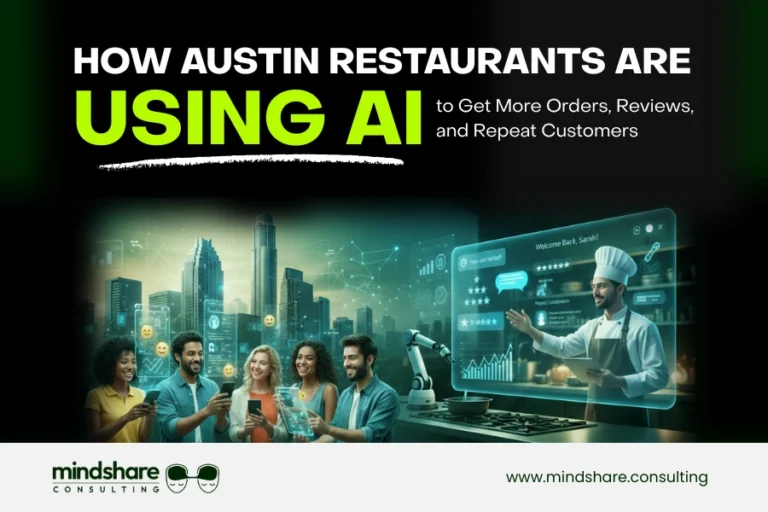
2026’s biggest shift isn’t a single new app; it’s AI quietly doing the repetitive marketing work restaurant owners never had time for: drafting review responses, writing social captions from a photo, and flagging which menu items to promote based on actual sales data. Used well, these tools free up hours a week without replacing the judgment calls that still need a real person, like tone, pricing, and what a regular customer actually wants to hear from you.
6. Integrations, Apps & Your POS Foundation
Not every app in a 200-strong POS marketplace is worth connecting, and a cluttered integration list is its own kind of tech debt. The right stack usually covers CRM, email automation, labor management, and accounting, plus, for multi-location brands, a proprietary mobile app that puts your ordering button on the customer’s home screen instead of buried in a browser bookmark. None of it matters if the underlying POS doesn’t fit your service model in the first place, so that choice comes first.
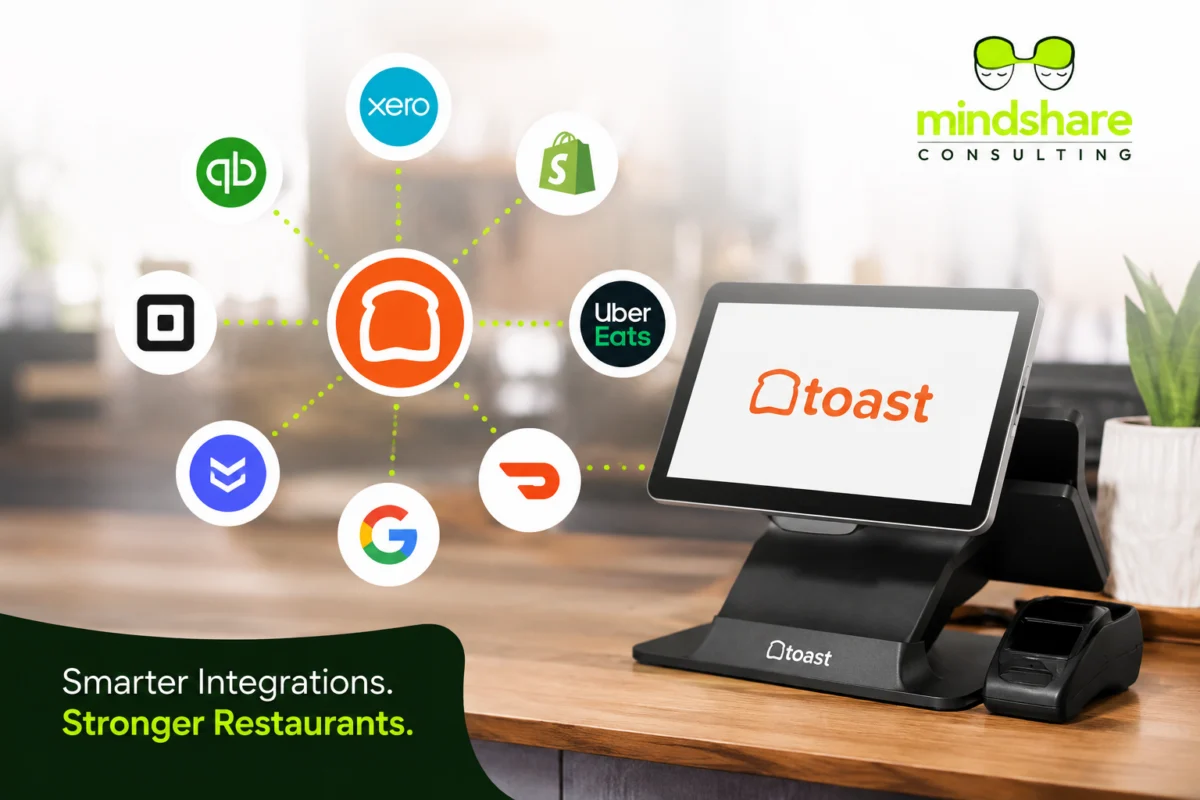
The Best Toast POS Integrations for 2026
The nine integrations out of 200+ marketplace apps actually worth connecting for CRM, email automation, labor, and accounting.
Read the guide →

Custom Restaurant Mobile Apps: Building on Toast
Why multi-location brands are moving past web ordering into proprietary iOS and Android apps built on the open Toast API.
Read the guide →
Still deciding on the POS itself? Our comparison of Toast, Clover, Square, Lavu, Owner.com, and Lightspeed breaks down which platform fits which restaurant type before you build a marketing stack on top of it.
Your Tools Are Only as Good as Their Setup
Owning Toast, Square, or Clover is not the same as using it. Mindshare Consulting Inc helps restaurants configure online ordering, loyalty, SMS, email, tracking, and integrations into one connected growth system, then layers on SEO, Google Ads, and Meta Ads so every tool is pulling in the same direction.
Frequently Asked Questions
What are the best digital marketing tools for restaurants in 2026?
The strongest stack usually combines a restaurant-first POS (Toast, Clover, or Square) for online ordering and loyalty, SMS and email for direct communication, GA4 and Meta Conversions API for tracking, and a small set of AI tools for reviews and social content. The right combination depends on service model and order volume.
Do I need a separate app for restaurant marketing, or does my POS already do this?
Most restaurant-first POS platforms already include online ordering, loyalty, gift cards, and basic email or SMS tools. The gap is almost always configuration, not missing features. Most operators are only using their POS as a checkout terminal.
How much does third-party delivery actually cost a restaurant?
Third-party delivery apps typically charge 25% to 30% commission per order. On a $50 ticket, that can be the difference between roughly a 10% profit margin on a marketplace order and 37% on the same order placed directly through your own ordering page.
Can Mindshare Consulting Inc help set up these tools?
Yes. Mindshare Consulting Inc helps restaurants configure online ordering, loyalty, SMS, email, GA4 and Meta Pixel tracking, POS integrations, and AI marketing workflows, then connects them to SEO, Google Ads, and Meta Ads for a complete growth system.