

Choosing the right website platform is one of the most important decisions a business can make. Yet many Austin business owners select a platform based on popularity, recommendations, or trends instead of choosing the solution that aligns with their business goals.
Whether you’re launching an ecommerce store, growing a local service company, or investing in digital marketing, your website platform will directly impact SEO, user experience, lead generation, and long-term scalability.
This is why the debate around Shopify vs WordPress Austin continues to be one of the most common questions businesses ask when planning a new website.
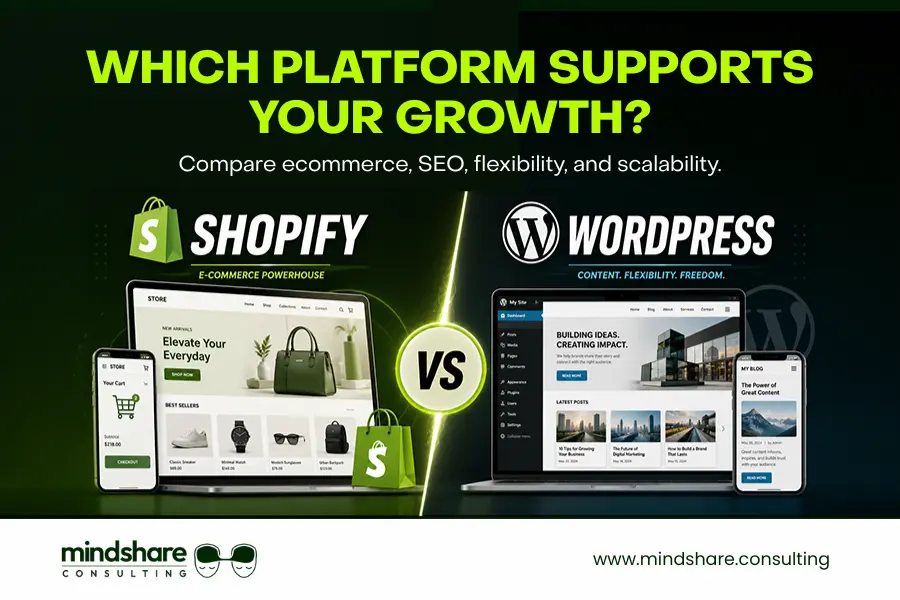
Both platforms are powerful, but they serve different purposes. Shopify is designed primarily for ecommerce, while WordPress offers unmatched flexibility for SEO, content marketing, and customization.
According to Google Search Central, website structure, user experience, and content quality all contribute to search performance, making platform selection an important business decision.
In this guide, we’ll compare Shopify vs WordPress Austin from an SEO, marketing, scalability, and business growth perspective so you can make the right choice.
Understanding Shopify vs WordPress Austin
Before comparing SEO and business performance, it’s important to understand the purpose of each platform.
What Is Shopify?
Shopify is a hosted ecommerce platform built specifically for selling products online.
It provides:
- Product management
- Payment processing
- Inventory tracking
- Order management
- Security updates
- Hosting
All from a single dashboard.
What Is WordPress?
WordPress is a content management system (CMS) that powers millions of websites worldwide.
It allows businesses to create:
- Service websites
- Ecommerce stores
- Blogs
- Membership platforms
- Custom web applications
Businesses seeking maximum control often prefer WordPress because of its flexibility.
When evaluating Shopify vs WordPress Austin, understanding your business objectives is the first step.
Also Check: The Ultimate Guide for a High Converting Website Design
When Shopify Makes Sense
For many ecommerce brands, Shopify is an excellent solution.
Businesses that primarily sell products online often benefit from Shopify’s simplicity and built-in ecommerce tools.
Shopify Is Best For:
- Ecommerce businesses
- Retail brands
- Product-focused companies
- Quick website launches
- Simplified maintenance
Key Shopify Advantages
Shopify Markets
- Shopify Markets helps businesses sell internationally through localized experiences and currency management.
Learn more at Shopify Official Website.
Shopify POS
- Retail businesses can unify online and in-store sales operations.
App Marketplace
- Thousands of apps allow businesses to add functionality quickly.
Security and Hosting
- Shopify handles hosting, updates, backups, and security automatically.
For businesses looking for an ecommerce website Austin solution with minimal maintenance, Shopify often makes sense.
Many companies working with an Austin Shopify developer choose Shopify because it allows them to launch and scale quickly.
Also Check: How a Well-Designed Website Can Skyrocket Your Bird Service Business
When WordPress Is the Better Choice
While Shopify excels in ecommerce, WordPress often wins when SEO, Content Marketing, and customization are priorities.
WordPress Is Best For:
- Service businesses
- Consultants
- Healthcare providers
- Law firms
- SEO-focused companies
- Content-driven organizations
Why Businesses Choose WordPress
Advanced SEO Flexibility
- WordPress provides more control over technical SEO implementation.
Elementor and Custom Design
- Businesses can create highly customized pages and landing experiences.
Superior Content Marketing
- Blogging remains one of the strongest methods for organic growth.
- WordPress was built around content publishing.
Local SEO Advantages
Businesses can easily create:
- Service pages
- City pages
- Location pages
- Content clusters
- Custom schema
This flexibility makes WordPress especially attractive for companies seeking a WordPress website company Austin.
Businesses investing in WordPress SEO Austin often choose WordPress because it supports advanced SEO strategies more effectively.
Learn more about WordPress at WordPress.org.
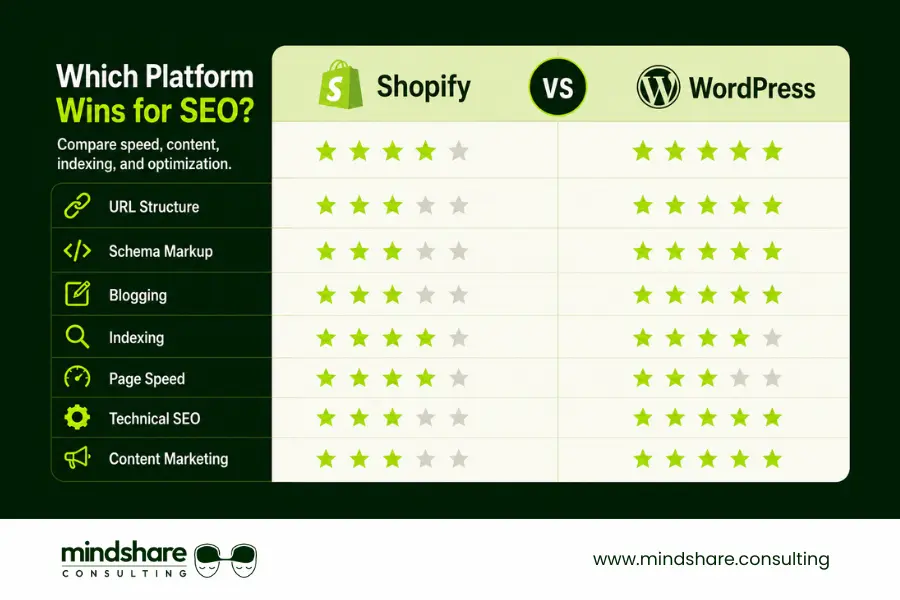
SEO Comparison: Shopify vs WordPress
SEO is often the deciding factor in the Shopify vs WordPress Austin discussion.
Let’s compare the most important SEO considerations.
URL Structure
- WordPress offers complete control over URL structure.
- Shopify has some limitations due to its predefined architecture.
- Winner: WordPress
Schema Markup
- Both platforms support schema markup.
- However, WordPress provides greater customization options.
- Winner: WordPress
Blogging and Content Marketing
- Content remains one of Google’s strongest ranking signals.
- WordPress significantly outperforms Shopify when it comes to blogging and content organization.
- Winner: WordPress
Website Speed
- Shopify provides strong out-of-the-box performance.
- WordPress can achieve excellent speed with proper optimization.
- Website performance should always be tested using tools such as Google PageSpeed Insights.
- Winner: Tie
Indexing and Crawlability
- Both platforms can perform well when properly optimized.
- WordPress offers greater control for advanced SEO implementations.
- Winner: WordPress
Technical SEO Flexibility
- Businesses requiring advanced SEO customizations generally prefer WordPress.
- Winner: WordPress
Overall, WordPress SEO Austin typically provides more long-term SEO opportunities, while Shopify SEO Austin remains highly effective for ecommerce businesses.
Also Check: Why do you need to Maintain a WordPress Site
Cost Comparison for Austin Businesses
Cost should always be evaluated over the long term rather than focusing solely on initial expenses.
Shopify Costs
Typical expenses include:
- Monthly subscription fees
- Premium themes
- App subscriptions
- Payment processing fees
WordPress Costs
Typical expenses include:
- Hosting
- Premium plugins
- Maintenance
- Development support
For businesses with simple ecommerce requirements, Shopify can offer predictable costs.
For businesses investing heavily in SEO and content marketing, WordPress often delivers greater long-term value.
Businesses should also review website best practices outlined in Google Search Essentials when evaluating future website investments.
Which Platform Converts Better?
Conversion performance depends more on execution than platform for Brand Designing.
However, each platform has strengths.
Shopify Conversion Advantages
- Optimized checkout process
- Product-focused design
- Ecommerce user experience
- Inventory management
WordPress Conversion Advantages
- Custom landing pages
- Advanced lead generation
- Flexible sales funnels
- Content-driven nurturing
For product sales, Shopify often performs exceptionally well.
For lead generation, WordPress usually provides more flexibility.
Also Check: How to Start an E-Commerce Store?
Common Mistakes Businesses Make
Many businesses struggle because they choose a platform based on the wrong criteria.
Choosing Based Only on Price
- The cheapest solution isn’t always the most profitable.
Ignoring SEO Requirements
- Many websites are launched without considering future organic growth.
Using Poor Themes
- Low-quality themes can create performance and user experience issues.
Installing Too Many Plugins or Apps
- Too many add-ons can slow websites and create maintenance challenges.
Choosing Weak Hosting
- Especially with WordPress, hosting quality significantly impacts speed and SEO.
- Avoiding these mistakes can dramatically improve website performance and ROI.
Also Check: WooCommerce vs. Shopify: Scalability for Growing Jewelry Businesses
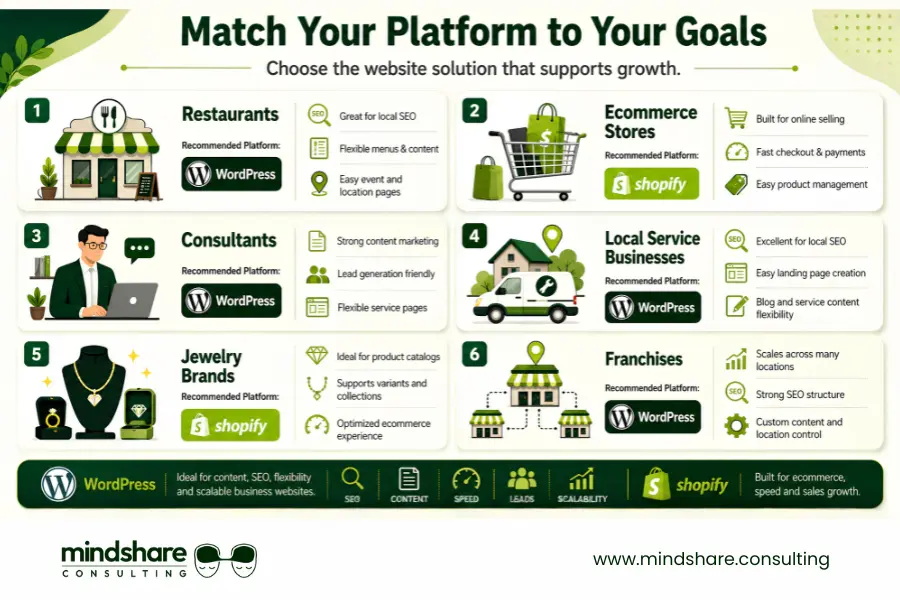
Final Recommendation by Industry
The best platform depends on your business model.
Restaurants
- Recommended: WordPress
- Better local SEO and content flexibility.
Ecommerce Stores
- Recommended: Shopify
- Excellent product management and checkout experience.
Local Service Businesses
- Recommended: WordPress
- Superior lead generation and local SEO capabilities.
Consultants and Coaches
- Recommended: WordPress
- Ideal for authority building, content marketing and Digital Marketing.
Jewelry Brands
- Recommended: Shopify
- Strong ecommerce functionality and inventory management.
Franchises
- Recommended: WordPress
- Supports location pages and local SEO at scale.
For most service-based businesses evaluating Shopify vs WordPress Austin, WordPress typically offers stronger SEO and marketing flexibility.
Also Check: The Role of UX/UI in Website Conversion Optimization
Conclusion
The Shopify vs WordPress Austin debate doesn’t have a universal winner because every business has different goals.
If your primary focus is ecommerce, inventory management, and ease of maintenance, Shopify is often the better solution.
If your focus is SEO, lead generation, content marketing, local visibility, and long-term digital growth, WordPress usually provides more flexibility and control.
Before choosing a platform, evaluate your business objectives, marketing strategy, scalability requirements, and future growth plans.
The right platform should support not only your current needs but also where your business wants to be in the years ahead.
If you’re considering a new website, redesign, or platform migration, Contact Mindshare Consulting can help you make the right decision based on your goals.
For a closer look at how we approach these builds for Austin businesses specifically, see our Web Design Austin Texas page.