
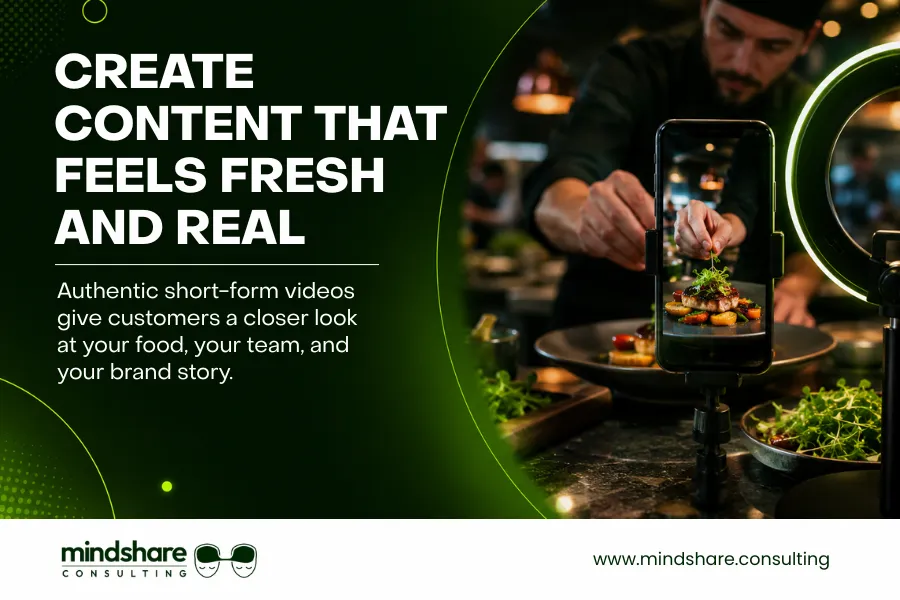

Every restaurant owner has posted a beautifully lit photo of their signature dish, watched it get thirty likes, and quietly wondered whether any of it actually put a single person in a chair that night.
Here’s the honest answer: most restaurant social media doesn’t drive traffic, because most of it is built around vanity metrics instead of a real funnel. Likes and follower counts feel good. They don’t pay rent.
Restaurant social media marketing that actually works in 2026 looks less like a digital menu and more like a system: content that builds trust, ads that convert that trust into visits, and a consistent presence that keeps you top-of-mind the next time someone’s deciding where to eat.
If you’re looking for a complete digital growth strategy beyond social media alone, explore our Restaurant Marketing Agency services to combine restaurant social media marketing, paid advertising, SEO, and customer retention into one results-driven marketing strategy.
Why Most Restaurant Social Media Doesn’t Convert
Before getting into what works, it’s worth naming what doesn’t:
- Posting only polished food photography with no faces, no voice, and no personality, it blends into an endless scroll of near-identical dish shots.
- An inconsistent publishing pattern, making it difficult to learn which topics, formats, and offers resonate with your local audience.
- No paid distribution strategy for high-performing content, limited-time offers, catering campaigns, or retargeting.
- No clear call-to-action, a beautiful photo with no link to order, book, or visit does nothing to move someone down the funnel.
Fixing this isn’t about posting more. It’s about posting with a purpose. Successful restaurant social media marketing focuses on building relationships first and driving measurable actions second.
1. User-Generated Content: Your Highest-Trust Marketing Asset
Why Guest Content Can Build Trust
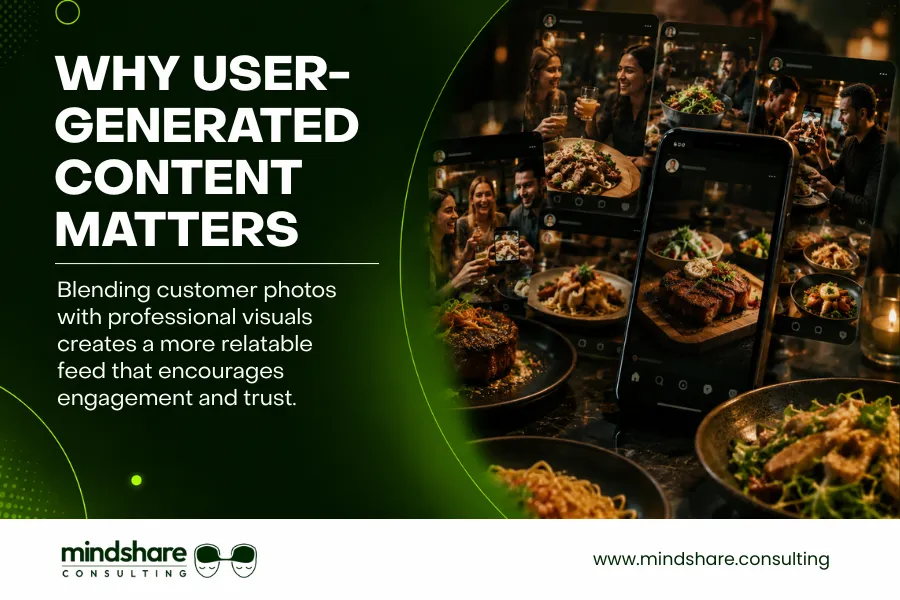
Guest-created photos, reviews, and videos can feel more credible than polished brand content because they document a real customer experience. A stranger’s genuine reaction to your food carries more weight with a potential customer than your best professional photographer ever could.
One of the biggest strengths of restaurant social media marketing is its ability to turn happy customers into authentic brand advocates.
How to Actually Generate It
- Create a branded hashtag and display it on table tents or receipts.
- Actively DM guests who tag your location, asking permission to repost.
- Feature guest photos in Stories with a simple “thank you” tag, guests notice and often share it themselves.
- Turn strong written reviews into simple quote-graphic posts.
Bottom Line Benefits
- Authentic social proof that converts skeptical scrollers into visitors.
- A content pipeline that doesn’t rely entirely on your own photography budget.
- Deeper guest loyalty, being featured makes people feel like part of the brand.
2. Short-Form Video: Where the Algorithm Rewards You Now
Reels, TikTok, and the Death of the Static Post
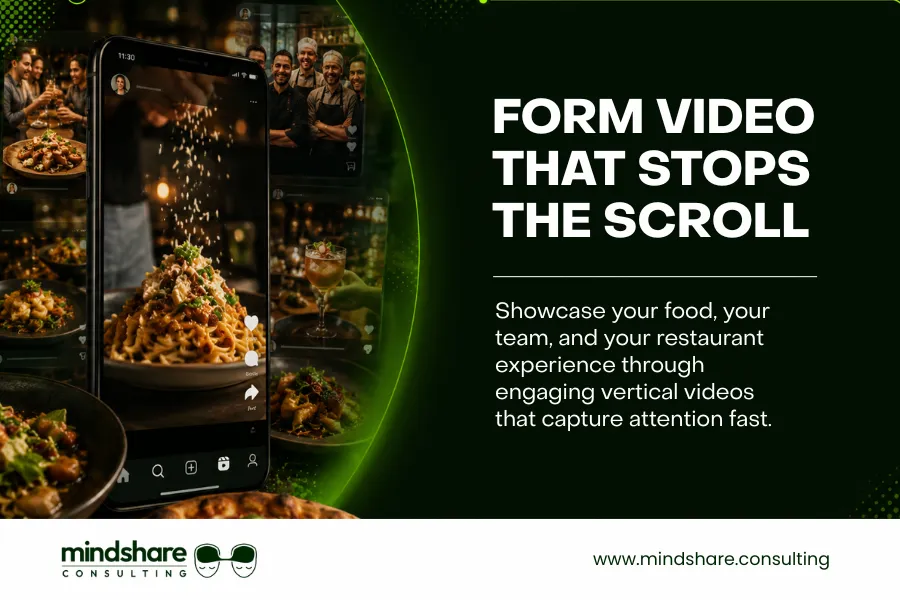
Instagram, TikTok, and Facebook all support short-form video, giving restaurants a flexible format for demonstrating food preparation, atmosphere, service, and staff personality.
A concise video of a dish being made, a sizzling plate arriving tableside, or a staff member explaining a menu item can communicate more of the restaurant experience than a single photo.
Short-form content has become one of the most effective tactics in modern restaurant social media marketing because it reaches both existing followers and entirely new audiences.
What Actually Performs for Restaurants
- Process videos, dough being tossed, a cocktail being shaken, a wood-fired oven in action.
- “POV” style content, filmed from the guest’s perspective walking in, sitting down, taking the first bite.
- Staff personality clips, a chef explaining a dish or a bartender recommending a favorite drink.
- Trend participation informed by current platform research. Use tools such as TikTok Studio to review performance and content patterns instead of copying every trend.
Bottom Line Benefits
- More opportunities to demonstrate movement, sound, atmosphere, and personality.
- Content that works across multiple platforms with minimal reformatting.
- A more memorable brand impression than a menu photo alone.
3. Meta Ads: Turning Awareness Into Actual Visits
Why Organic Reach Alone Isn’t Enough Anymore
Organic content is valuable for trust and community, but it cannot guarantee that every follower or nearby prospect will see a specific promotion.
Restaurant Facebook ads and Instagram ads close that gap by putting your best-performing content in front of a much larger, precisely targeted local audience.
For restaurants looking to scale results, combining restaurant social media marketing with professional Pay-Per-Click Advertising creates a powerful full-funnel strategy that drives both awareness and conversions.
A Full-Funnel Approach That Works
Top of funnel
Local awareness ads using a service area based on actual customer travel patterns, delivery boundaries, order data, and campaign performance.
Middle of funnel
Retargeting ads to eligible audiences who engaged with your content or visited your website, featuring a specific offer, menu item, reservation path, or catering CTA.
Bottom of funnel
Direct-response ads with a clear CTA such as:
- Order Now
- Reserve a Table
- Request a Catering Quote
These campaigns target warm audiences that are ready to act.
Bottom Line Benefits
- Predictable reach beyond your existing follower base.
- A structured path from “never heard of you” to “booked a table.”
- Clear attribution on which content and offers actually drive visits.
4. Consistency: The Unsexy Ingredient That Makes All of This Work
A strong restaurant content strategy isn’t about viral moments, it’s about building a repeatable content calendar that includes:
- User-generated content
- Short-form videos
- Behind-the-scenes content
- Promotions
- Seasonal offers
- Staff stories
Choose a publishing schedule your team can sustain, then use platform insights and website conversions to decide whether the cadence should increase or decrease. Consistency matters because it creates enough data to learn, not because a universal number guarantees reach.
The most successful restaurant social media marketing strategies aren’t built around occasional viral posts, they’re built around consistency, authenticity, and ongoing engagement with your local community.