

Every restaurant owner has had the same moment: a busy Friday night, the online orders won’t stop coming in, and then the next morning the deposit from the delivery platform arrives—and it’s smaller than expected.
Third-party delivery apps aren’t going away, and they shouldn’t. They can introduce your restaurant to customers who might never have discovered you otherwise.
But there’s an important distinction between using delivery apps for customer discovery and depending on them for every online order.
The commission structure behind third-party orders can significantly affect your margins. More importantly, the platform can control much of the customer relationship, ordering experience, and visibility within its marketplace.
That’s why direct ordering deserves a place in your restaurant’s digital strategy.
A restaurant website with a fast, easy-to-use, POS-integrated ordering experience can give you more control over your orders, your customer data, and your long-term customer relationships.
What Delivery Apps Actually Charge
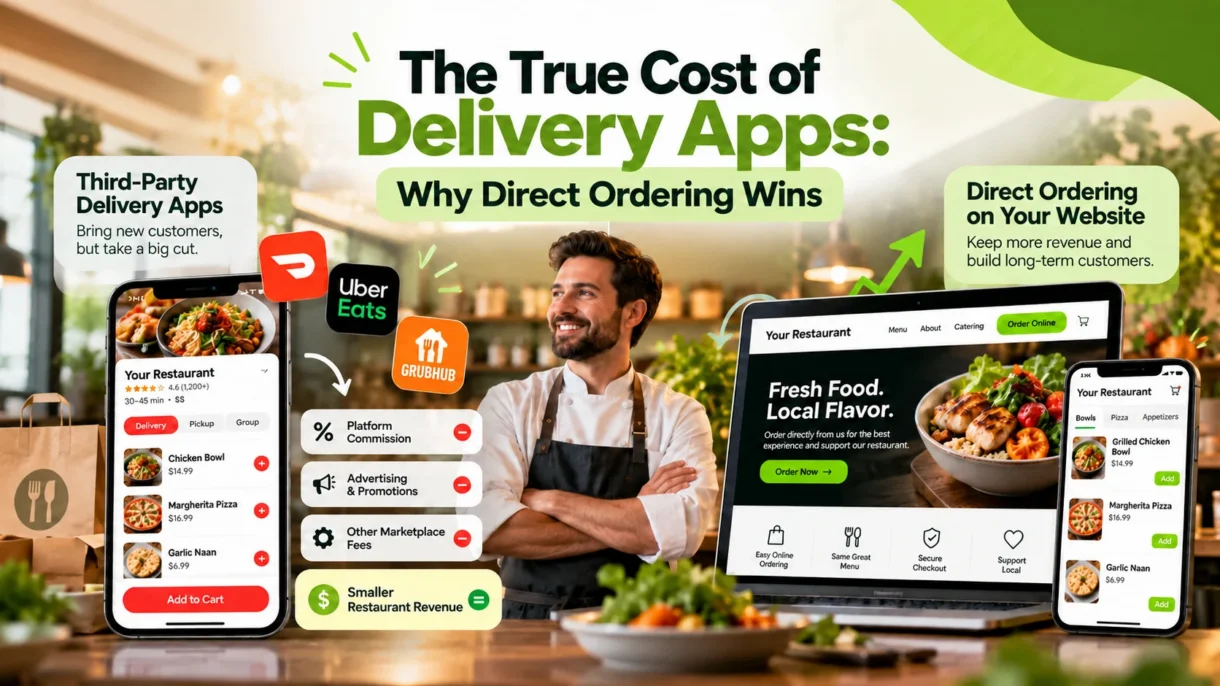
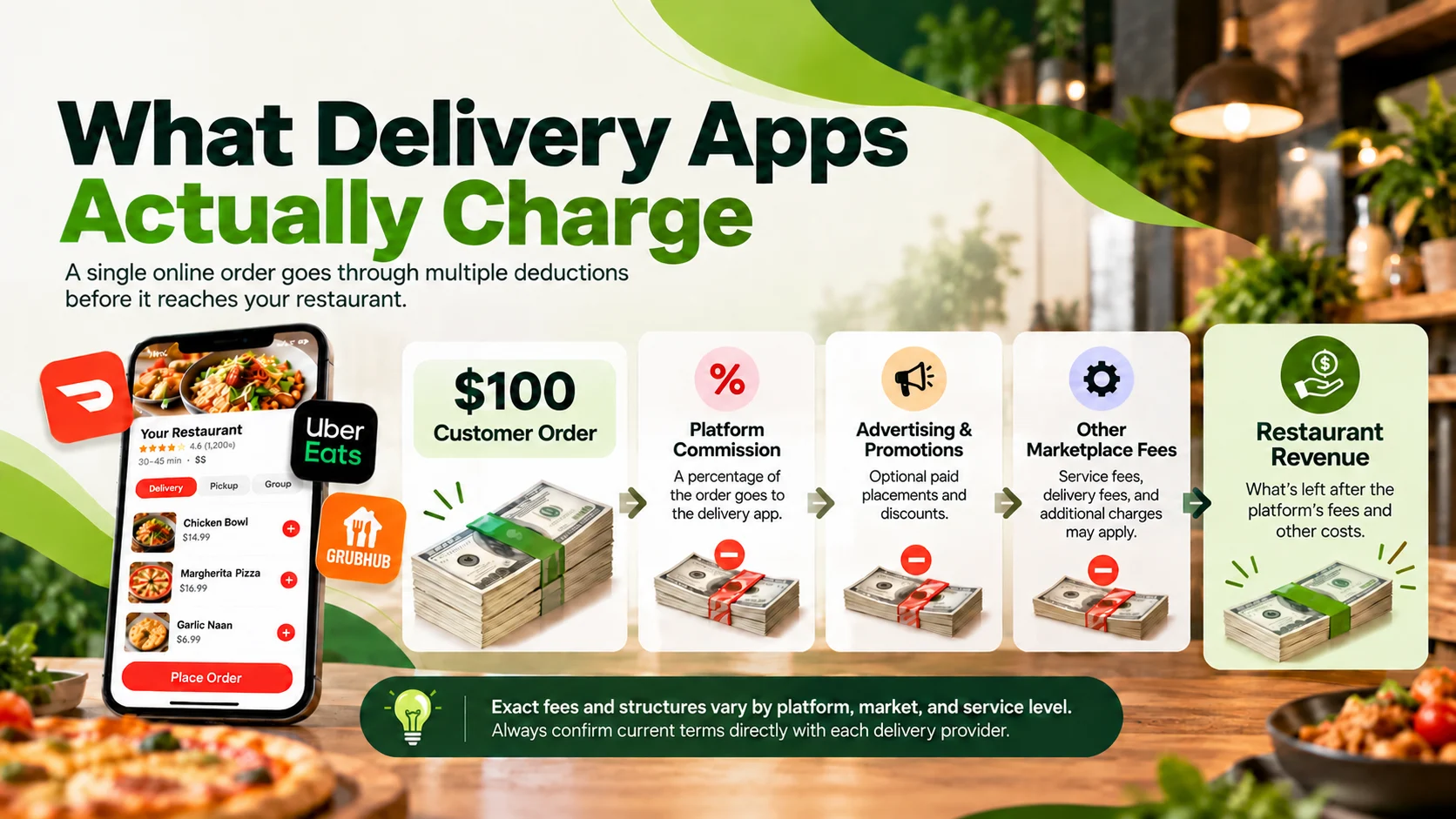
Third-party delivery platforms typically offer different commission structures depending on the services included.
A basic marketplace listing may have a different cost structure from a package that includes the platform’s delivery drivers, additional visibility, or promotional placement.
Restaurants may also encounter additional costs associated with advertising, promotions, discounts, or other marketplace programs.
The exact rates and structures can vary by platform, market, contract, and service level, so restaurants should always confirm the current terms directly with each delivery provider before using a specific percentage in their financial planning.
The important question isn’t simply:
“What is the commission?”
The better question is:
“What is the total cost of acquiring and serving this customer through the platform?”
That’s where the economics become more interesting.
The Hidden Costs Beyond Commission
The commission is the cost everyone talks about, but it isn’t the only consideration.
Three other factors can have a significant impact on your restaurant’s long-term growth.
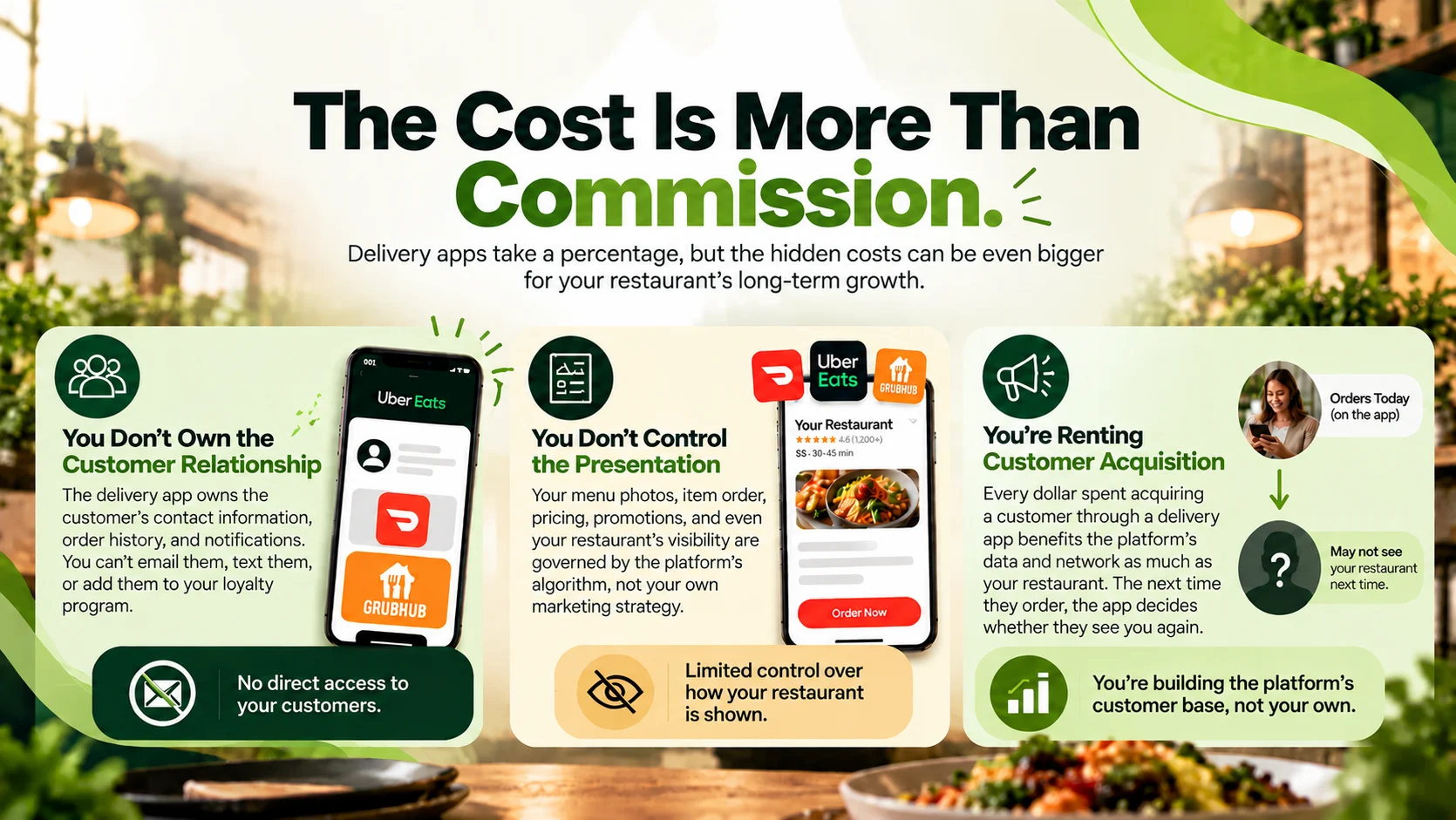
You Don’t Own the Customer Relationship
When someone orders through a third-party delivery marketplace, much of the customer relationship exists inside that platform.
The platform may control the customer’s account, ordering history, notifications, and communication environment.
That makes it more difficult for the restaurant to build a direct relationship with that customer.
Compare that with a direct order through your own website.
When customers interact with your own ordering system, you have more opportunities to build an ongoing relationship through properly consented loyalty, email, and SMS marketing.
Mindshare’s Restaurant Email & SMS Marketing services are specifically built around guest data captured through checkout and POS loyalty signup, with campaigns such as birthday offers, win-back campaigns, and automated customer flows. Mindshare Consulting Inc
You Don’t Fully Control the Presentation
On a third-party marketplace, your restaurant exists alongside many competitors.
Your menu presentation, photos, placement, promotions, and visibility can be influenced by the marketplace environment.
Your own website gives you significantly more control.
You decide:
- Which dishes appear first
- Which photos customers see
- How your menu is organized
- Which promotions are highlighted
- What upsells customers see
- Where the ordering button appears
- How your restaurant brand is presented
Mindshare’s Restaurant Menu Design service focuses on menu engineering, item placement, pricing psychology, food photography, and consistency across restaurant websites and POS displays. Mindshare Consulting Inc
You’re Renting Customer Acquisition
Delivery marketplaces can be excellent discovery channels, but restaurants should recognize the difference between renting access to customers and building a customer base of their own.
A customer who discovers you through a marketplace may continue using that marketplace for future orders.
The platform remains part of the relationship.
A direct ordering strategy changes that dynamic.
Once a customer knows your restaurant, your goal can shift from:
“How do I get discovered?”
to:
“How do I get this customer to order from me again?”
That second question is where direct ordering, loyalty, email, SMS, and customer retention become particularly valuable.
What Direct Ordering Actually Recaptures
A direct ordering page on your own website can give restaurants more control over the ordering experience.
Instead of sending a customer through a third-party marketplace, you can guide them directly from your website to your menu and checkout.
That can help you retain more of the order value while creating a direct customer relationship.
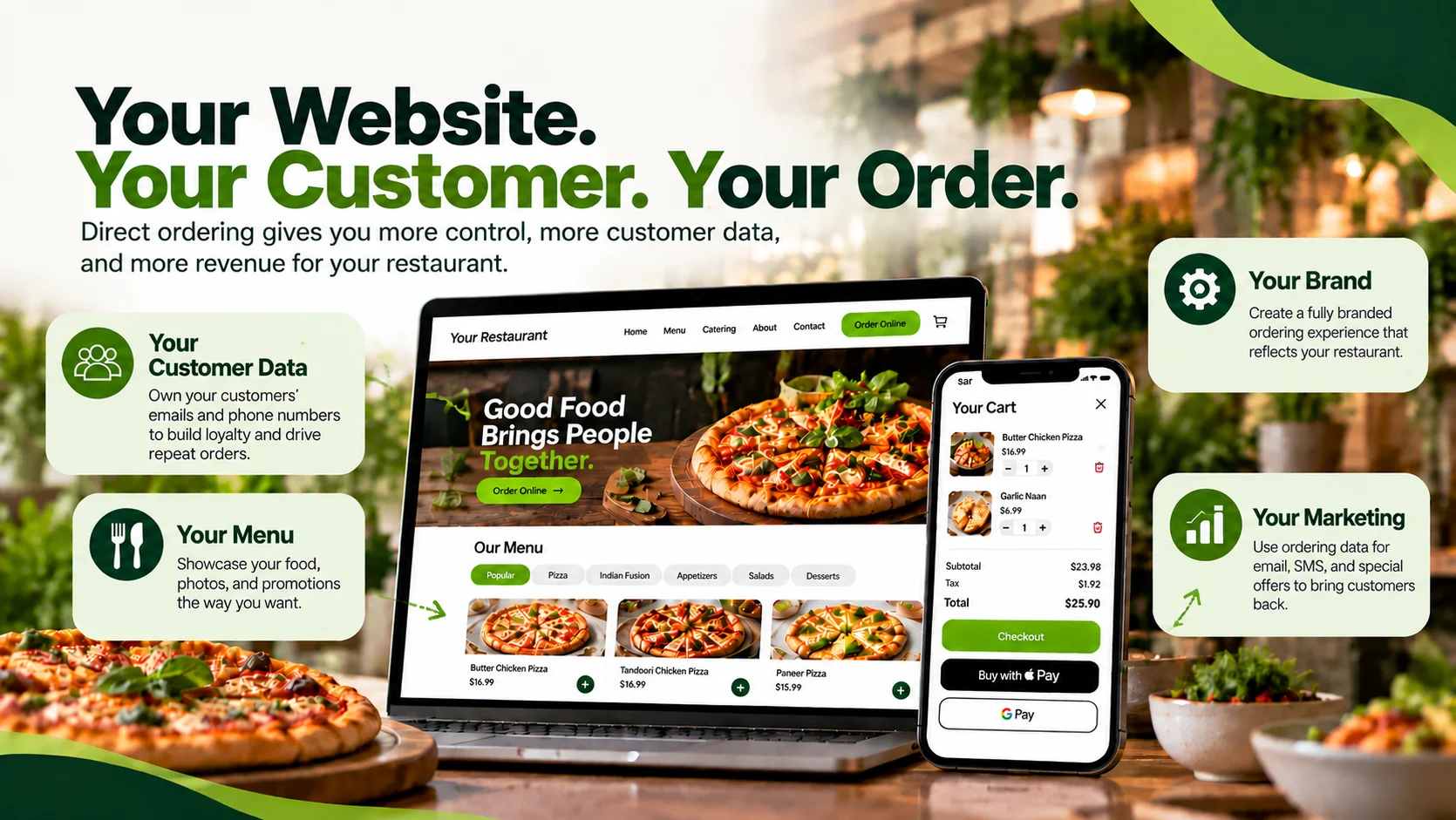
A strong direct-ordering strategy can give restaurants control over:
Your Customer Experience
Customers interact with your brand rather than navigating a marketplace filled with competitors.
Your Menu
You control your food photography, descriptions, categories, featured items, and upsell opportunities.
Your Customer Data
With appropriate consent and privacy practices, direct ordering can create opportunities to build first-party customer relationships.
Your Marketing
You can connect ordering behavior with loyalty, email, SMS, and other retention strategies.
Your Brand
The entire ordering journey can reflect your restaurant rather than a third-party marketplace.
Mindshare’s Restaurant Website Design service specifically focuses on restaurant websites built around direct ordering and POS integrations, including Toast, Clover, Square, and Lightspeed. Mindshare Consulting Inc
A Simple Way to Think About the Math
Consider two versions of the same order.
The first customer places the order through a third-party delivery marketplace.
The second customer places the same-value order through your restaurant’s direct ordering page.
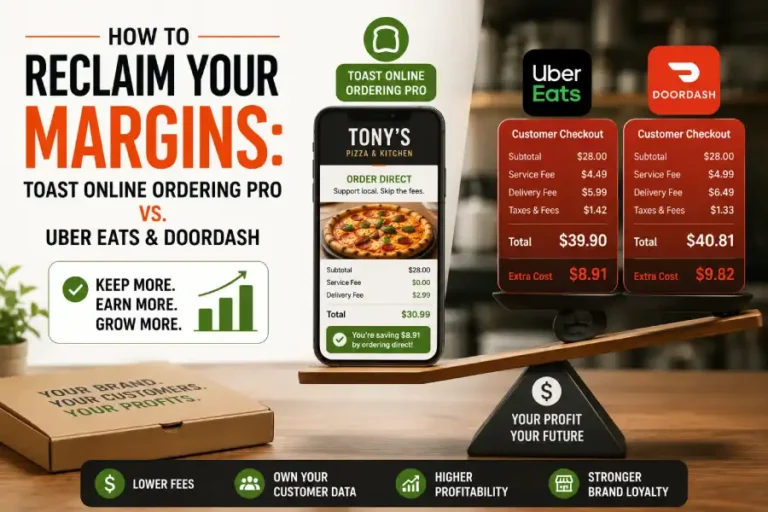
The order value may be identical, but the economics can be very different.
With a marketplace order, a percentage of the transaction may go toward commissions and other marketplace-related costs.
With a direct order, the restaurant can retain substantially more of the order value, subject to its payment processing and technology costs.
The difference becomes much more meaningful when repeated across hundreds or thousands of orders.
For example, imagine that a restaurant gradually moves a portion of its repeat customers from third-party ordering to direct ordering.
The objective isn’t necessarily to eliminate marketplace orders.
It’s to shift repeat demand toward the channel that gives the restaurant more control over its customer relationship and economics.
How a POS-Integrated Website Recaptures Margin
The restaurants that successfully make this shift don’t treat their ordering page as an afterthought.
They treat it as a revenue channel.
That means the website needs to be designed around the customer’s actual ordering journey.
Build for Mobile Ordering
Many restaurant customers discover restaurants and place orders from their phones.
Your ordering experience should therefore make it easy to:
- Find the menu
- Select items
- Customize orders
- Add items
- Review the cart
- Pay
- Complete the order
Every unnecessary step creates another opportunity for the customer to abandon the order.
Keep Your Menu Easy to Browse
A digital restaurant menu shouldn’t simply be a PDF uploaded to your website.
Customers should be able to quickly understand:
- Categories
- Popular items
- Prices
- Descriptions
- Photos
- Modifiers
- Add-ons
The goal is to make the online ordering experience feel as natural as possible.
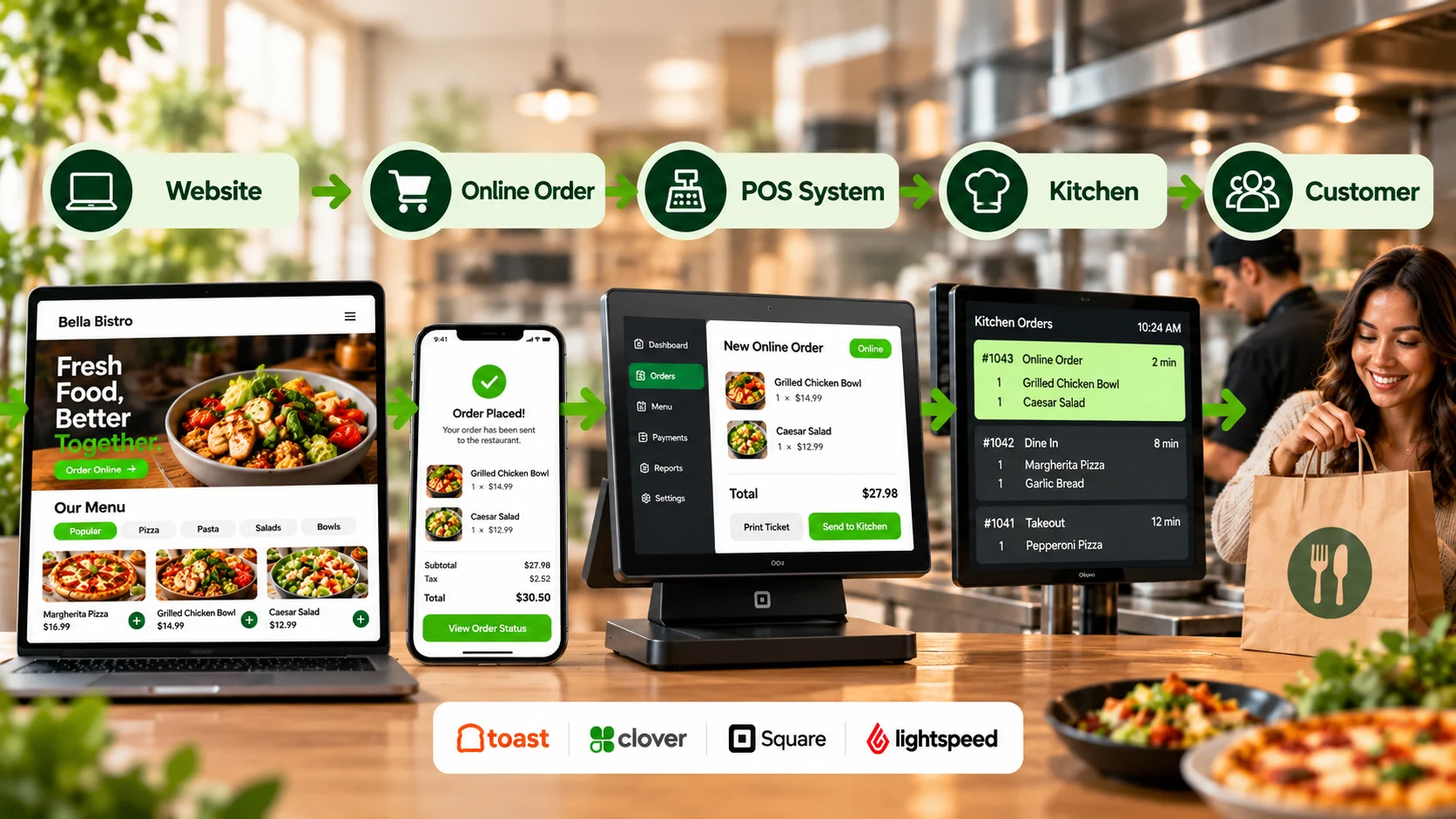
Connect the Website to Your POS
A POS-integrated ordering experience can help reduce manual order entry and keep restaurant operations connected.

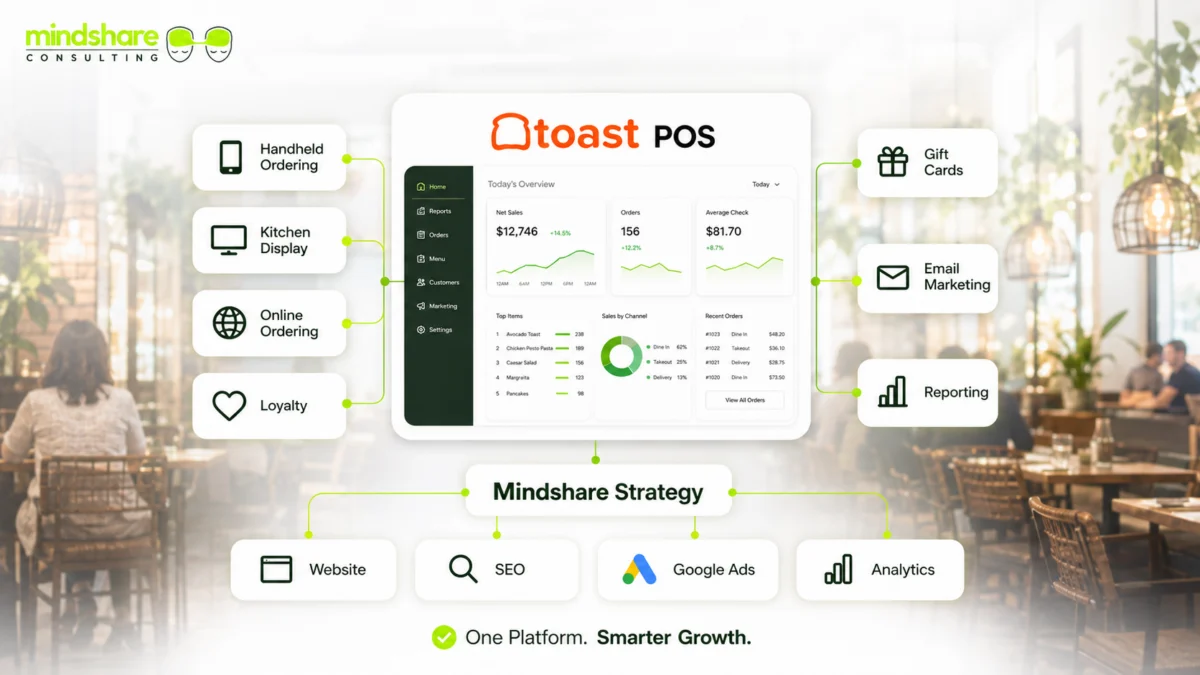
Mindshare’s restaurant website offering includes POS-integrated builds designed to connect websites with platforms such as Toast, Clover, Square, and Lightspeed. Mindshare Consulting Inc
Mindshare also offers platform-specific solutions, including Square Online Ordering, where the company describes direct ordering, menu optimization, kitchen order flow, and connections with delivery integrations. Mindshare Consulting Inc
Make Checkout Fast
The easier the checkout experience, the fewer opportunities there are for customers to abandon their order.
A strong ordering flow should minimize unnecessary clicks and make payment straightforward.
For mobile customers, payment options that reduce friction can be particularly useful.
Direct Ordering Doesn’t Mean Abandoning Delivery Apps
This is one of the most important points.
The goal isn’t necessarily to stop using DoorDash, Uber Eats, or other delivery marketplaces.
They can provide valuable customer discovery.
Someone who has never heard of your restaurant may discover it while browsing a delivery app.
That’s valuable.
But once someone becomes a repeat customer, the economics can change.
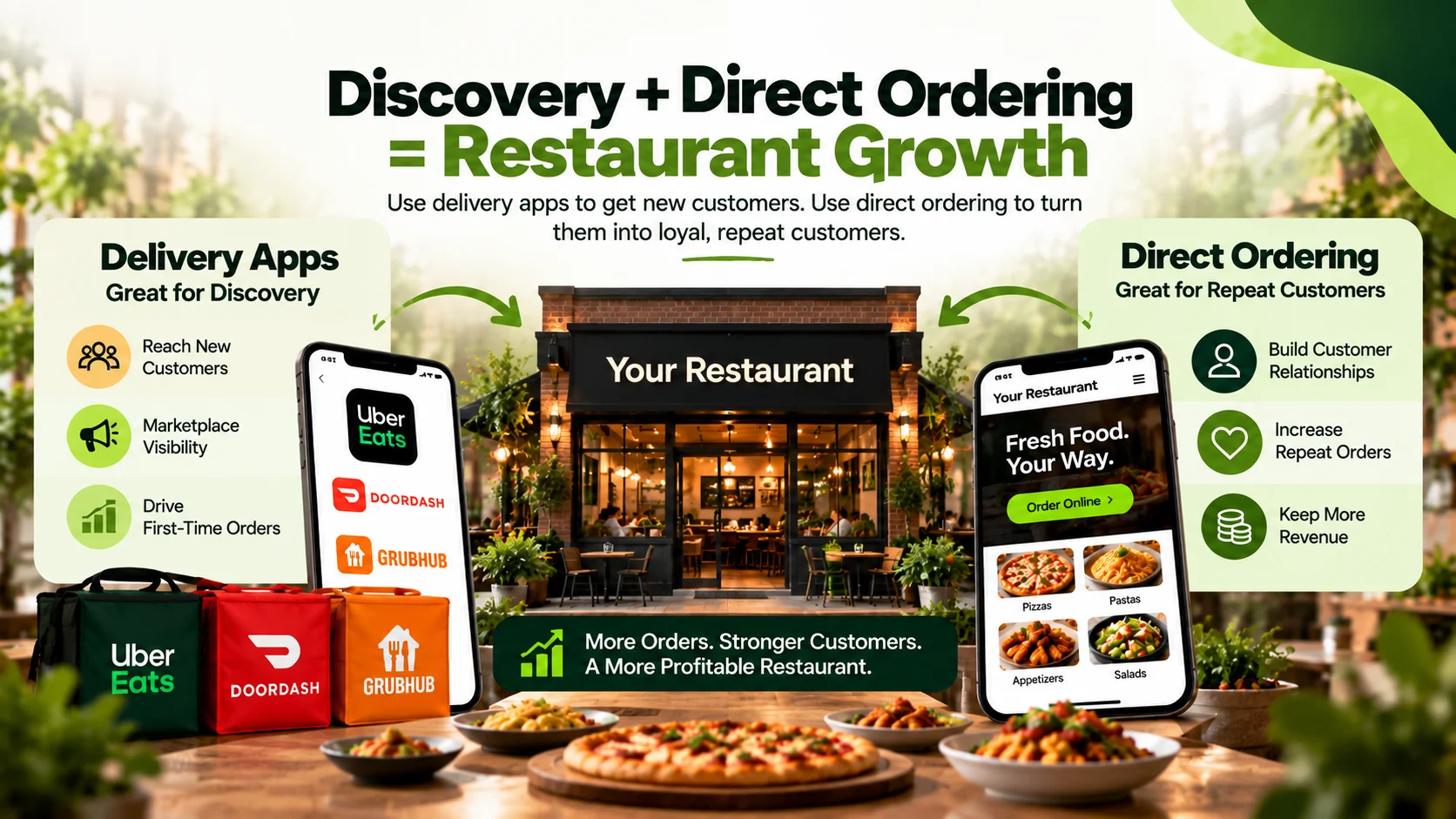
A practical restaurant strategy can be:
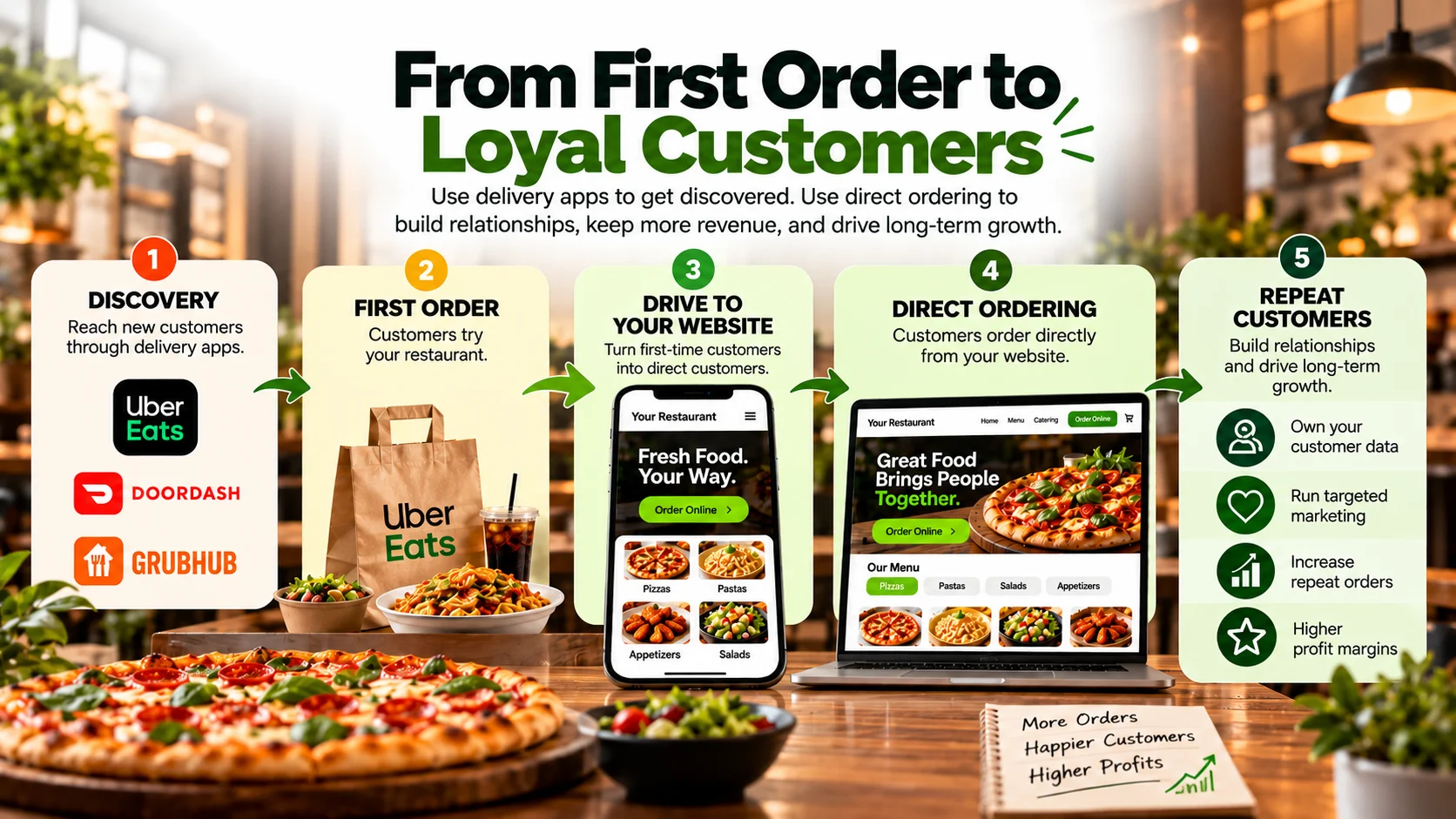
Delivery Apps → Discovery
Your Website → Direct Ordering
POS → Customer Data
Email/SMS → Retention
Loyalty → Repeat Visits
This creates a broader restaurant growth ecosystem instead of relying entirely on one acquisition channel.
Mindshare’s Restaurant Marketing Solutions combines local SEO, paid advertising, POS integrations, and customer retention marketing as part of its restaurant growth approach. Mindshare Consulting Inc
How to Encourage Customers to Order Directly
Once your direct ordering experience is ready, the next challenge is getting customers to use it.
Restaurants can promote direct ordering through multiple touchpoints.
Add Direct Ordering to Your Website
Your website’s primary navigation should make ordering easy to find.
Don’t bury your ordering link at the bottom of the page.
Make the next step obvious.
Use QR Codes
QR codes can connect customers directly to your ordering page.
They can be placed on:
- Tables
- Receipts
- Packaging
- Menus
- Store signage
Add a Note to Delivery Orders
When appropriate, restaurants can include a simple message with marketplace orders encouraging customers to visit the restaurant’s own website for future orders.
The objective is to turn a one-time marketplace customer into a repeat direct customer.
Promote Direct Ordering on Social Media
Your social media profiles can direct customers to your ordering page.
Mindshare’s Restaurant Social Media Marketing service focuses on menu-driven content, platform-specific posts, reels, stories, and community management. Mindshare Consulting Inc
Use POS Data to Build Repeat Business
Your POS can tell you much more than how much money you made today.
It can help you understand customer and sales behavior.
Depending on the platform and available integrations, restaurants can use data to identify:
- Repeat customers
- Popular menu items
- Ordering patterns
- Slow periods
- High-value customers
- Customer purchase behavior
That information can then inform marketing campaigns.
Mindshare’s Restaurant POS Marketing Agency works across platforms including Toast, Square, Clover, Lightspeed, TouchBistro, Lavu, SpotOn, NCR Aloha, and PAR Brink, connecting POS data with websites, apps, and marketing. Mindshare Consulting Inc
Direct Ordering and Customer Retention
The biggest long-term opportunity isn’t simply reducing third-party commissions.
It’s building a customer relationship that your restaurant controls.
Once a customer orders directly, restaurants can create opportunities for:
- Loyalty programs
- Win-back campaigns
- Birthday promotions
- VIP offers
- New menu announcements
- Seasonal promotions
Mindshare’s restaurant email and SMS marketing services are built around these types of retention campaigns and connect guest data with platforms such as Toast, Clover, Square, and Lightspeed. Mindshare Consulting Inc
The Bottom Line
Delivery apps built their business model around making it easy for customers to discover and order from restaurants.
That’s a valuable service, and third-party marketplaces can remain an important part of a restaurant’s customer acquisition strategy.
But once customers already know and like your restaurant, there is a strong reason to give them another option.
Direct ordering gives restaurants more control over the ordering experience, customer relationship, brand presentation, and long-term retention strategy.
The goal isn’t necessarily:
Delivery Apps OR Direct Ordering
It’s:
Delivery Apps for Discovery + Direct Ordering for Repeat Business
A fast, mobile-friendly, POS-integrated restaurant website can become the bridge between those two channels.
And when the website, POS, SEO, advertising, social media, and retention campaigns work together, online ordering becomes more than another sales channel-it becomes part of the restaurant’s broader growth system.
How Mindshare Consulting Can Help
Mindshare Consulting builds restaurant websites and digital marketing systems designed around online ordering, POS integration, customer acquisition, and retention.
Its restaurant website services include POS-integrated builds for platforms including Toast, Clover, Square, and Lightspeed. Mindshare Consulting Inc
The company also offers restaurant marketing solutions covering SEO, paid advertising, POS integrations, and customer retention. Mindshare Consulting Inc
Want help building a direct ordering experience that actually converts?
Explore Mindshare Consulting’s Restaurant Website Design services and learn how a restaurant website can become a direct ordering and revenue channel. Mindshare Consulting Inc